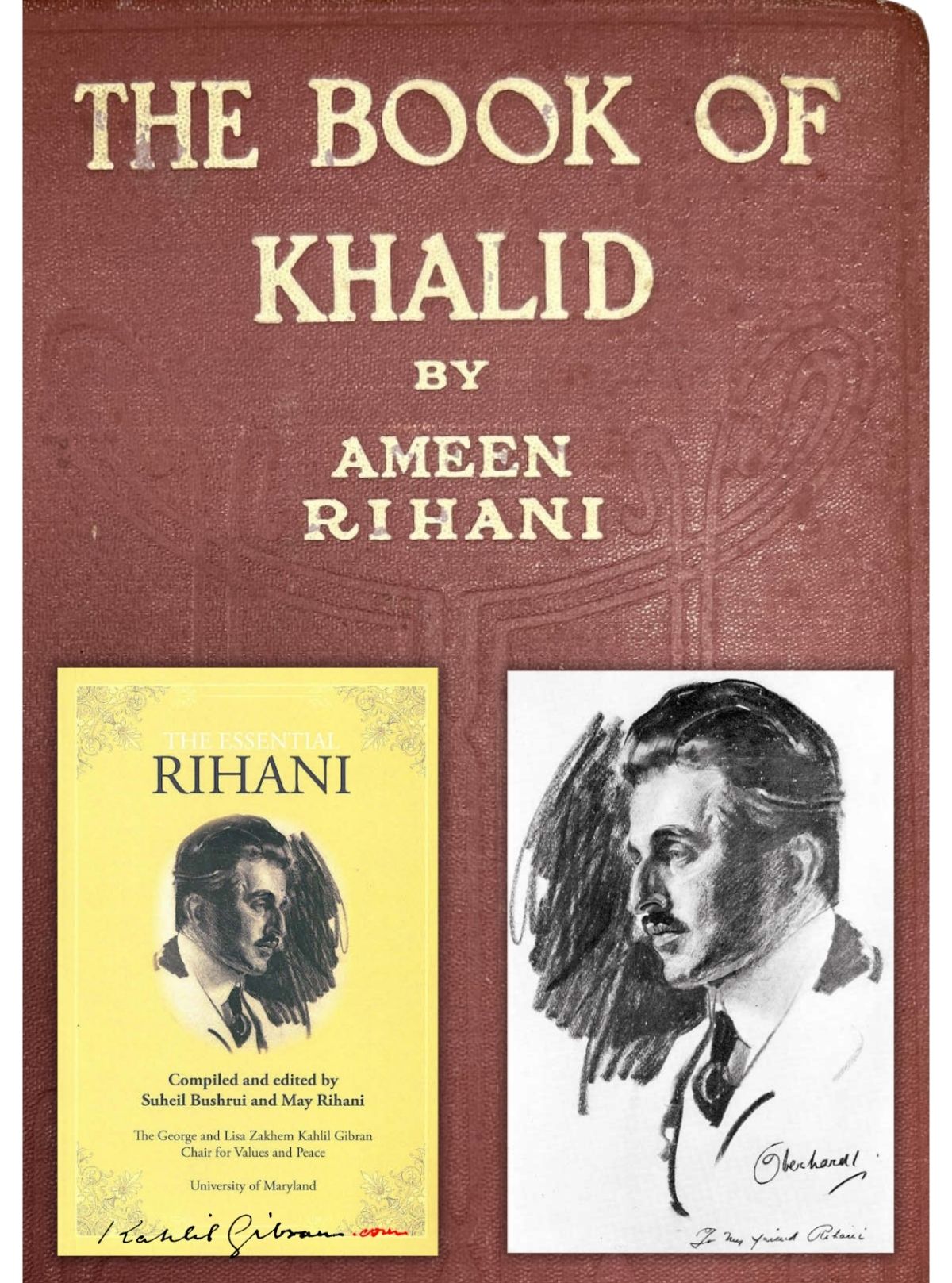
In May 2014, the George and Lisa Zakhem Kahlil Gibran Chair for Values and Peace published The Essential Rihani — a landmark anthology edited by Suheil Bushrui and May Rihani, gathering the most important works of Ameen Rihani, the Lebanese-American writer who was one of Kahlil Gibran's closest intellectual companions and most lasting influences.
Kahlil Gibran Collective
• ❧ KGC ❧ •
KAHLIL GIBRAN COLLECTIVE
By the Kahlil Gibran Collective · Kahlil Gibran Collective · 2014 · kahlilgibran.com
• ❧ KGC ❧ •
I
Ameen Rihani (1876–1940) occupies a singular place in the history of Arab-American literature — and in the personal history of Kahlil Gibran. A Lebanese-American essayist, novelist, philosopher, and poet, Rihani believed passionately in the oneness of the world's religions and the brotherhood of all nations. He was a formidable intellectual force in the modern Arab renaissance, and his influence on Gibran — both literary and philosophical — was deeper than is often recognised.
The Essential Rihani, published by the George and Lisa Zakhem Kahlil Gibran Chair for Values and Peace at the University of Maryland, brings together some of Rihani's most important works in a single authoritative volume, edited by the late Professor Suheil Bushrui and May Rihani. Selections include excerpts from The Rihani Essays, The Path of Vision, Around the Coasts of Arabia, The Book of Khalid, The White Way and The Desert, and a number of previously unpublished poems — offering both the general reader and the scholar an indispensable gateway into Rihani's extraordinary body of work.
• ❧ KGC ❧ •
II
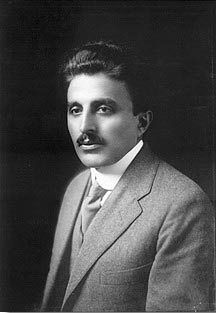
In June 1909, Gibran met a remarkable man called Ameen Rihani — a writer whose influence on him would prove both profound and lasting. Gibran was immediately fascinated by the thirty-four-year-old with the "fine face and good soul," a man who had also been born in Lebanon as a Maronite Christian. Gibran found in the older man a kindred spirit, describing him as "a great poet," and in later correspondence referred to him as al-mu'allem — "the teacher" — addressing him as "my brother in art and my co-worker in the realm of God's law."
The parallels between their lives were striking. Both had emigrated to America at the age of twelve. Both had returned to Lebanon in 1898 to pursue their cultural studies. Both were earning growing reputations as writers who challenged the political, social, and ecclesiastical status quo of their time.
Of particular significance for Gibran was the fact that Rihani was the first Arab writer to compose English verse and the first to write a novel in English. That novel — The Book of Khalid, published in 1911 — represented a landmark in Arab-American literary history. To illustrate it, Rihani chose Gibran: the artist with whom he felt the closest affinity. The book's influence on Gibran was considerable, and may well have planted in him the ambition to write in English himself — an ambition that would ultimately produce The Prophet.

❁
Sources: Suheil Bushrui and Joe Jenkins, Kahlil Gibran: Man and Poet (Oneworld, 1998).
All Rights Reserved © Copyright Kahlil Gibran Collective 2014