Joseph Nahas was a young assistant at the Arabic newspaper Al-Mohajer on Washington Street when a slight, silent man came in offering to sweep the floors in exchange for publication. This is his first-hand account of meeting Kahlil Gibran.
By Joseph Nahas · Edited by Francesco Medici and Glen Kalem-Habib
• ❧ KGC ❧ •
KAHLIL GIBRAN COLLECTIVE
By Joseph Nahas · Kahlil Gibran Collective · 2019 · kahlilgibran.com
• ❧ KGC ❧ •
I
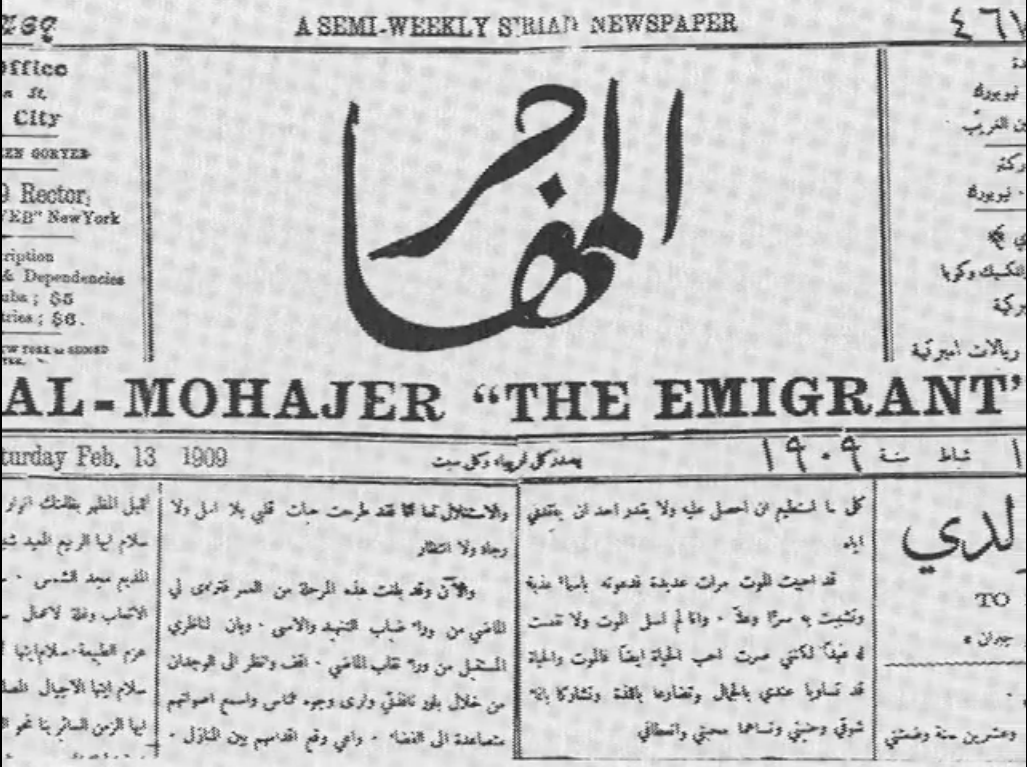
I first met Gibran Khalil Gibran at the office of an Arabic-language newspaper, Al-Mohajer ("The Emigrant"), where I was employed as an assistant to Ameen Guraieb, publisher of the paper, and to his brother, Khalil.
My duties were diverse, ranging from correcting manuscripts to typesetting, makeup, press-feeding, printing, folding, wrapping, and mailing. Khalil's duties were to oversee the printing, and Tufik Habib, an office clerk, attended to correspondence, completing the group. The publishing house was located on the second floor of a three-storey building at 23–25 Washington Street, half a block from Battery Park, at the southern tip of Manhattan.
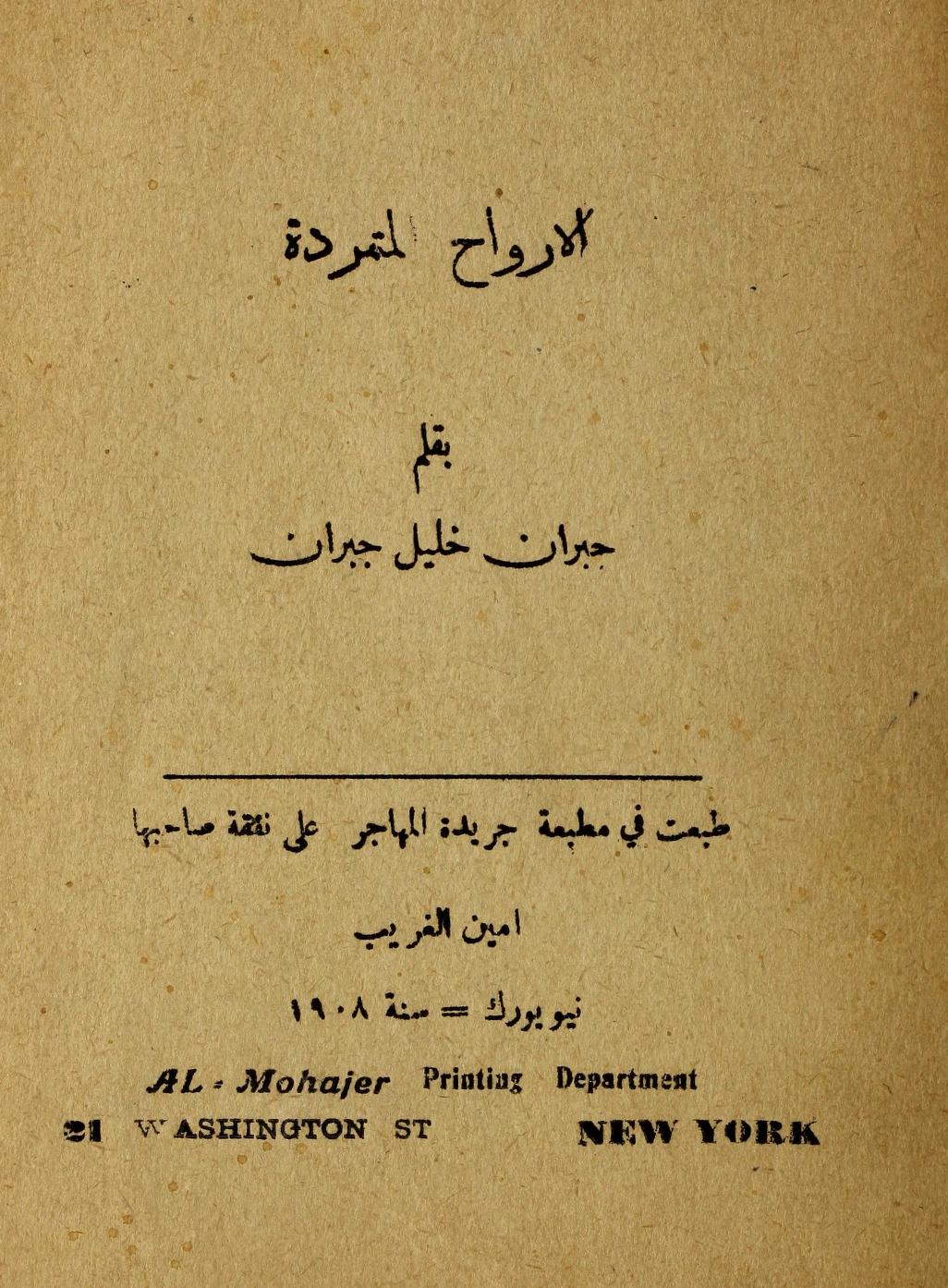
The meeting with Gibran was occasioned by his desire to have published, in instalment form, a column captioned "A Tear and a Smile." Gibran said: "For the privilege of having my manuscript published, sharing my thoughts with my fellow countrymen, and the entire Arabic reading world, I would be willing to render free service in the publishing house, in any capacity — not excluding sweeping."
Gibran had recently returned from Paris, after completing a course in art under the famous French sculptor Auguste Rodin. Because of the course there, and his concentration on the French language, his Arabic grammar had become slightly faulted. His script, however, was artistically neat, in the form then called the Persian style. Ironically, those first writings of his in Arabic were the last to be translated into and printed in English. Under the caption "A Tear and a Smile" also appeared, subtitled, "The Madman," "Spirits Rebellious," "Broken Wings," and others.
• ❧ KGC ❧ •
II
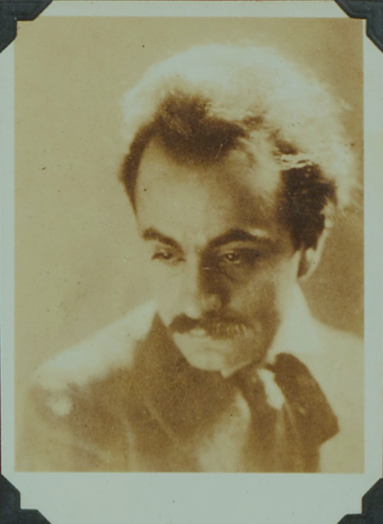
Gibran's features and physical appearance were of the "masculine-feminine" type. He was slender, but muscular; under average in height, about five feet four; high forehead; dark brown, curly hair; heavy eyebrows over large, dark brown wistful eyes, heavily lashed. His nose was slightly larger than average; his moustache also dark brown, drooping over full lips. His chin was dimpled, and his skin was of an amber-tan hue. Little did I think at that time that such an ordinary-looking man would, in a little over a decade, become a celebrity, receiving worldwide acclaim as a philosopher, poet — even an oracle.
For the first few days after our first meeting, I suspected that Gibran suffered from a deficiency of hearing and an impediment of speech. He seemed to be both laconic and saturnine. His taciturnity, however, could be attributed to the fact that his mind delved deeply into the innermost recesses of life, with an overpowering desire to examine cause and effect in human behaviour, and to discover a remedy for the social and spiritual ills of the world.
• ❧ KGC ❧ •
III
Gibran's style in writing was poetic prose. When he was asked why he chose that style instead of the classical Arabic meter and rhymed long verse — or quatrain — he replied:
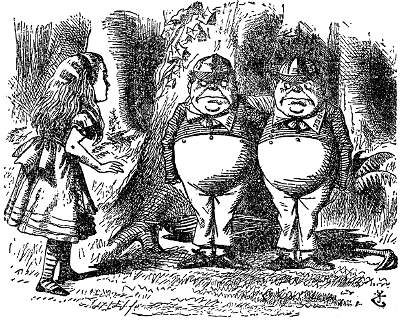
I don't wish to be shackled down to meter, rhythm, and rhyme at the expense of impeding the flow of my thought while searching for the word consistent with meter, rhythm, and rhyme, all of which in my simple opinion is twiddle dee, twiddle dum doggerel, sans clear thought.1
This statement seemed paradoxical to me, because he laboured hard in selecting words for his poetic sentences — even reaching to the archaic. Here, permit me to pause: this personal observation may seem pedantic and unjustified, but frankly, this is how it impressed me then.
❁
1 Tweedledum and Tweedledee are fictional characters in Lewis Carroll's Through the Looking-Glass, and What Alice Found There (1871) and in a famous English nursery rhyme (editors' note). ↩
Excerpt from Joseph Nahas, "Gibran, As I Knew Him," in Seventy-Eight and Still Musing: Observations and Reflections. With Personal Reminiscences of Gibran as I Knew Him (Hicksville, New York: Exposition Press, 1974), pp. 38–39.
All Rights Reserved © Copyright Francesco Medici and Glen Kalem-Habib 2019