A meeting called to discuss an orphanage drifted, as meetings do, and someone raised Gibran's excommunication. What he said in reply silenced the room — and then made an archbishop nod along with every sentence.
By Joseph Nahas · Edited by Francesco Medici and Glen Kalem-Habib
• ❧ KGC ❧ •
KAHLIL GIBRAN COLLECTIVE
By Joseph Nahas · Kahlil Gibran Collective · 2019 · kahlilgibran.com
• ❧ KGC ❧ •
I
It was one evening when I happened to be at the office of His Eminence Archbishop Aftimios Ofiesh, titular head of the Russian Orthodox Catholic Church in North America and its islands, discussing an article I had written on the separation of that church from the Antioch Patriarchate at Damascus. A coterie of writers arrived — Gibran, Naseeb Arida, Abdul-Maseeh Haddad, Nadra Haddad (Abdul-Maseeh's elder brother), Mikhail Takla, and Mikhail Naimy.
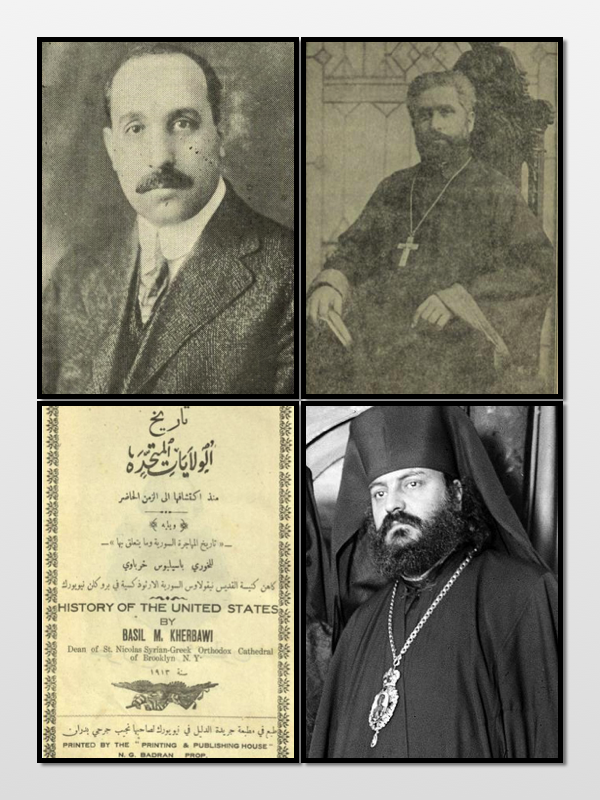
Naseeb Arida was the publisher of the Arabic magazine al-Akhlaq (The Character); Abdul-Maseeh Haddad published the Arabic newspaper as-Sayeh (The Traveler); Nadra Haddad was an officer in the Bank of Lebanon in New York City; Mikhail Takla was a New York businessman and an occasional writer in Arabic. Takla was also a choir leader at Saint Nicholas Orthodox Catholic Church, of which the Reverend Basil Kherbawy was Dean and the author of the Arabic version of The History of the United States, in which my own picture appeared. Mikhail Naimy was a businessman and a prolific author in English and Arabic as well as Russian. Both Haddads, Arida and Takla were natives of Homs; Naimy was born in Baskinta. All four had received their elementary schooling in a parochial school operated by the Russian imperial government, then the ruler of that land.
Gibran was still writing his column under the caption "A Tear and a Smile," with such subtitles as "The Madman" and "Sand and Foam."
• ❧ KGC ❧ •
II
The meeting had been called by the Archbishop to discuss establishing an orphanage for homeless children, and to organise plans of procedure. The discussion later drifted to the recent excommunication of Gibran by the then hierarchy of the church. Gibran said:
I am only a worker in the field of thought, concerned only in planting wholesome seed, untainted by the disease of traditional myths, free from the curse of hypocrisy and greed, a seed which will grow mental and spiritual food for generations to garner — a food which will encourage them to take another step nearer the Supreme Being… I don't wish to be a captive of one sect or one nationality… I am a member of all humanity, the creation of the Universal Wisdom which knows no bias, but dispenses justice, love, and peace for all… If pleading with the needy, weeping with the sorrowful, and standing with the oppressed — and if condemning hypocrisy and rejecting superstitions is considered to be heretical, then consider me to be among the multitude of other so-called heretics. I shall not bend the neck to the dictum of some wearers of the cloth, those who solemnly pledged themselves to abide by the laws of the Supreme Being, only to substitute for them the unjust laws of man. I am honored to be bearing the yoke of "rebel," and to have hypocrisy, arrogance, and superstitions as my antagonist.
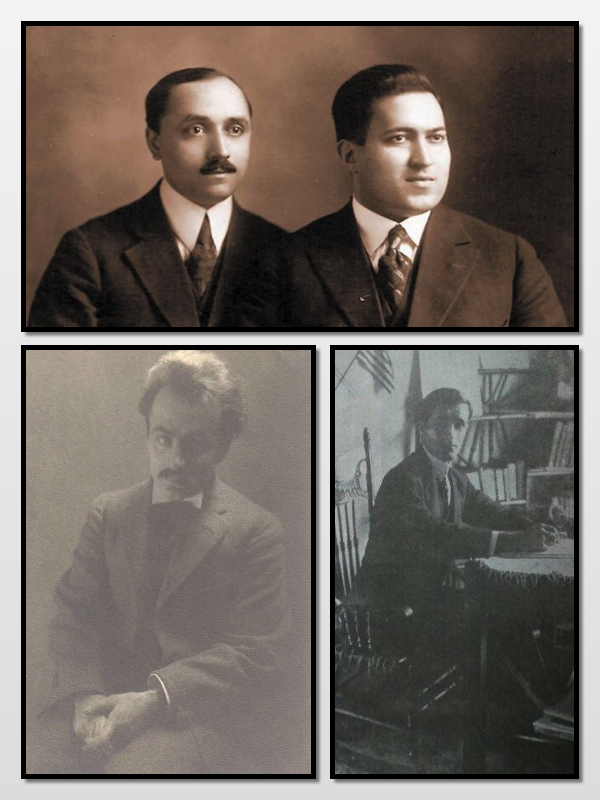
I was amazed to see the Archbishop nod his approval with every sentence Gibran voiced, and to hear the Reverend Basil Kherbawy — a late arrival — say at the conclusion, "Well said." All those present applauded. Jokingly, Naseeb Arida said, "Gibran, have you been secretly studying oratory, as well as writing it?" Abdul-Maseeh Haddad added, "I have never heard you make such an eloquent speech as this one. Have you been studying elocution and rhetoric behind our backs?" All laughed, except Gibran, who blushed and felt embarrassed.
❁
Excerpt from Joseph Nahas, "The Orphanage," in Seventy-Eight and Still Musing: Observations and Reflections. With Personal Reminiscences of Gibran as I Knew Him (Hicksville, New York: Exposition Press, 1974), pp. 50–52.
All Rights Reserved © Copyright Kahlil Gibran Collective 2019