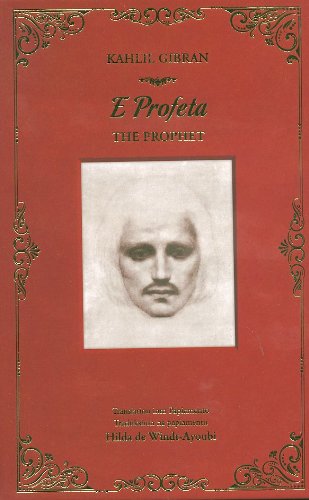
On 21 May 2014, while the world's attention was turned toward Cannes and the anticipated premiere of the animated The Prophet, a quieter but no less remarkable event was unfolding on a small Caribbean island: the launch of E Profeta — the first ever translation of Kahlil Gibran's masterpiece into Papiamento, a Creole language spoken by fewer than a million people. Glen Kalem-Habib was there.
By Glen Kalem-Habib
• ❧ KGC ❧ •
KAHLIL GIBRAN COLLECTIVE
By Glen Kalem-Habib · Kahlil Gibran Collective · 2014 · kahlilgibran.com
• ❧ KGC ❧ •
I
While most of the international Gibran world this past week had its eyes fixed on the pre-launch of the animated The Prophet at the Cannes Film Festival, a small island in the Caribbean — perhaps best known internationally for its citrus-infused liqueur, Blue Curaçao — was quietly welcoming a Prophet of its very own, on the international day of cultural diversity.
After three years of labouring, nurturing, and singing a bilingual lullaby, Mrs. Hilda de Windt-Ayoubi — a Spanish lecturer, poet, and painter from the island — gave birth to the 43rd official translation of Kahlil Gibran's The Prophet. This sui generis translation, E Profeta, is rendered in the language of Papiamento: spoken by fewer than a million people, a language woven from Portuguese and Creole, with deep influences of Spanish and Dutch. Its voice is heard most naturally in the Dutch Leeward Islands of Curaçao, Aruba, and Bonaire, and carries a functional presence across the Windward Islands of St. Eustatius, St. Maarten, and Saba. E Profeta stands in all likelihood as the first translation of The Prophet into any Creole language — a treasured event not only for the island, but for the entire Gibran world.
• ❧ KGC ❧ •
II
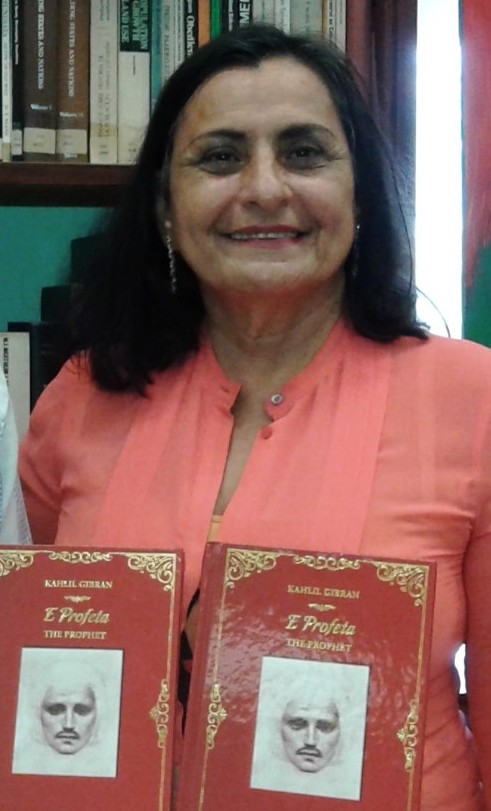
The launch took place at NAAM — the National Anthropological-Archaeological Museum in Pietermaai, Curaçao — in the presence of the Honourable Irene Dick, Minister of Education, Science, and Culture, alongside colleagues, family, and a very proud granddaughter, Talissa. The evening was graced by guest speakers including former students and colleagues of Mrs. de Windt-Ayoubi, recitals from her own poetry alongside the works of celebrated Curaçaoan writers Pierre Lauffer and Professor Frank Martinus Arion, an exposition of Kahlil Gibran's life and art, and the magical flute of Oswin Pikero.

Mrs. de Windt-Ayoubi is a grandchild of Lebanese immigrants who arrived on the island as far back as 1907 — and for her, this translation was as much a personal pilgrimage as a literary undertaking. She saw it as a wayward passage home: a way of reconnecting with roots that geography and time had stretched thin. She is passionate about her origins and even more so about Gibran. By the time of the launch she had already begun work on a second translation of his writings, and spoke of her long-held dream to visit Lebanon, the land of her heritage.
The translation was overseen and mentored by the late Professor Suheil Bushrui of the George and Lisa Zakhem Kahlil Gibran Chair for Values and Peace at the University of Maryland. Relatives of Mr. George Zakhem — Mrs. Jacqueline de Koning and Mrs. Caroline Isa — were also present at the launch. A heartwarming video message from both Professor Bushrui and Dr. Tarek Chidiac, president of the Gibran National Committee in Lebanon, was shared, offering congratulations to Mrs. de Windt-Ayoubi on her remarkable achievement.
The book includes reproductions of Gibran's original paintings, for which permission was granted by the Gibran National Committee. The preface by Mrs. de Windt-Ayoubi, the introduction by Professor Bushrui, and a history of translation into Papiamento by Professor Wim Rutgers of the University of Curaçao are presented in both Papiamento and English. E Profeta is available to purchase via Amazon.
• ❧ KGC ❧ •
III
The following is a translated extract from the original launch report published in Amigoe newspaper, Curaçao, 21 May 2014. Translated by Hilda de Windt-Ayoubi.
Willemstad — The translation of Kahlil Gibran's The Prophet — a book of life lessons known the world over — is now a fact. Hilda de Windt-Ayoubi completed the work and presented it yesterday at NAAM, the National Anthropological-Archaeological Museum in Pietermaai. The Minister of Education, Science, and Culture received one of the first copies from the translator herself. Alongside the book launch, an exposition of Gibran's works and paintings was presented, combined with paintings by the translator, who is herself a writer and painter.
For more on Hilda de Windt-Ayoubi's remarkable ongoing work with Gibran's legacy — including her award-winning Dutch translation published in 2023 — see our later article: New Translation by award-winning Hilda de Windt-Ayoubi.
❁
Photographs by Tico Vos. Report originally published in Amigoe, 21 May 2014.
All Rights Reserved © Copyright Kahlil Gibran Collective 2014