A biography of Blanche Knopf — wife of publishing giant Alfred A. Knopf and the woman behind some of the twentieth century's most enduring literary discoveries — reveals that it was Blanche, and not Alfred, who first recognised the genius of Kahlil Gibran.
By Glen Kalem-Habib · Contributor: Francesco Medici
• ❧ KGC ❧ •
KAHLIL GIBRAN COLLECTIVE
By Glen Kalem-Habib · Kahlil Gibran Collective · 2016 · kahlilgibran.com
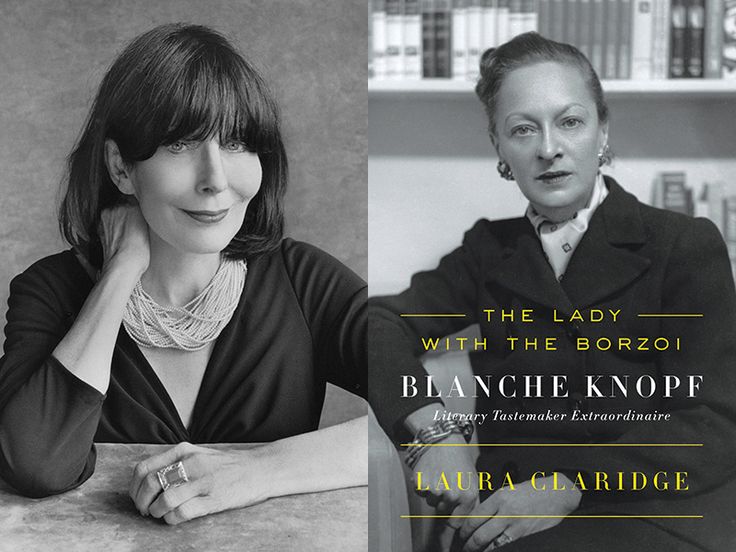
[B]ut it was Blanche's peculiar astuteness that led to the 1923 publication of Kahlil Gibran's The Prophet, whose modest initial sales would metastasize 40 years later, in the woo-woo '60s, helping to lift Knopf into the commercial big-time.
• ❧ KGC ❧ •
I
A biography of Blanche Knopf, wife of publishing giant Alfred A. Knopf — whose house published Carl Van Vechten, Ezra Pound, Joseph Hergesheimer, Henry L. Mencken, and Kahlil Gibran — sheds light into what one reviewer describes as a marriage "much more difficult than publishing."
Laura Claridge's biography The Lady with the Borzoi tells the story of Blanche Knopf: a pioneering woman who wanted a "life surrounded by books," whose love for reading and culture set her apart from her well-to-do Manhattan secular family and friends. The "pretty redhead" with her finger on the pulse was determined to print — pun intended — her name into the male-dominated publishing world of the early 1900s. She married the charming Alfred on a "prenuptial verbal pact" that they would build a publishing firm superior to others. The hardest part of that pact, as it turned out, was her husband's loyalty — which was only to himself.
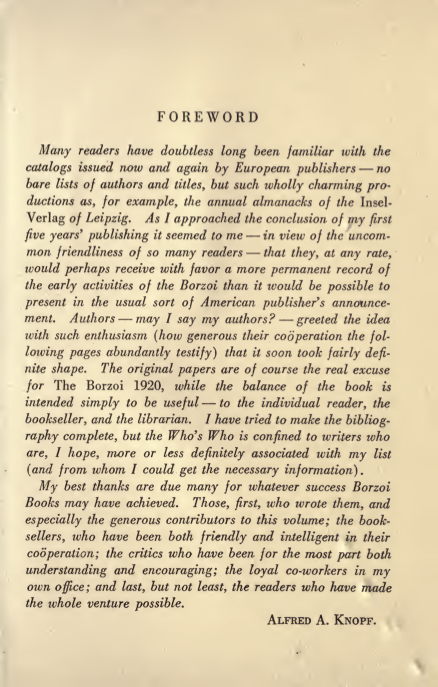
Scouting superior authors was a talent Blanche possessed in abundance. Her love of culture and poetry, combined with a remarkable social intelligence in the roaring twenties, attracted the calibre of writers who would go on to build the Borzoi label into one of the most prestigious publishing houses of all time — notwithstanding that most of the credit would go to her husband. Author and reviewer Alice Kaplan corroborated that Blanche was "denied credit for the success of the publishing firm she founded with her husband, and that bears his name alone."
Another important revelation of the book is the acknowledgement that it was Blanche, and not Alfred, who discovered Kahlil Gibran. The New Republic concluded: "the books that kept Knopf afloat through the years were The Prophet, Kahlil Gibran's collection of uplifting spiritual koans, Dashiell Hammett's detective novels, and Julia Child's Mastering the Art of French Cooking — all brought in primarily by Blanche."
In Claridge's portrayal of the Knopfs' "marriage of convenience," we learn that it was Blanche — intuitive, Eastern-leaning, with a way with words — who had the eye for talent. She persuaded writers such as Langston Hughes and Willa Cather to sign on. "Alfred was happy enough to capitalize on the quality she brought in."
This denial of due credit from her husband may well have motivated Blanche to find comfort and companionship among the young intellectuals of Greenwich Village — the same village Gibran roamed and lived in. Known as "an important landmark on the map of American bohemian culture" and a crucible of the "alternative avant-garde," the Village attracted such legendary residents as Augustus St. Gaudens, Mark Twain, Walt Whitman, Anaïs Nin, Salvador Dalí, Jackson Pollock, and Andy Warhol, among many others.
• ❧ KGC ❧ •
II
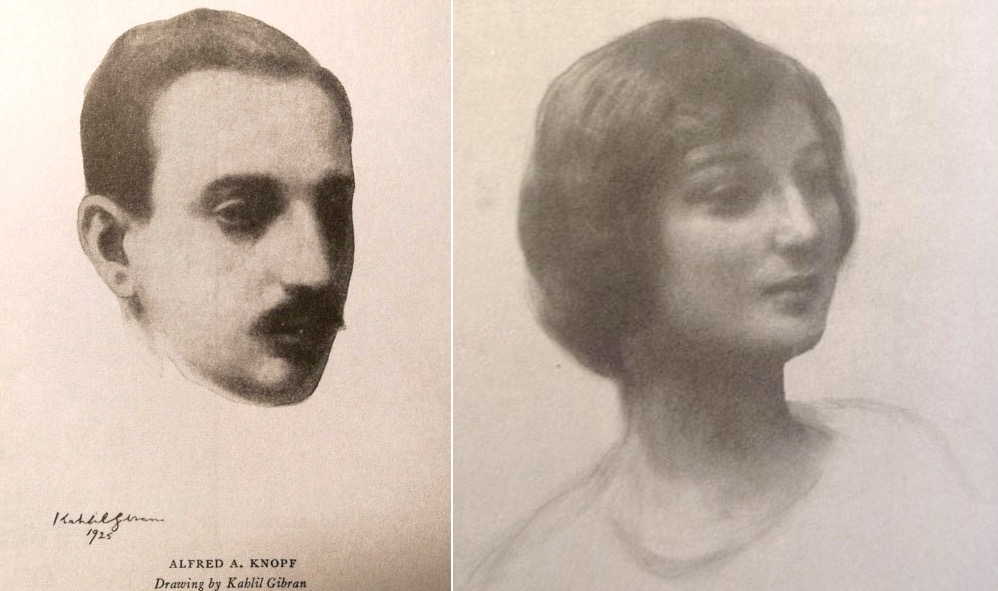
Was it then the "young and inexperienced Knopf" who had the courage and "remarkable faith in a writer unknown to the English-speaking readers"? Or was it, in fact, that Alfred had identified in his wife a woman of great magnetism — the ability to see beyond the words and into the minds and souls of readers — and that it was this gift, hers alone, that was instrumental in his success as a publisher?
Digging deeper into Blanche and Gibran's relationship, we find clues in the correspondence between Gibran and the Knopfs. Gibran was known for his thoughtful and personal tone in letters, which reveal much of what we know of him today. Letters addressed to Alfred were largely clinical and businesslike, lacking the intimacy Gibran was famous for: "Dear Mr. Knopf… Sincerely Yours." When writing to Blanche, however, the register shifts entirely: "Dear Blanche… looking forward to seeing you soon again… Faithfully Yours" — suggesting a far warmer, closer, and more personally connected relationship.
Her strong independent nature, intelligence, and taste for culture would have appealed deeply to Gibran the feminist, who is well documented to have befriended and trusted women over men throughout his life — a theme he extended in his poetry by making women his centralised subjects. His introduction of Almitra in The Prophet captures this quality precisely:
And there came out of the sanctuary a woman whose name was Almitra. And she was a seeress. And he looked upon her with exceeding tenderness, for it was she who had first sought and believed in him when he had been but a day in their city.
Professor Suheil Bushrui, in his paper "Gibran of America," records the circumstances of the Gibran–Knopf connection: "It was 1918 when Gibran's friend Witter Bynner, one-time editor of McClure's Magazine, arranged a dinner in Greenwich Village with a young publisher called Alfred Knopf, who had a reputation as an innovative publisher… Bynner intuitively sensed that the twenty-four-year-old publisher would be interested in the work of his Syrian friend, and was proved right when Knopf agreed to publish Gibran's The Madman in October."
Jean and Kahlil G. Gibran's biography Kahlil Gibran: His Life and World adds: "It was a bold gamble on Knopf's part, but his remarkable faith in a writer unknown to English-speaking readers was to be richly and deservedly rewarded. He subsequently published all of Gibran's English works including The Prophet, as well as several works originally written in Arabic and translated by others into English."
As research continues into the relationship between the Knopfs and Gibran, it becomes increasingly clear — in the light of this new information — that Blanche was the true visionary. It would be remiss of the Gibran world not to acknowledge her role in Gibran's publishing success.
• ❧ KGC ❧ •
III
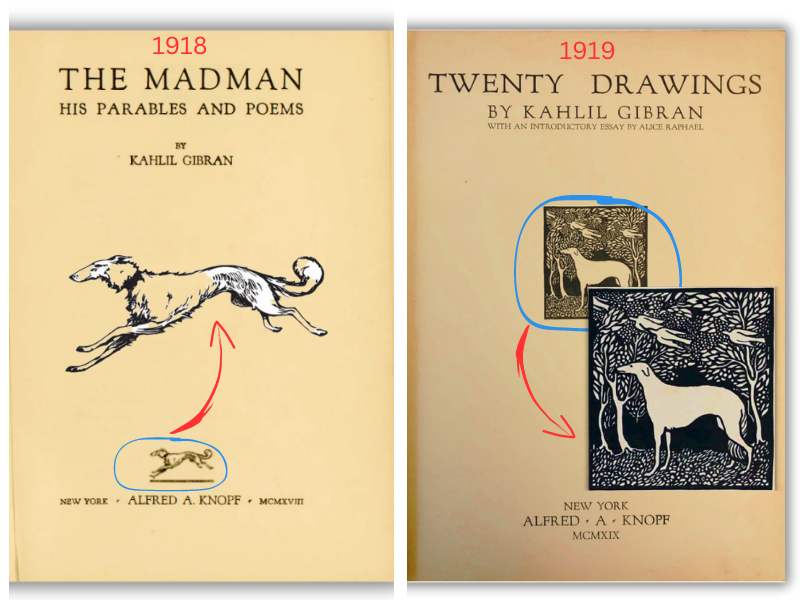
The title of this article is borrowed from a documentary of the same name: Alfred A. Knopf purchased a Bell and Howell 16mm camera in 1926 and began filming his authors as part of a home movies collection. In 1961 these images were edited and released as a short documentary, A Publisher is Known by the Company He Keeps. Knopf's footage of Kahlil Gibran — sadly no more than a minute in length, and without sound — remains the only known film of the author in existence.
These deductions are not surprising when one considers that a great portion of Gibran's story has yet to surface, owing to the lack of ongoing research, study, and support. A striking example is the large volume of correspondence and diaries housed at the Southern Historical Collection at the University of North Carolina — donated in 1953 by Mary Elizabeth Haskell, Gibran's lifelong friend, confidante, editor, and financial supporter — which remains significantly understudied since the late 1970s. These volumes represent a substantial part of what we do not yet know about Gibran. It is one of the primary reasons the Kahlil Gibran Collective was founded: to encourage and support exactly this kind of undertaking.
❁
Images — Portrait of Blanche Knopf by Gibran, Temple of Arts Series, courtesy of the Gibran National Committee. Foreword page of The Borzoi Book 1920 by Alfred Knopf, Alfred A. Knopf Inc. Kahlil Gibran's Borzoi sketch for The Prophet, Alfred A. Knopf Inc.
Film — A Publisher is Known by the Company He Keeps. Louis De Rochemont Associates / Phoenix BFA Films & Video. Director: Jules Victor Schwerin; narrator: Alfred A. Knopf; editor: Yoshio Kishi. Courtesy of the Gibran National Committee.
Books — Suheil Bushrui and Joe Jenkins, Kahlil Gibran: Man and Poet (Oneworld, Oxford, 1998). Suheil Bushrui, "Gibran of America" (University of Maryland). Jean Gibran and Kahlil G. Gibran, Kahlil Gibran: His Life and World (Interlink Books, 1974).
Further reading — The New Republic · Laura Claridge — The Lady with the Borzoi
Glen Kalem-Habib is an international Kahlil Gibran researcher, historian, and filmmaker. His research formed the foundation of the feature documentary Kahlil Gibran: The Reluctant Visionary. He is a founding member of the Kahlil Gibran Collective. Contributor: Francesco Medici — scholar and translator of the works of Kahlil Gibran in Italian and English.
All Rights Reserved © Copyright Kahlil Gibran Collective 2016