In April 1923, at a Brooklyn hotel, the Lebanese community of New York marked twenty-five years of its daily newspaper. Gibran rose to speak — not about the paper, but about what a newspaper is for.
By Glen Kalem-Habib and Francesco Medici
• ❧ KGC ❧ •
KAHLIL GIBRAN COLLECTIVE
By Glen Kalem-Habib & Francesco Medici · Kahlil Gibran Collective · 2026 · kahlilgibran.com
LITERARY HISTORY · ARAB-AMERICAN PRESS · KAHLIL GIBRAN
• ❧ KGC ❧ •
I
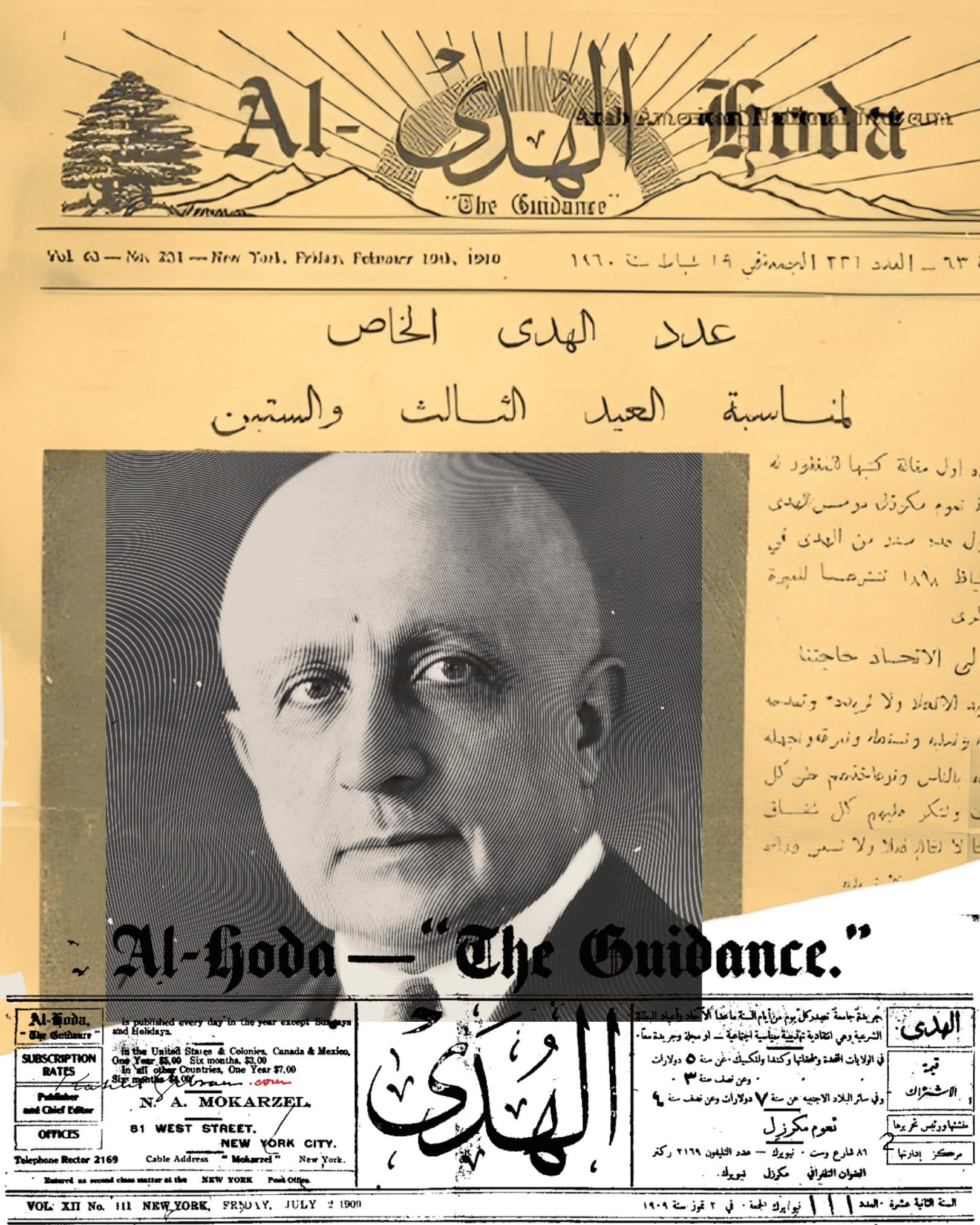
In the closing years of the nineteenth century, a Lebanese political activist, intellectual, and publisher named Naoum Antoun Mokarzel arrived in the United States with an ambition that would reshape the cultural landscape of Arab America. Born in Freike in 1864, Mokarzel founded "Al-Hoda" — Arabic for "The Guidance" — in 1898, and with extraordinary tenacity built it into the largest Arabic-language daily newspaper in all of North America. For more than seven decades, until 1971, "Al-Hoda" served as a mirror, a megaphone, and a school for hundreds of thousands of Syrian and Lebanese immigrants navigating the promises and perplexities of life in a new land.
Mokarzel was no quiet bystander. He wielded his newspaper and publishing house as instruments of Maronite Christianity and Lebanese nationalism, championing the cause of an independent Lebanon with a ferocity that earned him admirers and adversaries in equal measure. His combative stance and willingness to enter sectarian disputes and legal battles with rival Arabic-language publishers in New York earned him a lasting epithet: "al-Nimr al-Lubnani" — "the Lebanese Tiger."
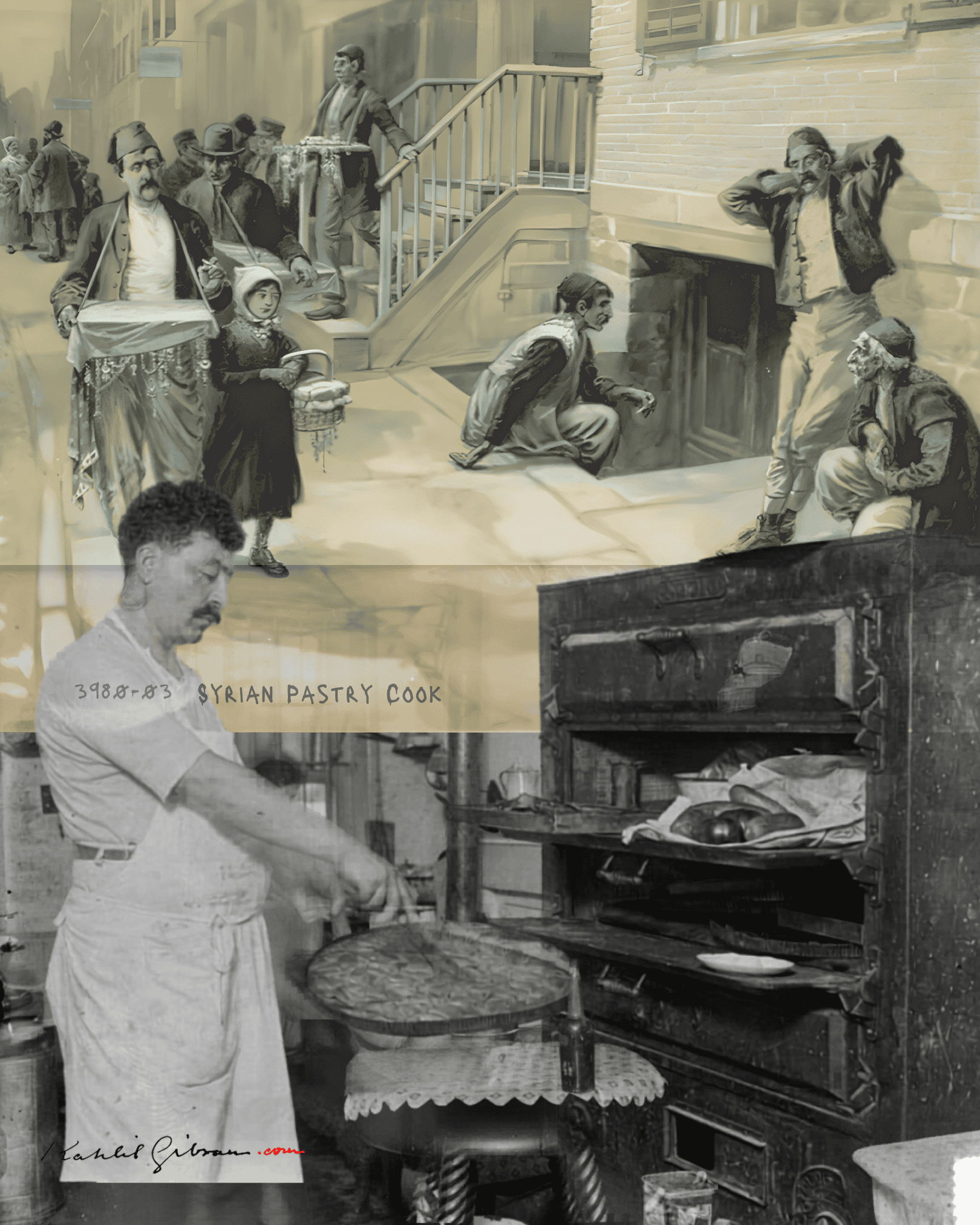
The world that greeted "Al-Hoda"'s first readers was one of dislocation and longing. Syrian and Lebanese immigrants — many of them young men who had crossed the Atlantic with little more than determination — found themselves in a country whose language, customs, and institutions were utterly foreign. For this community, an Arabic-language newspaper was not merely a luxury; it was a lifeline. It carried news from home, offered guidance through bureaucratic mazes, published poetry and literature that kept the Arabic language alive, and gave its readers a sense of belonging in an unfamiliar world.
From its earliest issues, "Al-Hoda" was distinguished by its literary ambition as much as its journalistic mission. Mokarzel opened the pages of the paper to some of the finest Arabic-language writers then living in America — men and women who would come to form what historians now call the Mahjar literary tradition: the great flowering of Arabic literature produced in the diaspora.
• ❧ KGC ❧ •
II
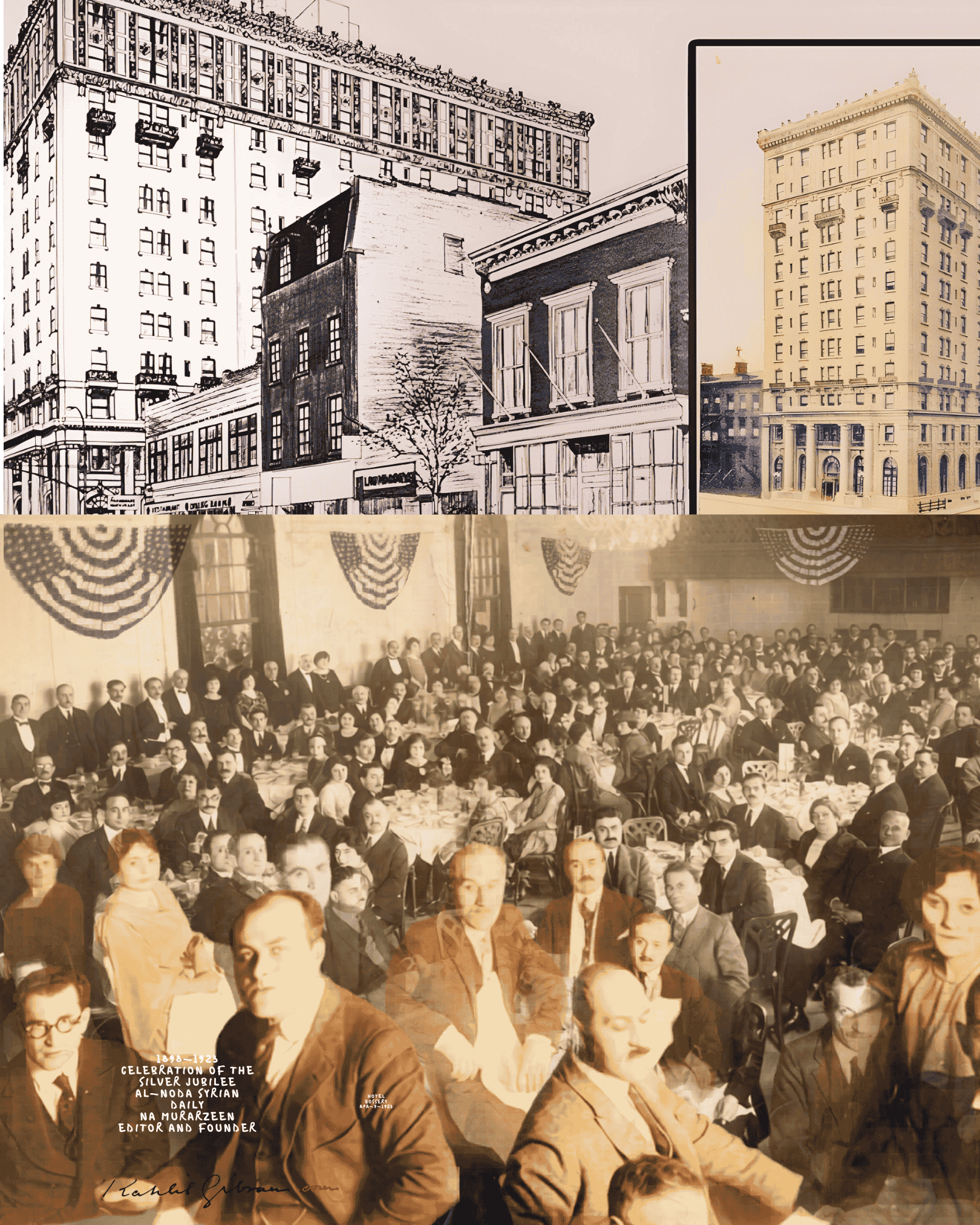
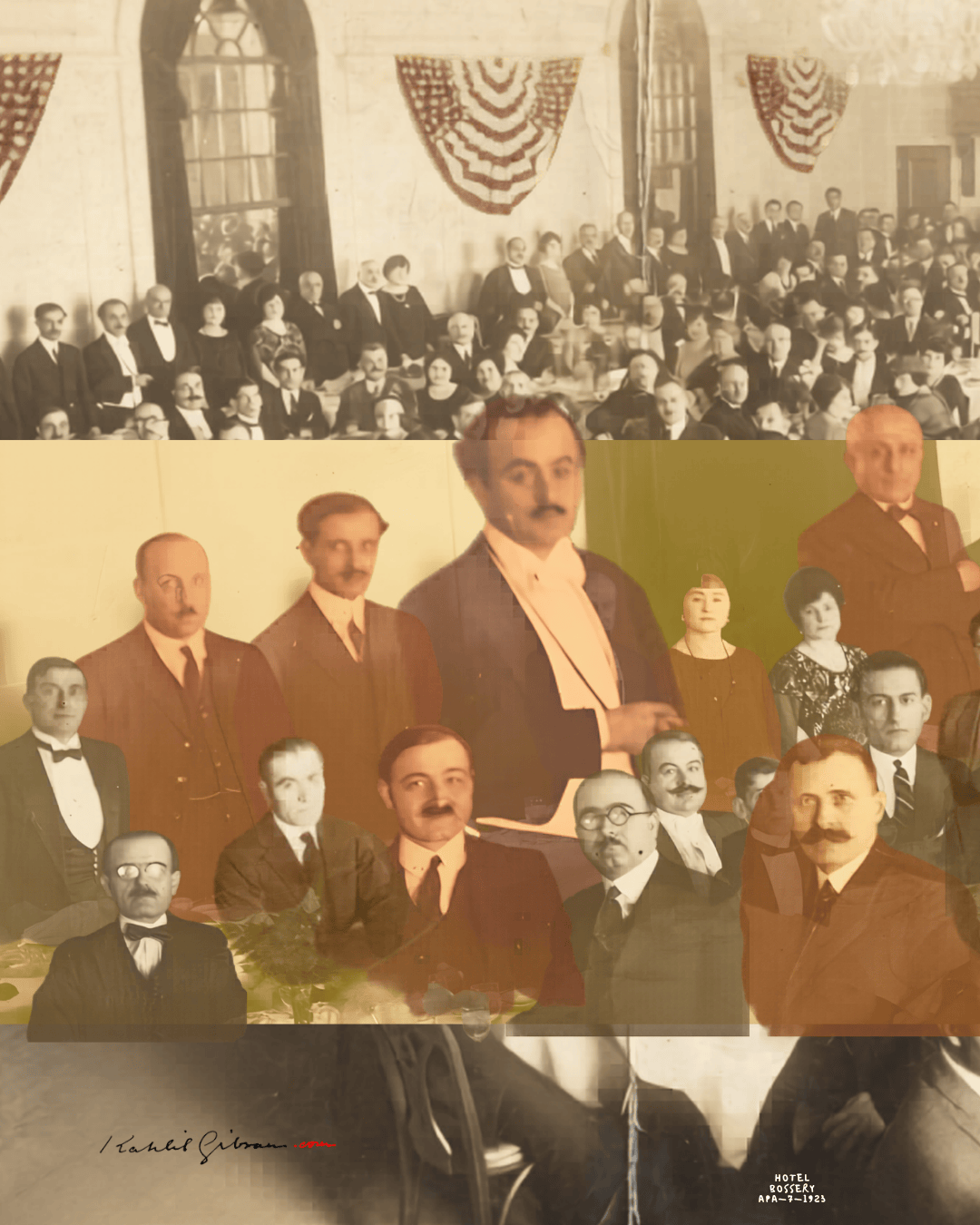
By the spring of 1923, "Al-Hoda" had endured for a remarkable twenty-five years. The Lebanese community in New York decided to mark the occasion in grand style, organising a Silver Jubilee Banquet in Mokarzel's honour. The impetus came from the community's business and literary leaders, who wished to formally acknowledge the publisher's twenty-five-year campaign for Lebanese independence and his tireless service to immigrants across the continent. A committee was formed, invitations sent to notables across the community, and on April 7, 1923, the ballroom of the Hotel Bossert in Brooklyn was filled with some three hundred guests.
It was, by all accounts, a singular evening. Poets, writers, businessmen, intellectuals, and professionals had gathered together — a cross-section of Lebanese immigrant society at its most accomplished. Eloquent speeches and elegant poetry filled the hours; the proceedings stretched so late into the night that the master of ceremonies, Joseph Namaan Malouf, was finally obliged to cancel several remaining speeches at two o'clock in the morning so that Naoum Mokarzel himself could address the room. His words, when they came, were few and full of gratitude.
"Among the speakers that evening was Kahlil Gibran. His tribute was characteristically incisive: a meditation not merely on a man, but on the meaning of journalism itself."
• ❧ KGC ❧ •
III
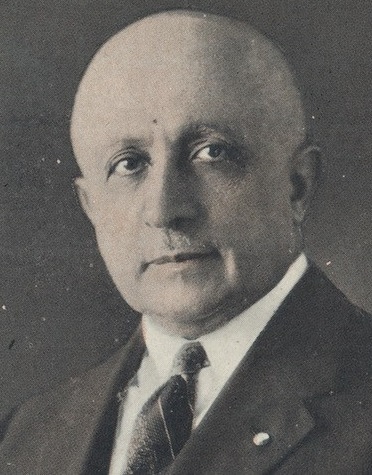
Naoum Mokarzel was a man of sharp edges and deep loyalties. Born in the mountain village of Freike in present-day Lebanon in 1864, he carried with him to America the political passions of a generation that had watched their homeland divided and diminished by Ottoman rule and Great Power rivalry. The cause of an independent, Maronite-led Lebanon was not merely a political programme for Mokarzel — it was a vocation, one he pursued with the same relentlessness that he brought to his journalism.
His newspaper became the principal organ of that cause in the diaspora. Through its columns he lobbied American politicians, organised community petitions, and maintained a running commentary on events in the Levant that kept thousands of immigrants connected to the fate of their ancestral home.
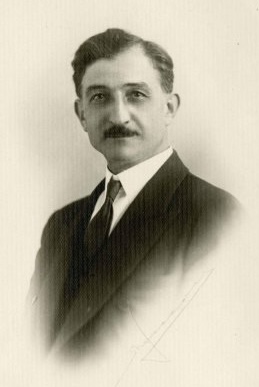
After Naoum's death in Paris in 1932, "Al-Hoda" passed to his younger brother Salloum Antoun Mokarzel (1881–1952), who founded "The Syrian World" (1926–1932), the first English-language magazine in the United States established by a Syrian immigrant. After Salloum's death in 1952, the paper came under the management of his daughter Mary Mokarzel — who became its historian as well as its steward, and whose biography of the paper remains the most authoritative account of its life and legacy.
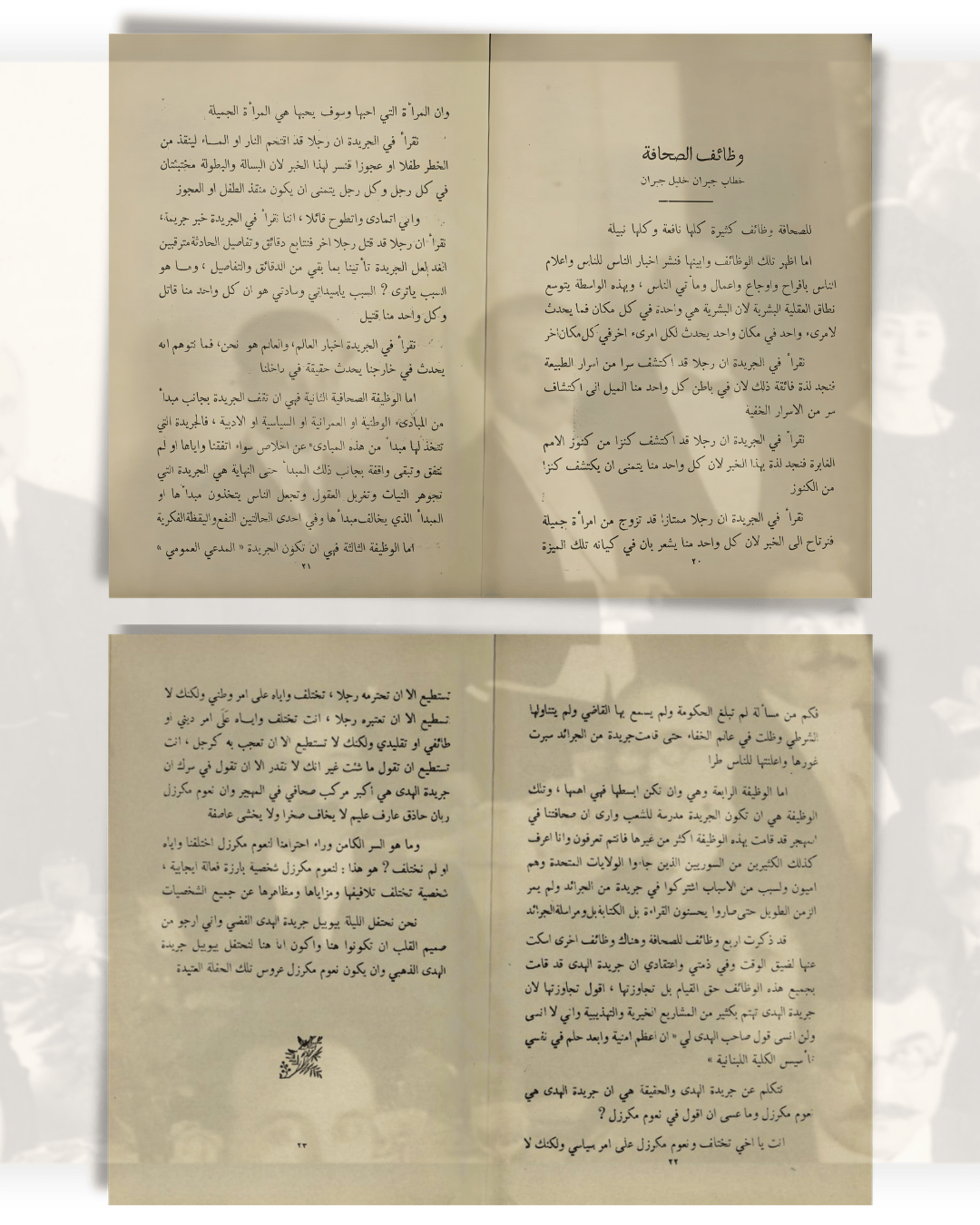
The speech Gibran delivered at the Silver Jubilee of "Al-Hoda", titled "Waza'if al-Sihafa" ("The Functions of Journalism"), was not a conventional toast. It was, in the tradition of the best Arabic oratory, a philosophical essay delivered aloud — a sustained reflection on the meaning and purpose of the journalistic enterprise, culminating in a portrait of the man whose newspaper had embodied those purposes for a quarter of a century. What follows is Gibran's address, translated into English, presented here in full.
• ❧ KGC ❧ •
IV
The Functions of Journalism
Journalism has many functions — each of them beneficial, each of them noble. The most important of these is to convey people's news to one another, informing them and allowing them to share in the joys and sorrows of what takes place among human beings. In doing so, it broadens the scope of human experience, for humanity is one: what happens in one place happens for others, and what occurs to one person in one place occurs to another elsewhere.
We read in the newspaper that a man has uncovered a secret among the mysteries of nature, and we take pleasure in this, because within each of us there is a desire to discover what is hidden. We read that a man has found a treasure among the treasures of the earth, and we delight in such news, because each of us longs to discover a treasure. We read that a distinguished man has married a beautiful woman, and we rejoice in this, because each of us senses within himself that same distinction. And the woman, at times, sees herself in that beautiful woman. We read that a man has thrown himself into fire or water to save a child or a helpless old person; we celebrate such news because courage and heroism lie hidden in every human being, and each of us wishes to be that child or that old person.
"When I read in the newspaper of a crime — of one man killing another — I say that each one of us is a killer, and each one of us is a victim."
And I go further: when I read in the newspaper of a crime — of one man killing another — I examine its details and reflect: what is the cause? The cause is human. And I say that each one of us is a killer, and each one of us is a victim. We read in the newspaper the news of the world — and the world is ourselves; what happens outside has, in truth, taken place within us.
The Functions of Journalism
The second function of journalism is that the newspaper should stand by a principle — whether national, civic, political, or literary. A newspaper that adopts a principle must be sincere toward it, whether we agree with it or not, and must remain faithful to it to the end. It is the newspaper that puts principles to the test and brings them into action, leading people either to adopt a principle or to abandon one that contradicts it. In either case, there is a growth of thought.
The third function is that the newspaper should be the defender of the people. How many tragedies go unheard by the government, which neither learns of them nor addresses them, remaining hidden in obscurity until a newspaper seeks them out, uncovers their truths, and makes them known to the people.
The fourth function — though it may seem the simplest — is, in my view, the most important: that the newspaper should serve as a school for the people. I see that our newspaper in America has fulfilled this role more than others, and I acknowledge it. I know many Syrians who emigrated to the United States and who, for various reasons, subscribed to a newspaper; with time, they came not only to read, but even to write through newspapers.
""Al-Hoda" has been the greatest journalistic vessel upon the sea, and Naoum Mokarzel is a skilled and experienced sailor, who fears neither rocks nor storms."
I have mentioned four functions of journalism, though there are others I have omitted for lack of time and space. Yet I believe that the newspaper "Al-Hoda" has fulfilled these functions — and even surpassed them. I say surpassed because "Al-Hoda" has been concerned with many charitable and humanitarian endeavours. Nor do I forget what the owner of "Al-Hoda" once said to me: "My greatest wish and my one dream is to establish the Lebanese College."
We speak of "Al-Hoda," and the truth is that "Al-Hoda" is Naoum Mokarzel. And what can be said of Naoum Mokarzel? You, my brother, may disagree with him on a political matter, yet you cannot help but respect him. You may oppose him on a religious, sectarian, or traditional issue, yet you cannot help but admire him as a man. You may say what you wish, but inwardly you cannot deny that "Al-Hoda" is the greatest journalistic vessel upon the sea, and that Naoum Mokarzel is a skilled and experienced sailor, who fears neither rocks nor storms.
What, then, is the hidden secret behind our respect for him, whether we agree with him or not? It is this: Naoum Mokarzel is a strong, effective, and striking personality — one marked by both its virtues and its flaws, and for that very reason it stands out among all others.
Tonight we celebrate the newspaper "Al-Hoda," and I sincerely hope that you will be here with me in celebrating it, and that Naoum Mokarzel will be the bridegroom of this splendid occasion.
• ❧ KGC ❧ •
V
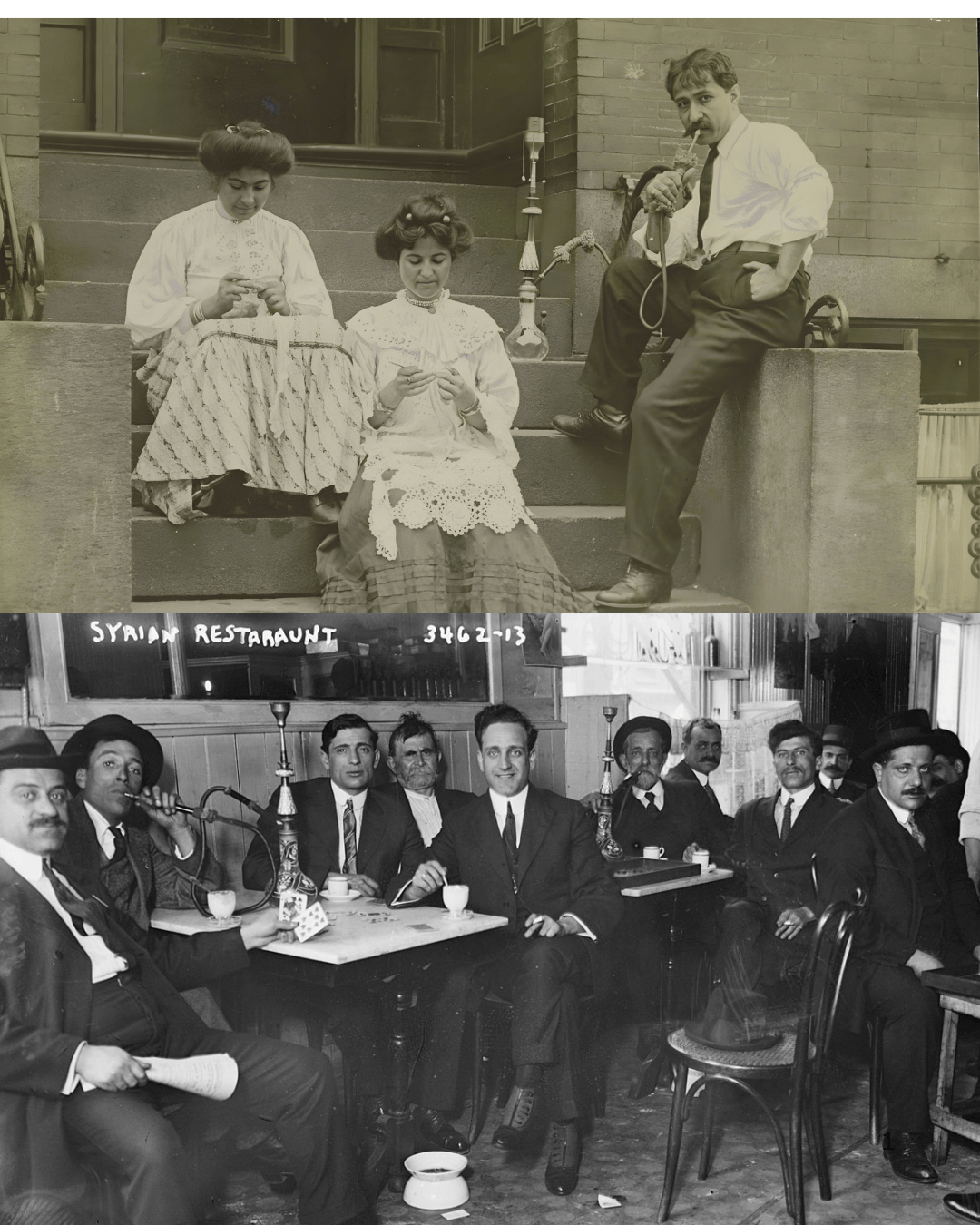
Gibran's speech that evening was — and remains — one of the most eloquent meditations on the role of the press ever delivered in the Arabic language. That it was spoken not in Beirut or Cairo but in a Brooklyn hotel ballroom, to an audience of Lebanese immigrants dressed in evening wear against a backdrop of American bunting, speaks to something remarkable about the world that "Al-Hoda" helped to create.
For the Lebanese and Syrian diaspora of the early twentieth century, a newspaper was far more than a printed sheet. It was a community centre, a political platform, a literary journal, a language school, and an act of collective memory. To subscribe to "Al-Hoda" was to declare that one's identity as a Lebanese or Syrian was not something to be shed at the port of entry, but something to be cultivated, argued over, and passed on to one's children.
Naoum Mokarzel understood this with the instincts of a born publisher. He understood too — and this is perhaps his greatest legacy — that a newspaper could be an agent of transformation as well as a mirror of its community. The immigrants who learned to read by following its columns, who were drawn into public life by its controversies, who found their voices first as letter-writers and later as contributors to its pages — these were among the most important readers any editor could hope for.
""I know many Syrians who emigrated to the United States and who, for various reasons, subscribed to a newspaper; with time, they came not only to read, but even to write through newspapers." — Kahlil Gibran"
That transformation — from reader to writer, from subject to citizen — is the true measure of what "Al-Hoda" accomplished over its seven decades in print. The paper continued publication until 1971, outlasting its founder by nearly four decades. Today, its archive stands as an irreplaceable record of Arab-American life — of the aspirations, arguments, sorrows, and celebrations of a community that remade itself in the New World without ever quite forgetting the old one.
❁
Source Note The original Arabic text of Gibran's address was published in al-Shawa'ir al-Sharifa ("The Noble Sentiments", New York: Matbaʻat Jaridat al-Hoda al-Yawmiyya, 1924, pp. 20–23). Edited by Yaqub Rouphail, the collection contains contributions by many notable Arab-Americans including Mikhail Naimy (1889–1988), Nadra Haddad (1881–1950), and the feminist writer Afifa Karam (1883–1924).
All Rights Reserved © Copyright Glen Kalem-Habib and Francesco Medici 2026