He shared Gibran’s Paris years, sketched him at the Café du Dôme, and outlived him by three decades — sculpting the monuments of a country that barely had an art school. Francesco Medici on Yusuf Huwayyik.
By Francesco Medici
• ❧ KGC ❧ •
KAHLIL GIBRAN COLLECTIVE
By Francesco Medici · Kahlil Gibran Collective · 2026 · kahlilgibran.com
The Life and Art of Yusuf Huwayyik
• ❧ KGC ❧ •
I
The first art school founded in Lebanon was the inaugurated in Beirut in 1937, followed some twenty years later by the establishment of the American University of Beirut's Department of Fine Arts and Art History. In the 1950s and 1960s, the first art galleries emerged, finally introducing the country to the works of local artists. While younger generations were able to train in their homeland, those who preceded them — generally from well-to-do Christian families — were compelled to turn to European academies in order to refine their talent and gain mastery over artistic styles and techniques.
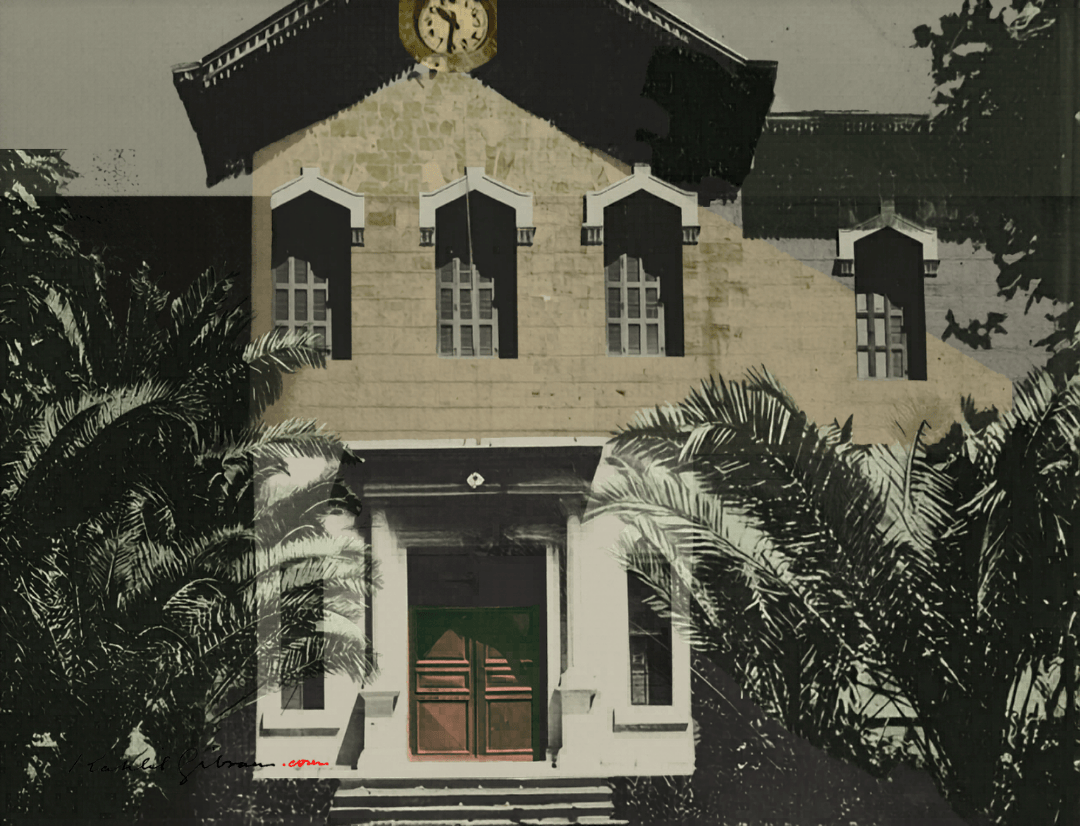
Among the many art students — particularly foreigners — who flocked to Paris between the late nineteenth and early twentieth centuries, the Académie Julian enjoyed remarkable popularity. It imposed no stringent admission requirements and offered highly flexible instruction: courses in drawing, painting, and sculpture could be attended for a few months or for an entire year. The list of artists who studied at, or gravitated around, this private institution (founded by the painter and engraver Rodolphe Julian in 1868 and active until 1968) is rich, diverse, and distinguished: Henri Matisse, John Singer Sargent, Fernand Khnopff, Edmund Dulac, Marcel Duchamp, Maurice Prendergast, Édouard Vuillard, Maurice Denis, Pierre Bonnard, and Paul Sérusier, to name but a few. To these illustrious figures must be added at least a couple of Lebanese artists, one of whom has today been almost entirely — and unjustly — forgotten.
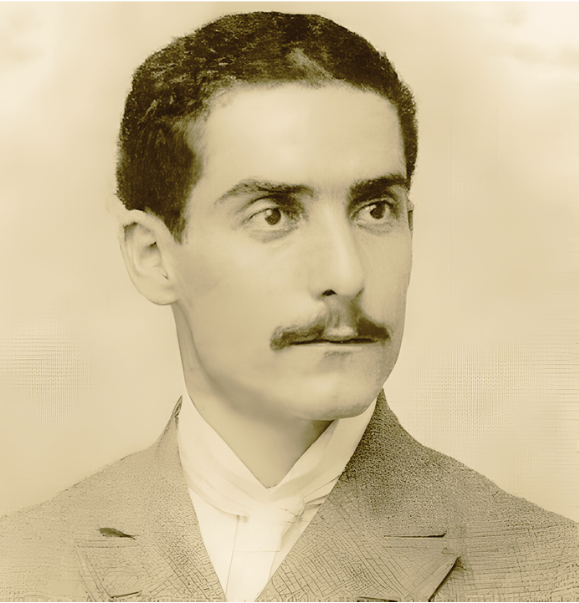
The son of Sa'd Allah al-Huwayyik (1853–1915), administrative advisor to the Mutasarrifate of Mount Lebanon (1902–1907), and nephew of the Maronite Patriarch Ilyas Butrus al-Huwayyik (1843–1931), Yusuf Huwayyik was born in Helta, in present-day northern Lebanon, on 9 March 1883. In 1898 he left his native village for Beirut, where he enrolled at the Collège de la Sagesse (Madrasat al-Hikmah). It was during this period that his deep and enduring friendship with Kahlil Gibran, his contemporary and fellow student, took root — a bond destined to shape both men's intellectual and artistic development. Together, the two youths founded the school periodical al-Manarah ("The Lighthouse"), in which, alongside a third student, they published articles and drawings.
In 1903, upon completing his studies, Gibran returned to the United States, where his family had emigrated in 1895, while Yusuf departed for Italy to pursue studies in painting, sculpture, and architecture at the Accademia di Belle Arti in Rome. These formative years proved decisive, particularly in the field of sacred art, and were enriched by numerous journeys to Naples, Florence, Milan, and Venice, as well as, in later years, to Spain, Greece, Egypt, and Iraq. In 1909 he moved to Paris, where he effectively inaugurated his artistic career. Although he initially devoted himself to painting — his earliest passion — he gradually turned toward sculpture under the decisive influence of the revered master Auguste Rodin.
• ❧ KGC ❧ •
II
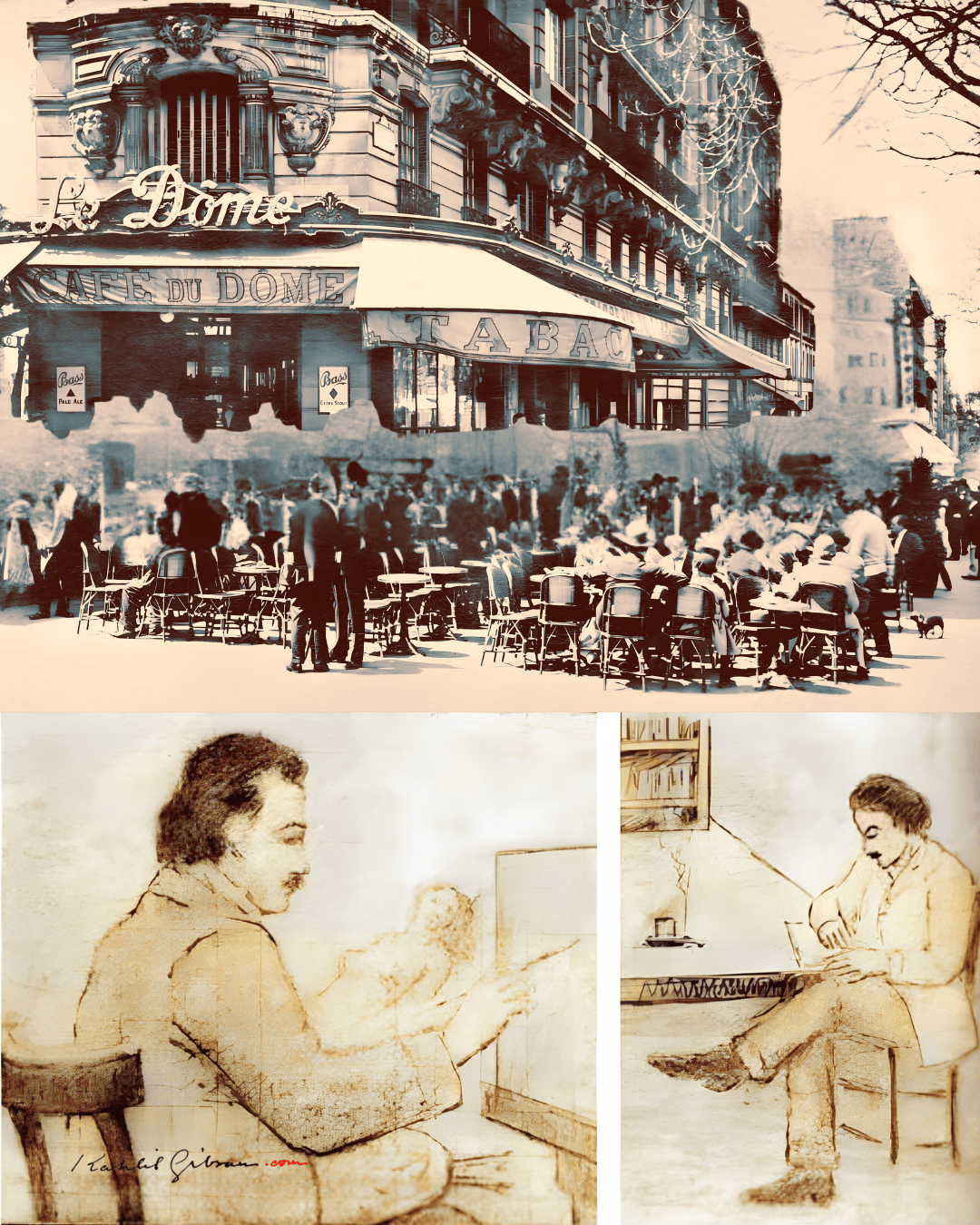
Reunited with Gibran in the Ville Lumière, Huwayyik entered into a close and enduring artistic companionship. The two men, frequent visitors to the celebrated Café du Dôme in the Montparnasse district, supported one another, visited museums and galleries together, and shared the cost of hiring models who posed in their studio apartment. Short on financial resources, they abandoned the Académie Julian and continued their studies independently, having come to recognise their affinity with the classical tradition rather than with Fauvism, Cubism, and the other "currents of artistic activity in Paris," which they regarded as a "mad revolt in full swing against art and beauty." The evocative oil portrait of Gibran painted by Huwayyik in 1910, entitled Portrait of a Parisien, is today preserved at the Gibran Museum in Bsharri, Lebanon.
In the late spring of 1910, the writer Ameen Rihani (1876–1940) joined them in Paris. Throughout the summer, the three compatriots were inseparable, humorously referring to themselves as "the Father, the Son, and the Holy Ghost." In 1938, Huwayyik would sculpt a bust of Rihani, now preserved in the writer's house-museum in Freike, Lebanon.
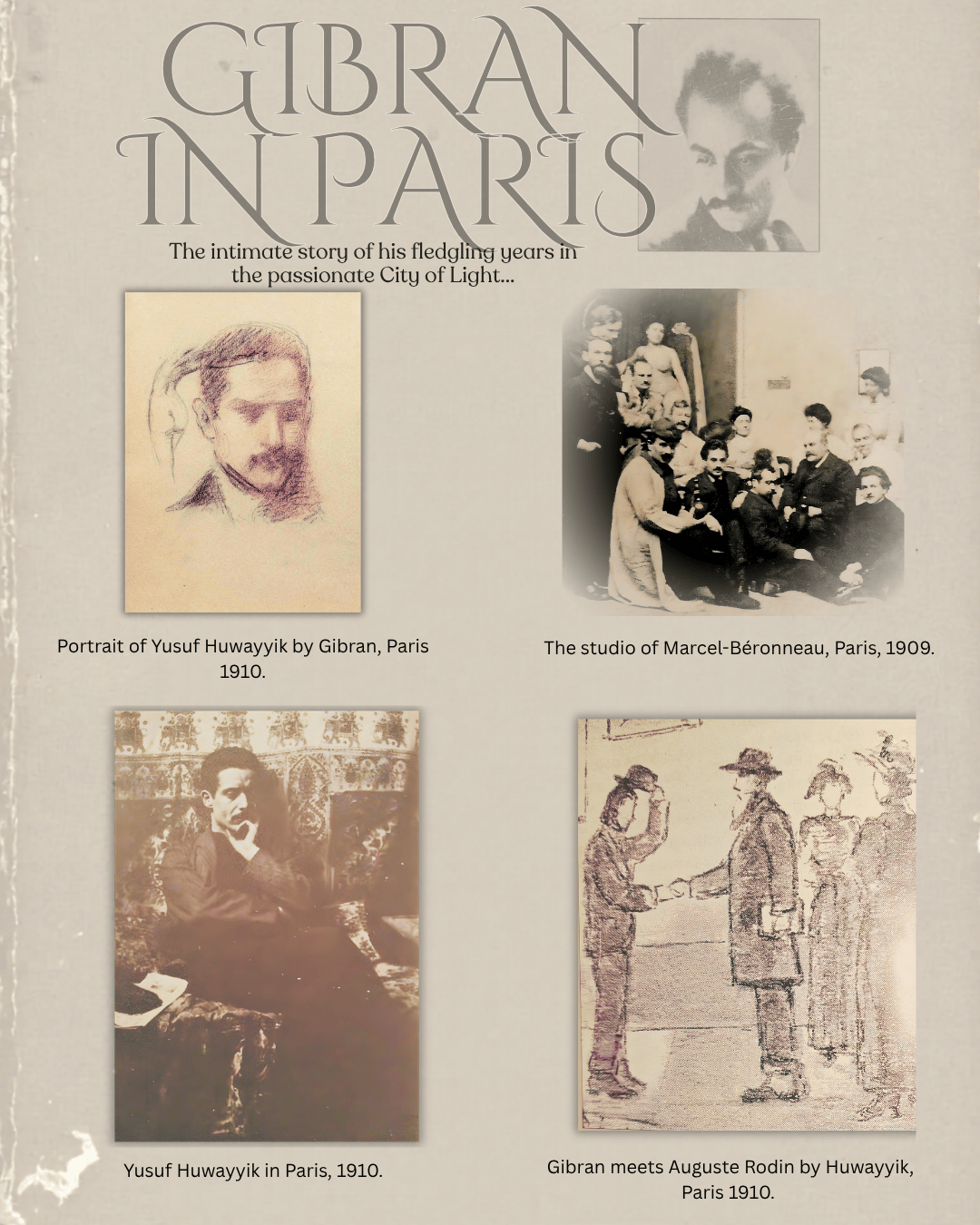
During their Parisian years, Huwayyik and Gibran encountered numerous prominent intellectuals, political activists, and artists, among them the celebrated American dancer Isadora Duncan (1877–1927), who purchased two of Huwayyik's paintings for the sum of 500 francs. It was also during this period that Huwayyik discovered the work of his favourite author, the French thinker Ernest Renan (1823–1892), whose monumental Histoire des Origines du Christianisme (1866–1881) he deeply admired. At the same time, he began translating Dante Alighieri's Divine Comedy into Arabic — a project that would remain unfinished and unpublished. Thanks to a surviving account of that fruitful Parisian period, it is known that he translated at least the canto of Paolo and Francesca and submitted the result to Gibran himself:
I read the translation of the fifth canto to him, in which Dante discusses love. I repeated some phrases in Italian for the sake of clarity. I raised my voice when I came to a dramatic passage until I reached the last part where Dante says, "And I dropped like a dead body." I turned toward Gibran to see the effect my reading had on him, and there he was, with his head downward and his eyes wet with tears. — Yusuf Huwayyik, Gibran in Paris, trans. M. Moosa (New York: Popular Library, 1976), pp. 90–91.
• ❧ KGC ❧ •
III
In the autumn of 1910, Kahlil and Yusuf both left France — the former heading to Boston, the latter to Lebanon. The two companions could not have imagined at the time that they would never see each other again. (Gibran would die at just 48 in New York, without the chance to visit either Europe or Lebanon again.) The nostalgia for their extraordinary bond clearly emerges in a letter sent the following year by Gibran to his friend overseas:
Boston, 1911 'Although this city is full of friends and acquaintances, I feel as if I had been exiled into a distant land where life is as cold as ice and as grey as ashes and as silent as the Sphinx. My sister is close by me, and the loving kinfolk are around me everywhere I go, and the people visit us every day and every night, but I am not happy. My work is progressing rapidly, my thoughts are calm, and I am enjoying perfect health, but I still lack happiness. My soul is hungry and thirsty for some sort of nourishment, but I don't know where to find it. The soul is a heavenly flower that cannot live in the shade, but the thorns can live everywhere. This is the life of the Oriental people who are afflicted with the disease of fine arts. This is the life of the children of Apollo who are exiled into this foreign land, whose work is strange, whose walk is slow, and whose laughter is a cry.
How are you, Yusuf? Are you happy among the human ghosts you witness every day on both sides of the road?
— Gibran
Huwayyik continued travelling between Europe and the Middle East until the late 1930s. In his unpublished memoirs, preserved by his heirs in Lebanon, he speaks of the freedom of Western peoples and their civilisation, lamenting the bitter fate of his homeland, subjected for four centuries to the yoke of the Sublime Porte. Meanwhile, as his reputation as an artist spread throughout Greater Syria, his political ideas began to arouse suspicion and distrust. It is known that spies sent by Djemal Pasha (1872–1922) — one of the triumvirs who led the Ottoman Empire from 1913 until the end of the First World War — closely monitored the sculptor's activities, considering him a dangerous subversive.
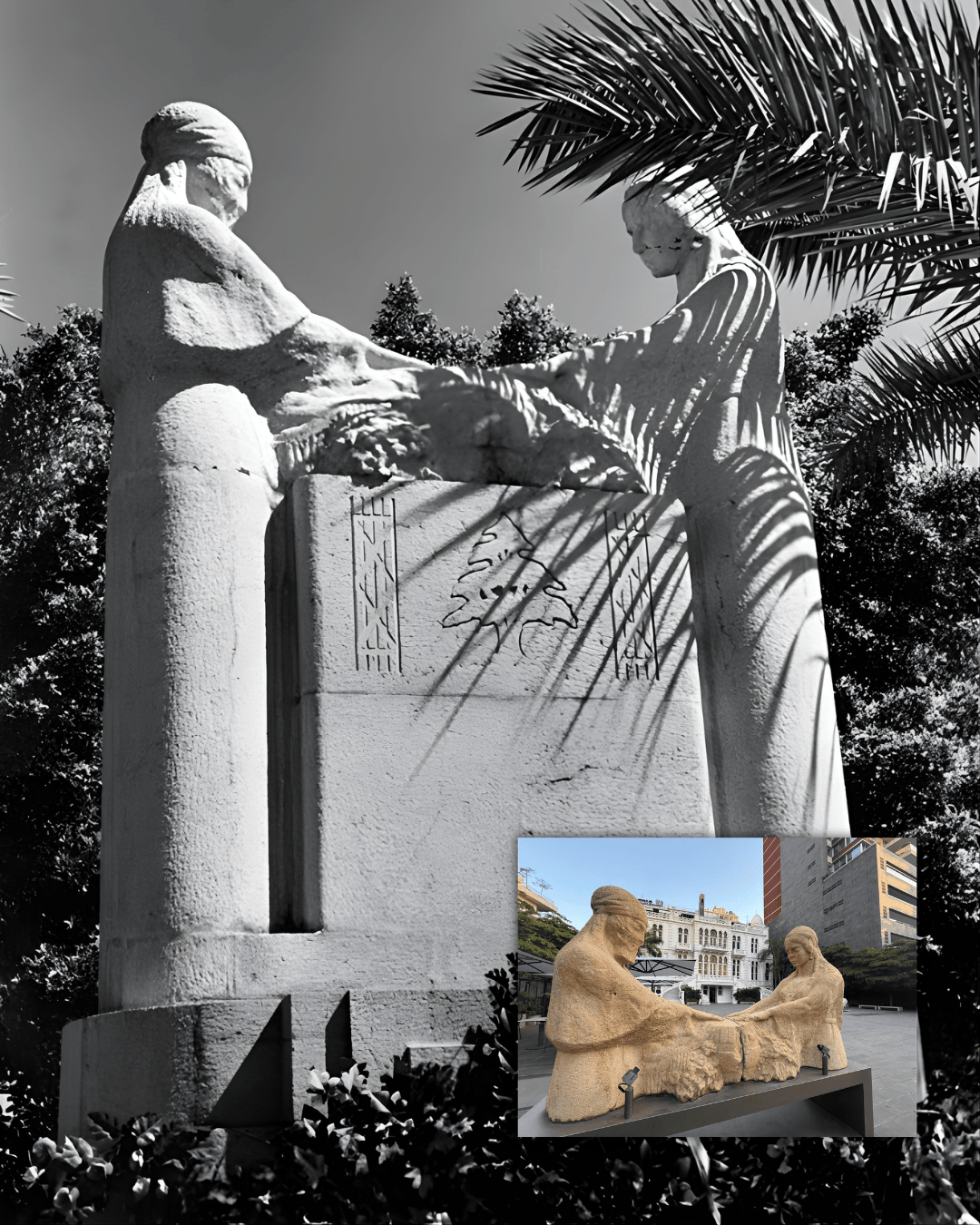
On 6 May 1916, now commemorated in Lebanon and Syria as Martyrs' Day, numerous Syrian-Lebanese independence activists and nationalists were sentenced to death and publicly hanged in Beirut and Damascus by the Ottoman authorities. Huwayyik narrowly escaped the gallows only because he was residing abroad. That tragedy inspired one of his masterpieces: the Martyrs' Monument, originally placed in Al-Burj (later renamed Martyrs' Square) in Beirut. The work, commissioned during the French Mandate in Syria and Lebanon (1923–1946) and known as Les Pleureuses, was unveiled on 19 December 1930, and depicts two weeping women — one Christian and the other Muslim — facing each other and extending their hands toward one another. Unfortunately, in 1948 the stone sculpture was subjected to severe acts of vandalism and was removed in 1953, eventually being replaced in 1960 by a new bronze monument created by the Italian sculptor Renato Marino Mazzacurati (1907–1969). Huwayyik's original work was later restored and relocated to the gardens of the Nicolas Sursock Museum in Beirut.
• ❧ KGC ❧ •
IV
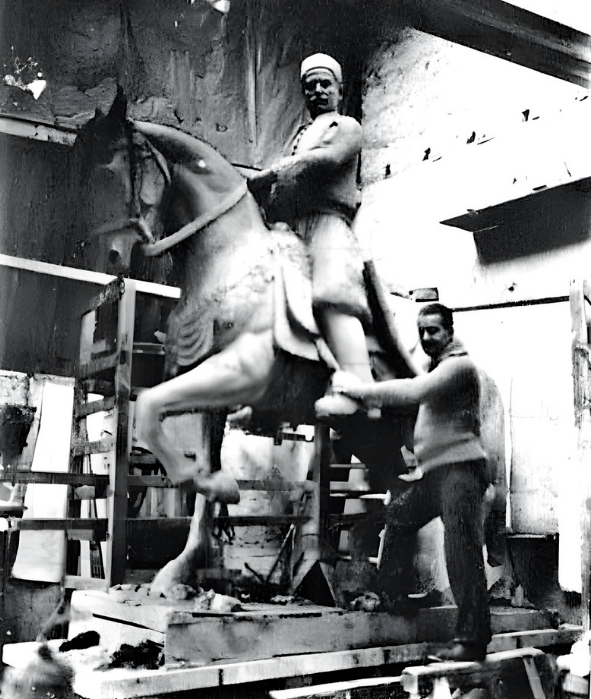
The sculptor worked for years on numerous busts and monuments that immortalise eminent figures of his time as well as from the past. In his view, portraying an individual meant accurately representing their lines and proportions, and therefore their soul, character, and thought — which is why critics have often described him as "a refined psychologist." Among his most notable subjects are the Lebanese patriot Youssef Bey Karam (1823–1889), the Lebanese painter Daoud Corm (1852–1930), the Egyptian poet Ahmed Shawki (1869–1932), Patriarch Huwayyik (his paternal uncle), Pope Benedict XV (1854–1922), and Faisal I (1885–1933), King of Iraq and Syria. It was indeed Huwayyik, thanks to his excellent relations with Vatican circles, who facilitated the historic 1919 meeting between the pontiff and the Hashemite ruler, whom he had met that same year in Paris during the Peace Conference.
In 1924, in Rome, Yusuf married Countess Anna Maria Paolini, and from their union was born Giorgio Hoyek (1925–2007) — the surname an imprecise Italian transliteration — who would go on to become a distinguished jurist. (A bust of Giorgio as a child, sculpted by his father, is part of the private collection owned by his descendants Ornella and Paola Hoyek.) The marriage ended after just one year, and Huwayyik returned to Lebanon, where he consolidated his reputation as a national artist, working almost exclusively on commissions from the Lebanese clergy or state. Many of his works, primarily sculptures, are therefore located inside churches or in public places. Some of his masterpieces can be admired in the Church of Our Lady of Lebanon in the Achrafieh district of Beirut, and in the chapel of the Maronite Sisters of Ebrine. There are also the monument to Patriarch Stephan Douayhy (1630–1704) in Ehden, and those dedicated to the Prophet Elijah and the pan-Syrian nationalist Antoun Saadeh (1904–1949). The paintings Our Lady of the Seven Sorrows and Christ in the Garden of Olives were donated to the Motherhouse of the Daughters of Charity of Saint Vincent de Paul in Paris. The artist also produced a number of bas-reliefs, medals, and commemorative plaques.
In 1939, after his definitive return from Europe, Yusuf settled in Aoura, in the Batroun district of northern Lebanon — a place surrounded by rocky formations and deep gorges. Here the artist built a small stone house at the foot of an ancient oak tree, in whose shade he would spend long hours meditating, writing his memoirs, and occasionally receiving visits from relatives, friends, and admirers. Inside the modest dwelling he set up a small studio where some of his busts, portraits, and other works of art can still be admired today. Over time, however, his name and work fell into oblivion: his style — at once realistic and romantic, if not symbolist — no longer seemed to arouse interest. He gradually withdrew into private life, without ceasing to sculpt, but doing so solely for the pure and personal pleasure of the senses and the eyes. Belonging to his final artistic phase is a marvellous series of sensual female nudes that evoke themes of love, motherhood, and simple rural life.
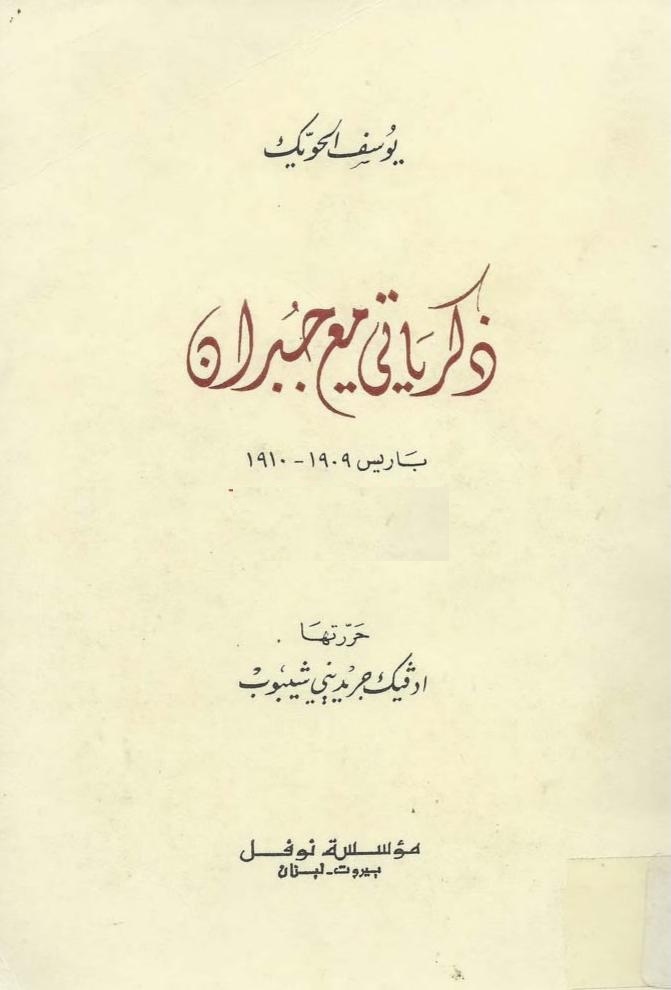
In 1957, in Beirut, he published Dhikrayati ma'a Jubran, translated into English and released twenty years later in New York under the title Gibran in Paris. It is a mémoire of the two-year Parisian period (1909–1910) spent in close contact with his youthful friend. The work consists of twenty-five chapters — as many stories narrated in the form of dramatised conversations — and has the undeniable merit of being easy to read, thanks also to a sober, discreet, and balanced style.
At the beginning of 1962, the artist's already fragile health worsened significantly. On medical advice, Huwayyik left his humble home in Aoura for the last time to move to Haret Sakher, in the city of Jounieh, where he spent the last days of his life in the care of his sister Mhabbé. His final wishes, entrusted to his nephew Yusuf Richa, read: "I wish for a private funeral, a simple coffin, and a gravestone bearing no inscription of my name. I wish to be buried in Helta, together with the other members of my family, without pomp or honours."
At his death, which occurred on 23 October 1962, some recalled his words: "Art plays a fundamental educational role because it is the touchstone of the development and civilisation of peoples." A local newspaper wrote: "With Yusuf Huwayyik, our country has lost the dean of contemporary Lebanese sculpture."
❁
Notes
Yusuf Huwayyik, Gibran in Paris, translated by M. Moosa (New York: Popular Library, 1976), pp. 90–91.
Kahlil Gibran, A Self-Portrait (New York: Citadel Press, 1959), p. 37.
Yusuf al-Huwayyik, Dhikrayati ma'a Jubran. Baris 1909–1910, Dar al-Ahad, Bayrut 1957.
All Rights Reserved © Copyright Francesco Medici 2026