In 1905 the young Kahlil Gibran published his very first book — a slim hymn in prose to the art of music. Francesco Medici traces the melodies that ran through Gibran’s life, from the ‘Atābā of Bišarrī to the symphonies of Boston, and from a love declared in red ink to the funeral marches that carried him home.
By Francesco Medici
• ❧ KGC ❧ •
KAHLIL GIBRAN COLLECTIVE
By Francesco Medici · Kahlil Gibran Collective · 2026 · kahlilgibran.com
If you sing of beauty though alone in the heart of the desert you will have an audience.
Inspiration will always sing; inspiration will never explain.
A great singer is he who sings our silences.
— Kahlil Gibran1
The literary debut of Kahlil Gibran (Ǧubrān Ḫalīl Ǧubrān, 1883–1931) can be traced to a decisive encounter that took place in Boston in May 1904 between the young artist from Mount Lebanon — who had emigrated to America at the age of twelve and had already held several exhibitions, with his visual works receiving enthusiastic reviews from the local press — and his fellow countryman Ameen Goryeb (Amīn al-Ġurayyib, 1880–1971). The latter had founded the Arabic-language daily newspaper “al-Mohajer” (an Anglicized transliteration of “al-Muhāǧir,” meaning “The Emigrant,” 1903–1909) in New York the previous year. The newspaper’s offices were located at 21 Washington Street, at the southern tip of Manhattan, precisely in the area of the American metropolis where, since the final decades of the nineteenth century, a genuine Arab neighborhood had been taking shape. Populated largely by immigrants from the Middle East, this district became known as “Little Syria.”
The journalist was immediately impressed by Gibran’s extraordinary talent and vibrant personality. Gibran eagerly showed him the pencil and charcoal sketches he had drawn in his notebooks. Goryeb’s attention, however, was drawn primarily to the many writings recorded there — thoughts, aphorisms, poems, and short stories — to such an extent that he offered the author a regular collaboration with “al-Mohajer” for a salary of two dollars a week. It was not long before a new column entitled Dam‘ah wa Ibtisāmah (“A Tear and a Smile”) was launched in the newspaper’s pages. Gibran’s name appeared prominently as the columnist, accompanied by a brief yet highly complimentary editorial personally written and signed by Goryeb:
This newspaper is very fortunate to be able to present to the Arabic-speaking world the first literary fruit of a young artist whose drawings are admired by the American public. This young man is Ǧubrān Ḫalīl Ǧubrān of Bišarrī [Besharri], the famous city of the braves. We publish this essay without comments under the caption of “Dam‘ah wa Ibtisāmah,” leaving it up to the readers to judge it according to their tastes.2
The first piece by Gibran to appear in “al-Mohajer” was entitled Ru’yā (“Vision”),3 and it set the tone for many of the writings that followed. It is a text imbued with lyricism, in which the author places at its center “the human heart, imprisoned by matter and victimized by the laws of mortals.”4 These contributions, initially occasional and becoming more regular especially between 1906 and 1908, brought him increasing recognition and were later collected in the anthology Kitāb Dam‘ah wa Ibtisāmah. The title of the collection, which directly echoes that of the newspaper column, is particularly fitting: tears and laughter represent for the young writer the two poles of existence and thus also constitute the keys through which an understanding of humanity may be attained. Joy can only be experienced through contrast — that is, only by one who has endured the deepest sorrow. Gibran felt fully justified in asserting this conviction, especially in light of the devastating succession of family bereavements he suffered between 1902 and 1903, when, within the span of only fifteen months, he lost his younger sister, his half-brother, and finally his mother. Accordingly, these early writings, marked predominantly by profound despair and by a passionate, vehement denunciation of the injustices of the world, occasionally open onto fleeting moments of radiant optimism.
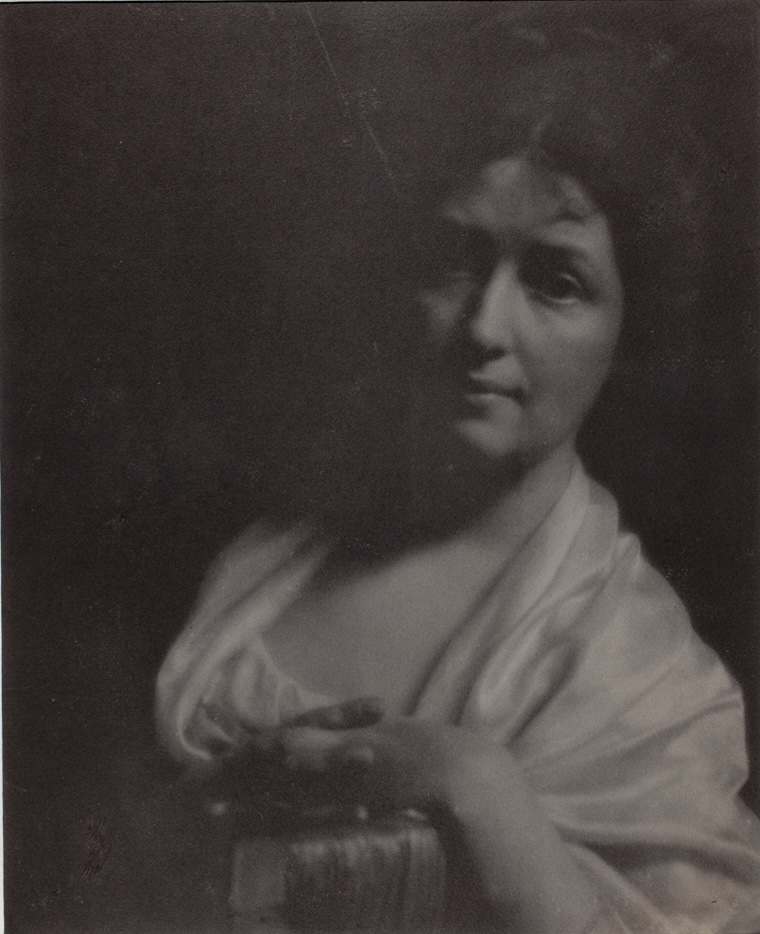
The reasons for Gibran’s success in the early years of the twentieth century — well before his fame became international through works translated into or directly written in English, and above all through The Prophet,5 which is now available in more than one hundred languages — are to be found primarily in his popular appeal:
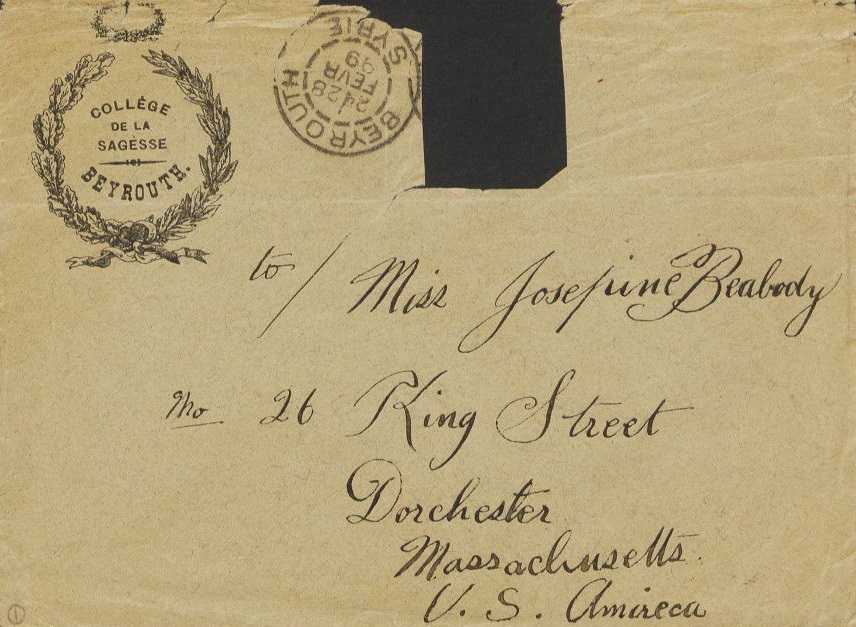
Four years of college in Beirut [at the Collège de la Sagesse (Madrasat al-Ḥikmah), from 1898 to 1902] had not fully equipped him to perfect his writing in Arabic, and there is no record of any friendship with an Arabic scholar in Boston to whom he might have turned — indeed, he had formed no strong attachments within the Syrian community. He was forced to resort to his essentially peasant’s ear when putting down his thoughts. Ignoring much of the traditional vocabulary and form of classical Arabic, he began to develop a style which reflected the ordinary language he had heard as a child in Besharri and to which he was still exposed in the South End. This use of the colloquial was more a product of his isolation than of a specific intent, but it appealed to the thousands of Arab immigrants who responded to this unique and simplified treatment. Many in his audience, barely literate in their native tongue, felt comfortable with his unconscious modernization of their language.6
Other aspects of Gibran’s style, however, were far less naïve. He possessed a remarkable knowledge of both Arabic literature and the literatures of Europe and the United States, drawing clear inspiration from each of them. While his Western models were chiefly the English, French, and German Romantics, together with the American Transcendentalists, on the Arabic side he naturally looked to the pioneers of the Nahḍah (the Arab socio-political and cultural renaissance), such as the Syrian Francis Marrash (Faransīs Marrāš, 1836–1873), one of the earliest innovators of prose poetry (al-ši‘r al-manṯūr). Nor should one overlook the extraordinary flourishing of the Arabic-language press in the United States at the turn of the twentieth century. Some of these newspapers and journals enjoyed wide circulation and exerted a strong influence on the opinions that immigrants formed both about the New World and about the life they had left behind across the ocean. In America, Syrian and Lebanese immigrants were highly receptive to new stimuli and new forms of expression, and Gibran, with the simplicity of his language and the frankness with which he expressed his ideas, was able to provide them with both.
Numerous sources attest to how seriously the young writer regarded his role as a guide for his people who had settled on the American continent. Joseph Nahas (Yūsuf Naḥḥās, 1896–1987), an employee of “al-Mohajer,” for example, recalled hearing Gibran utter the following words when he first met him in the newspaper’s offices:
For the privilege of having my manuscript published, sharing my thoughts with my fellow countrymen, and the entire reading world, I would be willing to render free service in the publishing house, in any capacity — not excluding sweeping.7
The Lebanese sculptor Yusuf Huwayyik (Yūsuf al-Ḥuwayyik, 1883–1962), who studied alongside Gibran at the Académie Julian in Paris from 1909 to 1910, recounts in his memoirs of the two years spent in the Ville Lumière a conversation he once had with his youthful companion, who at one point is said to have remarked:
There is no doubt that books influence and shape the lives of nations. Writers and intellectuals stimulate people to think. It is with Voltaire and Rousseau that France began to think — even Napoleon could not stop it from thinking. I wonder when this miracle of thinking will happen in the East? And when and with whom the East will begin to think? […] Yes! With Gibran the East will begin to think.8
• ❧ KGC ❧ •
I
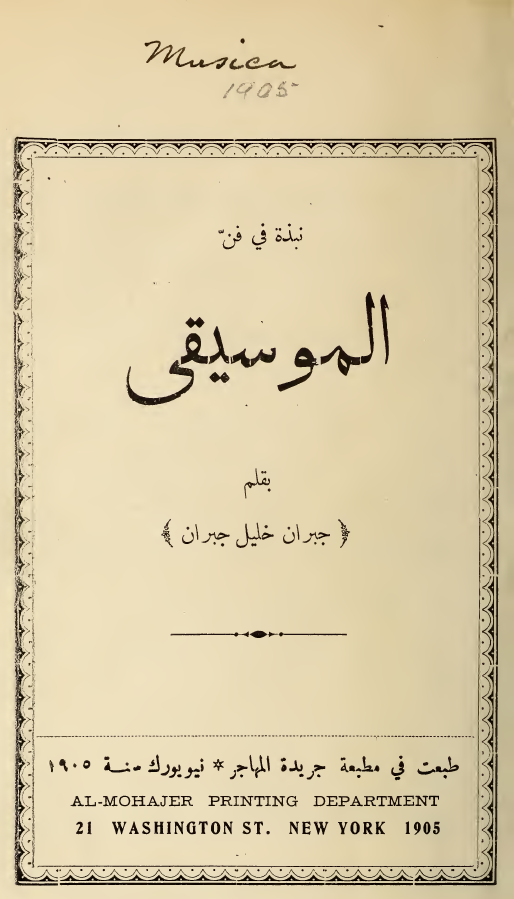
Nubḏah fī Fann al-Mūsīqá (“A Short Treatise on the Art of Music”), also known simply as al-Mūsīqá (“The Music”), belongs to this early, still immature phase of Gibran’s literary production. An autograph document by the author — a sort of curriculum vitae drafted in 1925 and preserved among the private papers of the American poet Witter Bynner (1881–1968) — states that the work was composed “at the age of 18,”9 thus around 1901. On a page of his biography of Gibran, the writer Mikhail Naimy (Mīḫā’īl Nu‘aymah, 1889–1988) portrays his friend and companion during an unspecified Boston night of that period; despite the late hour, he is still fully engaged in his work:
Gibran kept smoking and sipping coffee till away past midnight. While looking for a certain drawing he came upon a long article he had written in Arabic on music. It was one of his first literary efforts written a year before. On reading it over he began to correct a word here and to change a sentence there […]. As he read Gibran kept adding and changing, and as he reached the end he became quite convinced that the piece was well worth publishing in a separate booklet which would launch him as a writer among writers in the Arabic-speaking world. With that decision Gibran went to bed.10
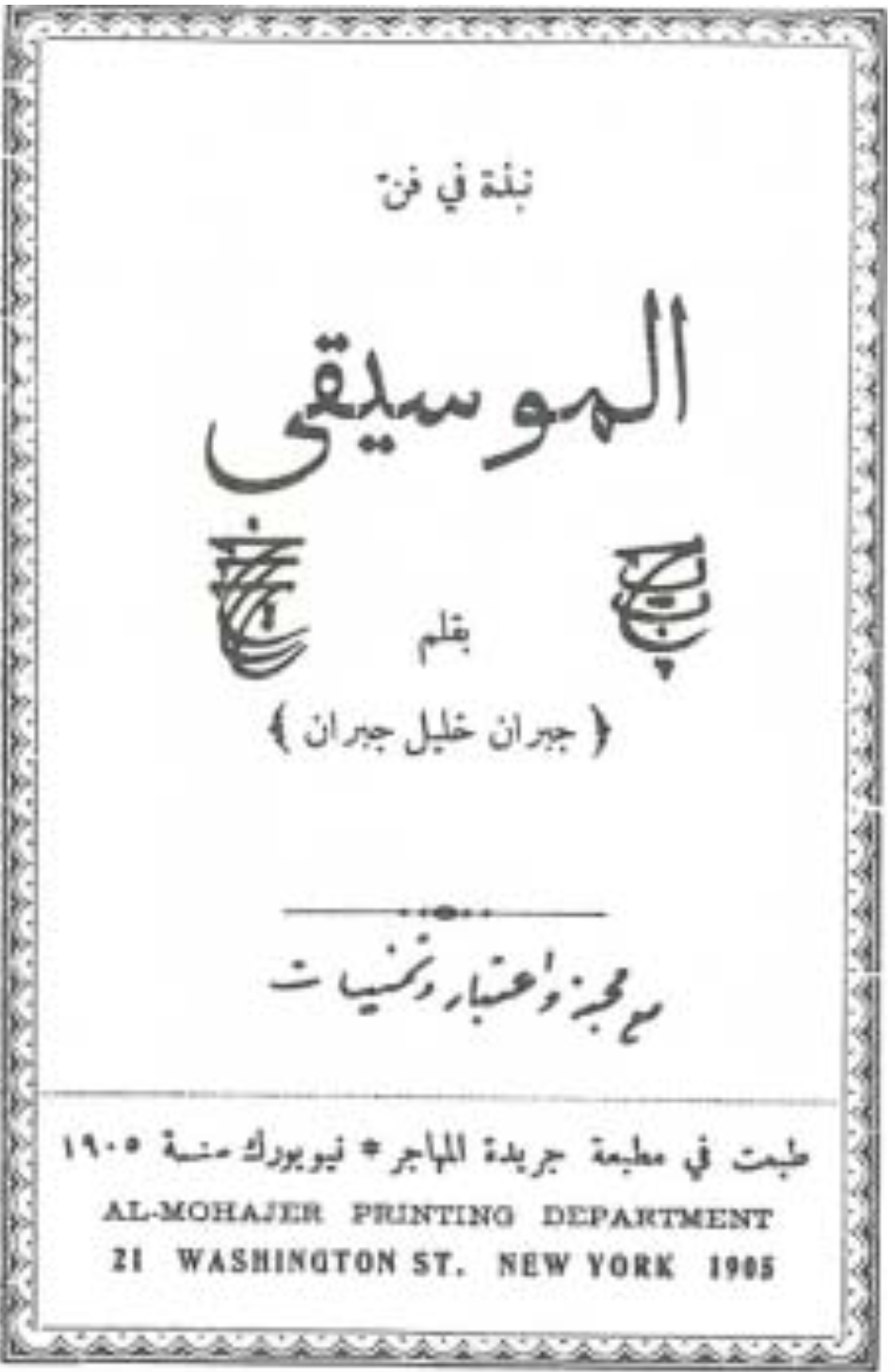
It was Goryeb, through “al-Mohajer” Printing Department, who fulfilled Gibran’s wish to see his first book published. The slim volume — barely twenty pages in all — appeared in New York in 1905, most likely sometime between late spring and early summer.11 Despite its title, the work is in fact hardly scientific in nature and amounts to little more than a short pamphlet containing a semi-amateurish hymn in prose, nostalgic and melancholy in tone, addressed to the art of music. As such, al-Mūsīqá appears to reveal more about its author — described by some critics as “a flowery sentimentalist”12 — than about its subject matter, for, as the Lebanese poet and critic Khalil S. Hawi (Ḫalīl Salīm Ḥāwī, 1919–1982) observed, Gibran’s “descriptions of music are so vague that we could as well apply them to poetry, love or any other subject which can excite emotion in the heart.”13 Suheil B. Bushrui (Suhayl Badī‘ Bušrū’ī, 1929–2015) wrote that “al-Mūsīqá, as a work of art, betrayed all the characteristics of neophyte apprenticeship. There was no lack of passion, but the fire of his imagination was dampened by an ornate style, a languid tone, and uncertain rhythm.”14 The revisions subsequently made to the text by Naimy, who collected Gibran’s complete works for publication nearly half a century later,15 suggest that the editor himself did not consider even the Arabic of the original entirely beyond reproach. Goryeb, on the other hand, motivated in part by a desire to promote the Romantic revolution then taking place in Arabic literature, deserves credit for recognizing in the ambitious young writer the potential that would, within a few decades, make him what is still regarded today as the most beloved Middle Eastern poet in the world. Gibran was also able to rely on Goryeb’s support — as both the author of the prefaces and the publisher — for his next two books as well, ‘Arā’is al-Murūǧ (“Nymphs of the Valley”)16 and al-Arwāḥ al-Mutamarridah (“Spirits Rebellious”),17 the latter of which is said to have earned him excommunication from the Lebanese Maronite Church.
• ❧ KGC ❧ •
II
In the prologue to al-Mūsīqá, the author compares the art of music to a conversation with the beloved woman, a symbolic figure perhaps inspired by one or more real female characters. During his boarding-school years in Lebanon, it is said that the young student became involved in a brief romantic relationship in Besharri with a certain Ḥalā al-Ḓāhir (1881–1955), whose family allegedly opposed the match because they considered Gibran’s social origins too humble. According to some scholars, this unhappy episode may have provided the inspiration for his novel al-Aǧniḥah al-Mutakassirah (“The Broken Wings”).18 Mention should also be made of the uncertain account of his infatuation with the beautiful Sulṭānah Tābit, a twenty-two-year-old widow who died prematurely and was the sister of his schoolmate Ayyūb Tābit (1875–1947).19 Gibran is said to have recounted the details of this attachment to his patroness and benefactress, Mary Elizabeth Haskell (1873–1964).20
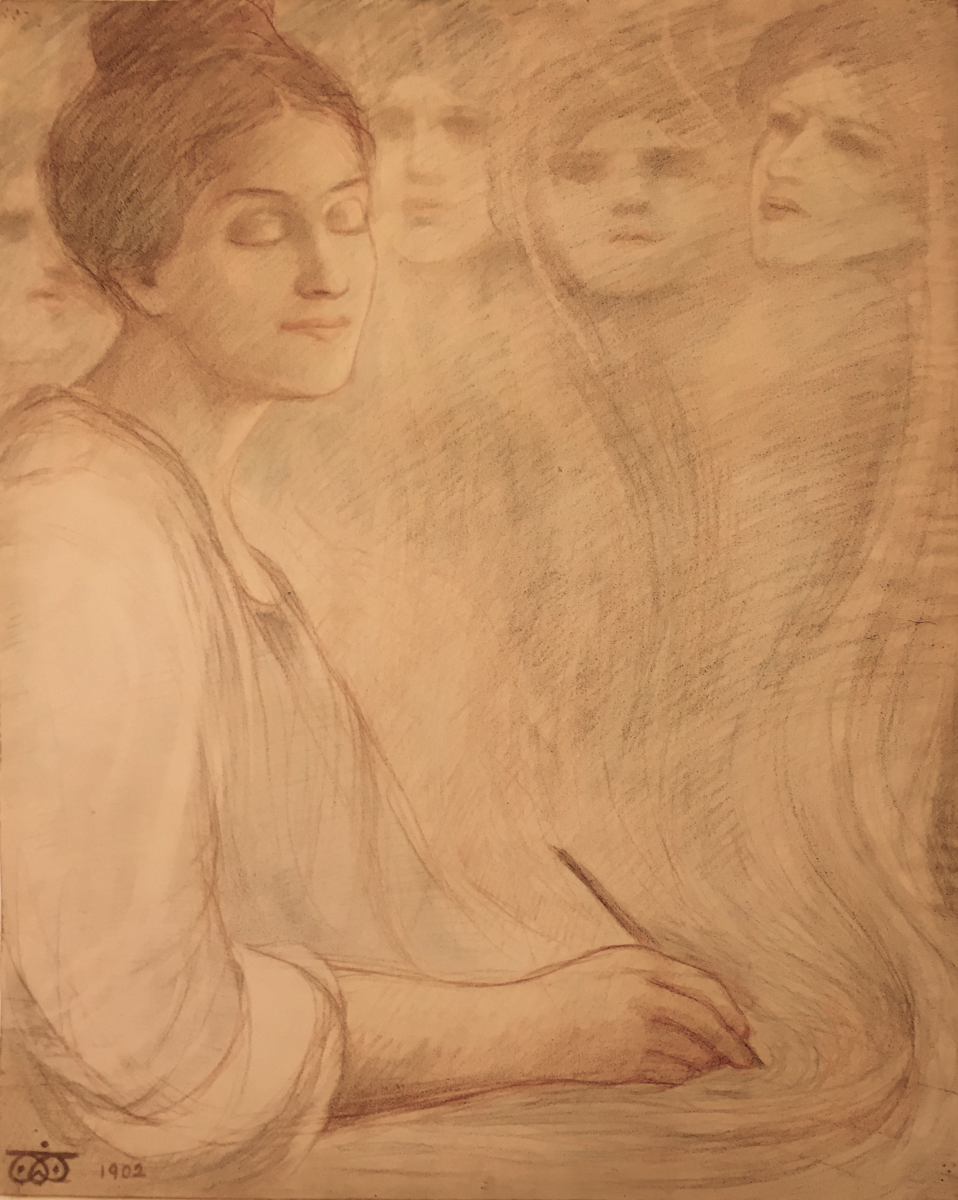
There was, however, another young woman whom Gibran had met on March 8, 1898, at the Boston Camera Club, shortly before his departure for Beirut, and with whom he fell in love at first sight. His meeting with the twenty-three-year-old American poet and playwright Josephine Preston Peabody (1874–1922) took place at the opening of an exhibition of Fred Holland Day (1864–1933), a renowned avant-garde photographer and publisher, as well as a mentor to Gibran, who was then just over fifteen years old and had posed as a model for many of the photographs on display.21 The two exchanged letters over the following years and then began seeing each other regularly in Boston at the end of 1902, several months after Gibran returned from Lebanon.
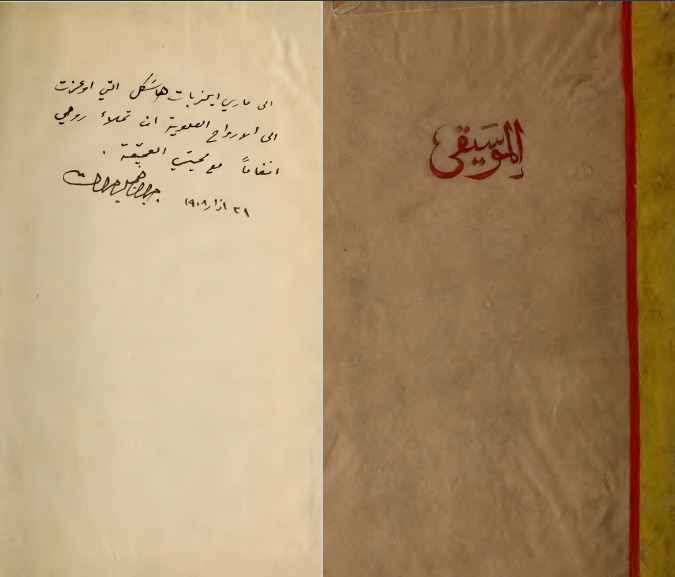
On July 1, 1905, the aspiring writer visited Josephine to present her with a special edition of the booklet. With his own hands, he had covered its plain salmon-colored cardboard binding with a fine parchment dust jacket on which he had inscribed the title “al-Mūsīqá” in Arabic using red ink. On the title page, he had written in Arabic both his own initials and hers (Ǧ.Ḫ.Ǧ. – Ǧ.B.B.), together with a dedication whose meaning was unmistakable: “With love and respect and best wishes.”22 He read several passages to her, especially the opening lines, improvising a translation as he went, perhaps also to declare once again his admiration and affection for her. However, the woman felt only friendship for him and, less than a year later, married Lionel S. Marks (1871–1955), the distinguished professor of mechanical engineering at Harvard University.
• ❧ KGC ❧ •
III
After the prologue, Gibran moves forward briskly and without academic pretensions, instructing his Arab-American readers about the importance that music has always held throughout human history. He focuses in particular on several ancient peoples, including the Chaldeans, Egyptians, Persians, Indians, Greeks, Romans, Assyrians, and Hebrews. In this section of the work, the influence of Day is evident, as he instilled in the young artist a passion for mythology, especially Greco-Roman mythology. In her diary, under the date of December 12, 1898, Josephine recounts a particularly significant anecdote in this regard: after reading the Classical Dictionary by John Lemprière (1765–1824),23 which Day had lent him, Gibran returned it to its owner and solemnly declared, “I am no longer a Catholic: I am a pagan.”24 Day himself had also introduced the young man to Western classical music, inviting him every week to concerts of the Boston Symphony Orchestra. Yet, by reviewing several maqāmāt in the text, the author demonstrates that he was also familiar with and appreciative of the musical tradition of his homeland.
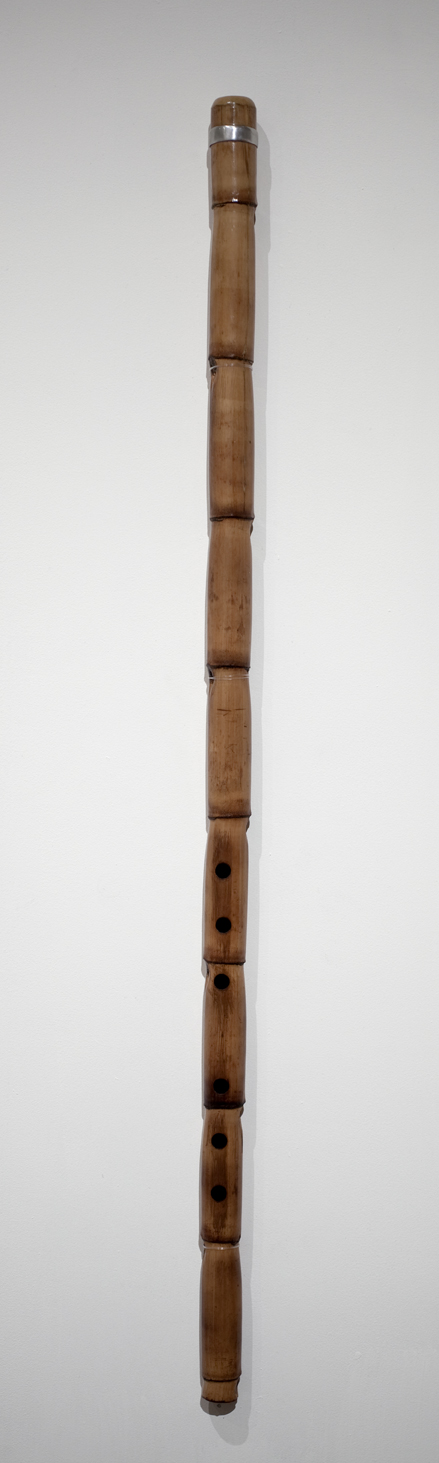
Codified in the fourteenth century, the maqām is the modal framework that characterizes Persian, Arab, Turkish, and Andalusian classical music, both vocal and instrumental. Each maqām is said to be capable of evoking specific sensations and emotions in the listener; moreover, its use has also been documented for therapeutic purposes and, within Sufism (Taṣawwuf in Arabic, that is, Islamic mysticism), as a means of inducing a meditative state. Among the various ‘families’ of maqāmāt, themselves divided into numerous subcategories, Gibran mentions four — Nahāwand, Iṣfahān, Ṣabā, and Raṣd (or Rast) — carefully describing the distinctive evocative power of each. He also refers to the ‘Atābā, a genre of improvised sung poetry, usually centered on themes of love, that is widespread throughout the Syrian-Lebanese region.
• ❧ KGC ❧ •
IV
Gibran’s passion for music can be discerned not only throughout his entire literary production, in both Arabic and English — which abounds in references to this particular art form (the oldest, in his view, in all of human history,25 and the only possible means of reconciling the ideal world with the real one)26 — but also in his personal and epistolary exchanges. On June 20, 1914, when Haskell asked him what poetry meant to him, he replied: “An extension of vision — and music is an extension of hearing.”27 Earlier that same year, on January 2, he had written to May Ziadah (Mayy Ziyādah, 1886–1941), the Lebanese-Palestinian writer and feminist living in Cairo:
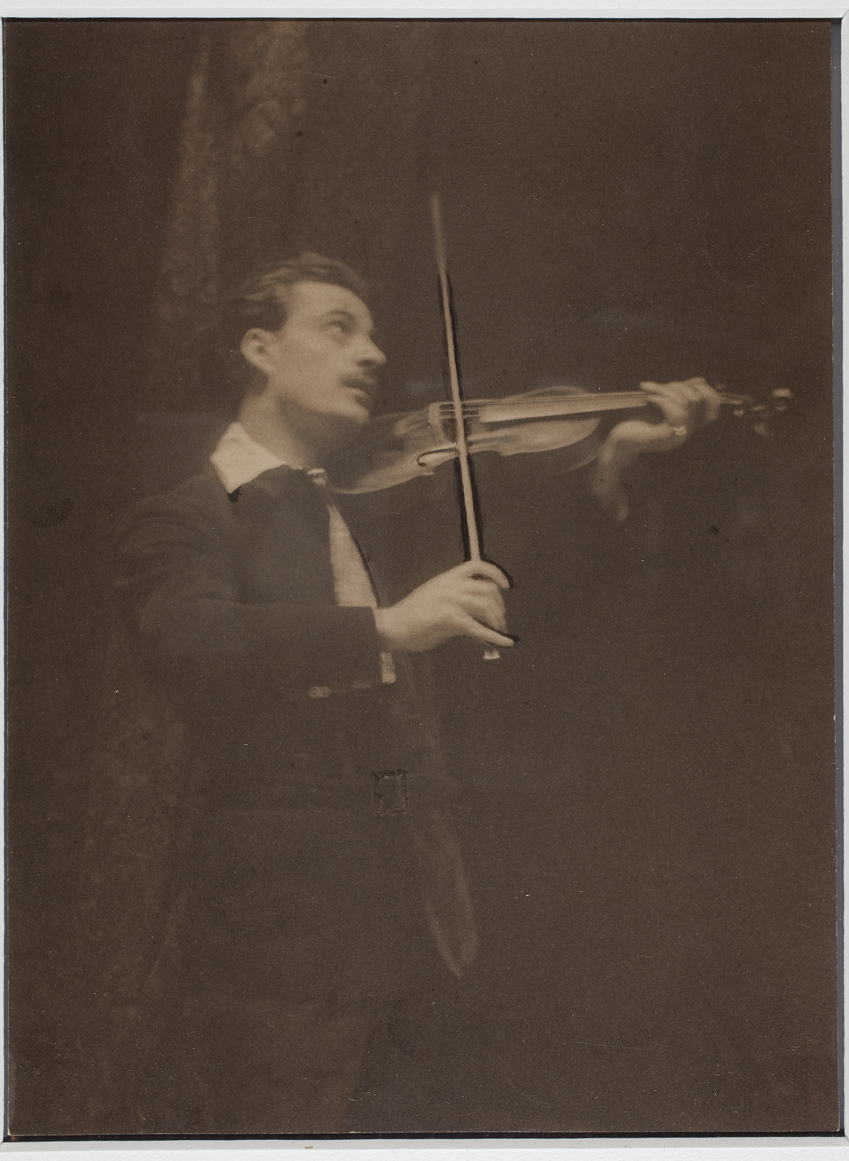
I very much regret to say that I do not play any musical instrument, but I love music as much as I love life, and I am particularly keen on learning its principles and structure and deepening my knowledge of its history, its origins and its development. And if I survive I shall write a long essay on these aspects of Arabic and Persian compositions. I am equally fond of Western and Oriental music. Hardly a week goes by without my going once or twice to the Opera, although of all European music I prefer those pieces known as symphonies, sonatas and cantatas, because opera lacks the artistic simplicity which suits my nature and is tuned to my likes and dislikes. And now let me say how jealous I am of the ‘ūd28 you hold so close to you; and I beg you to say my name, together with my words of appreciation, when you play Nahāwand upon the strings of your ‘ūd, for that is a melody I love and which I regard in terms similar to those opinions expressed by Carlyle on the Prophet Muḥammad.29
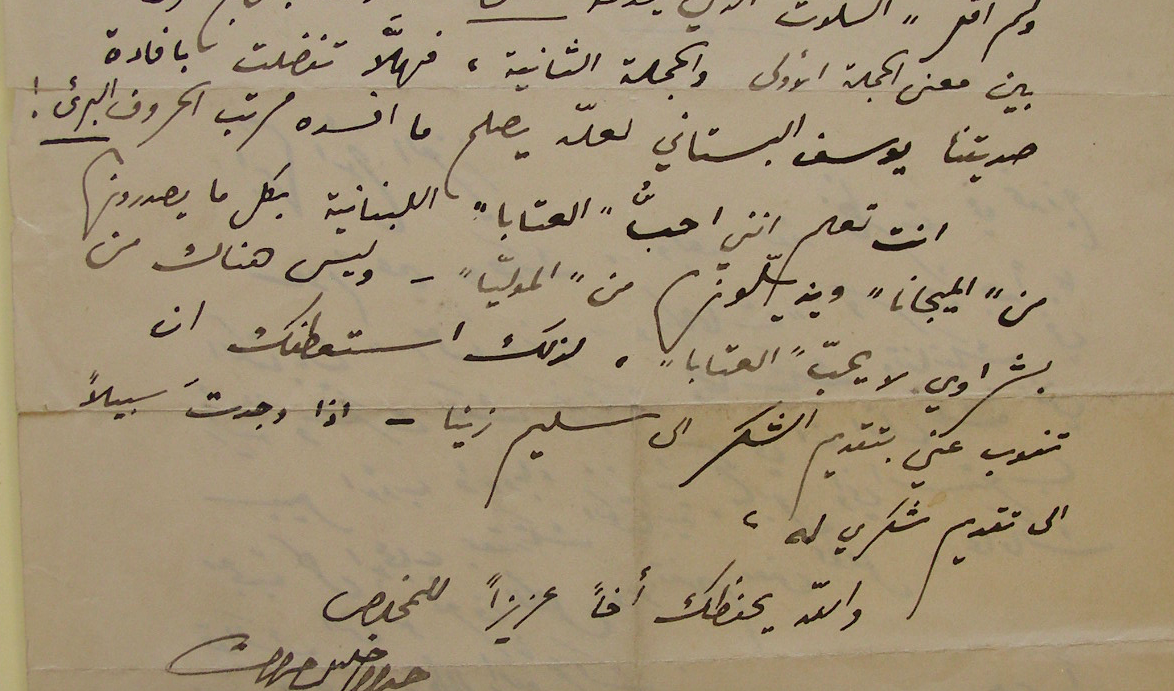
On February 24, 1928, in a passage from a letter addressed to Antony Bashir (Anṭūniyūs Bašīr, 1898–1966), the Arabic translator of his works originally written in English, Gibran expressed the high regard in which he held the various forms of Middle Eastern folk singing: “You know that I love the Lebanese ‘Atābā, especially with all the Mīǧānā that they preface it with and the Mūlayyā. There is no person from Bišarrī who does not like ‘Atābā.”30 Thanks to Naimy, we even know the opening verses of a Mawwāl (a genre of love song typical of Lebanese folklore) that was particularly dear to Gibran. The biographer heard his close friend sing it on a sunny summer day in late June 1921, during a brief vacation they spent together in the small village of Cahoonzie, located about one hundred miles from New York City:
O beauteous one! I have strayed off the path of love
Since I surrendered to you my heart.
So lonesome am I for you, and the distance is so far.
Ah! Had we but said good-bye…31
The emigration to the United States had certainly not distanced Gibran from the sounds and melodies of his homeland. Among the various Arab immigrant communities, the custom of enlivening gatherings, celebrations, religious occasions, and wedding banquets with good music remained very much alive. The ḥafalāt, the musical evenings of Little Syria, featured talented singers, instrumentalists, and improvisers of every kind, some of whom achieved such renown at the time that they became acclaimed artists among a broader American audience as well. It is highly probable that Gibran personally knew some of them, such as Alexander Maloof (Iskandar Ma‘lūf, 1884–1956), a composer, pianist, conductor, and arranger best known for his ability to blend Middle Eastern and Western styles, and Russell John Bunai (Rizq Allāh Būnāy, 1903–1996), a singer who would go on to enjoy considerable success in the recording industry. Moreover, in the early 1920s, Gibran translated from Arabic into English the lyrics of three ancient Syro-Lebanese songs, which he entitled O Mother Mine,32 I Wandered Among the Mountains,33 and Three Maiden Lovers,34 and which were subsequently set to music by the eminent Lebanese-Cypriot composer Anis Fuleihan (Anīs Fulayḥān, 1900–1970).35 During the same period, shortly after the publication of his book al-Mawākib (“The Processions”),36 and precisely on one of the convivial occasions described above, Gibran himself received an unexpected tribute:
I heard The Processions sung all through a while ago. A Syrian friend was celebrating the birth of a son with a party, like the Arabian Nights, with all the beauty but none of the lust. And at midnight, there appeared an old man with flowing beard and a beautiful youth and they took the two parts and sang them through to old Arabic themes that they had found. I was so moved, I wept.37
• ❧ KGC ❧ •
V
The short essay al-Mūsīqá concludes with an invocation, a kind of prayer in which the author urges readers to glorify ancient and modern musicians, both Western (Ludwig van Beethoven [1770–1827], Richard Wagner [1813–1883], and Wolfgang Amadeus Mozart [1756–1791]) and Eastern. Among the latter, the names of al-Mawṣilī are mentioned — with a likely allusion to both Ibrāhīm al-Mawṣilī (742–804) and his son Iṣḥāq (767–850), of Persian origin, both active at the Abbasid court in Baghdad — along with Šākir al-Ḥalabī, a native of Aleppo to whom is attributed the introduction into Egypt in 1840 of the Muwaššaḥ (a genre of sung poetry from the Andalusian tradition), and ‘Abduh al-Ḥāmūlī (1841–1901), a great Egyptian singer and the leading figure in the modern revival of Arabic music. In an interview given in 1919 on the contribution made by his people to the history of human civilization, Gibran states:
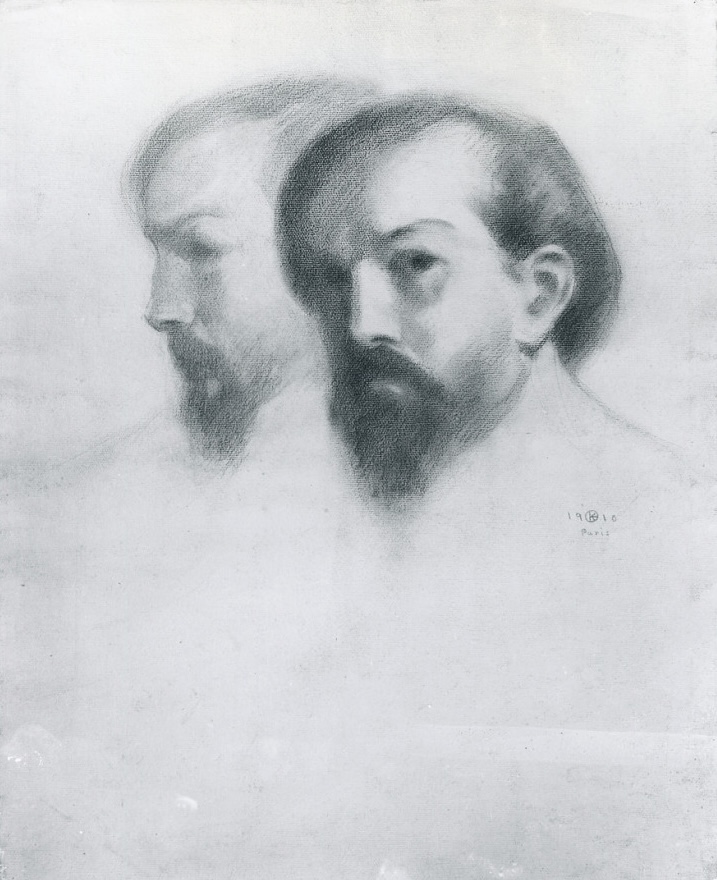
In music also the Arabs have made themselves felt by the Western world. The songs of southern Russia, for example, would be well understood and enjoyed by my people, their origin often being Arabic. Tchaikovsky and Verdi have felt its influence. ‘Aïda’ is composed of Arabic motifs Italianized. Debussy told me that he, too, had taken our motifs and built upon them some of his works.38
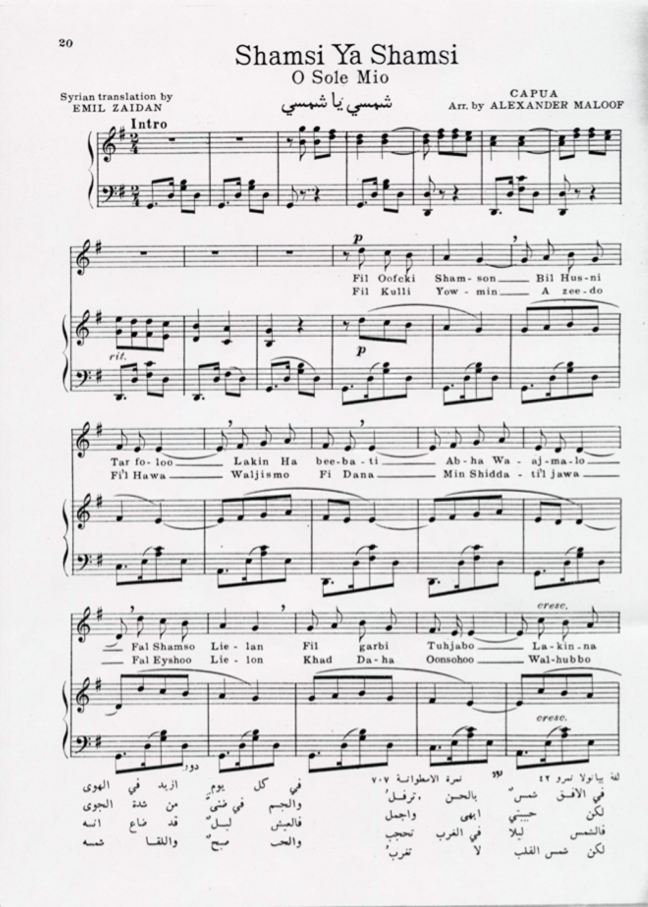
Kahlil Gibran’s well-known fondness for Italy as “the spiritual home of all lovers of beauty”39 was also reflected in his musical tastes. It is not difficult to imagine him listening with delight to Shamsi ya Shamsi (Šamsī yā Šamsī), the Arabic adaptation of the famous Neapolitan song ’O sole mio (“My Sun”), translated by Émile Zaidan (Imīl Zaydān, 1896–1982) and arranged by Maloof in the 1920s.40 As for classical music, besides Giuseppe Verdi (1813–1901), one of his favorite Italian composers was Gioachino Rossini (1792–1868).41 Curiously, this preference led him to become a customer of “an Italian barber named Squazzo” in New York. Gibran frequented the man’s barbershop at 19 Washington Street because “Squazzo, having a good baritone voice, would be singing music from The Barber of Seville to entertain customers.” According to Gibran, the barber’s vocal talents were so remarkable that he deserved an audition at the Metropolitan Opera House.42
• ❧ KGC ❧ •
VI
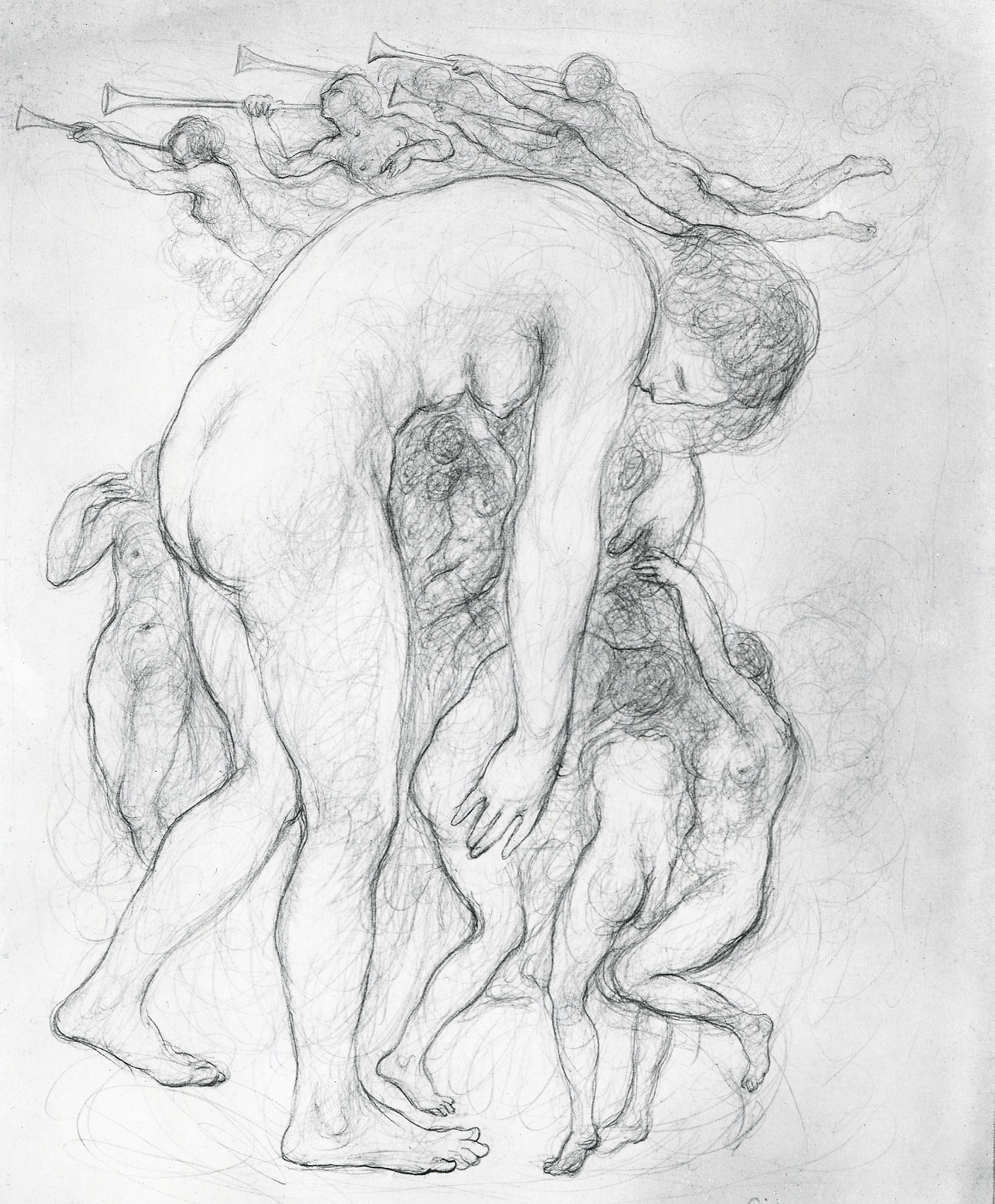
Gibran’s passing, too, was accompanied by solemn music. On 23 July 1931, more than two months after his death in New York, and under pouring rain, his remains were transported from Boston, where they had been temporarily interred, to the port of Providence, Rhode Island. There, the ocean liner Sinaia awaited, ready to set sail for Lebanon. Amid the emotion of hundreds of people gathered on the pier, a wind orchestra performed the Funeral March from Richard Wagner’s Tannhäuser and Åse’s Death from Edvard Grieg’s Peer Gynt Suite; a choir then sang Nearer, My God, to Thee. On 21 August, after a four-week voyage, the ship docked in Beirut. Following state funeral ceremonies and a number of official commemorations during which some of Gibran’s verses — set to music for the occasion by local composers — were sung, his coffin, escorted on foot by a crowd that grew ever larger from village to village and by mounted soldiers, set out on its final journey toward his native Besharri. Accompanied by joyful dances and military hymns, the procession was “the joyous kind of funeral that one thinks one would like.”43 Thus the ‘Son of the Cedars,’ much like the Egyptian ṣūfī poet and mystic Ibn al-Fāriḍ (1181–1235), to whom Gibran had dedicated an article fifteen years earlier, “closed his eyes to the world in order to see beyond it, and stopped his ears so that the noise of the earth would not prevent him from hearing the melodies of eternity.”44
❁
• ❧ KGC ❧ •
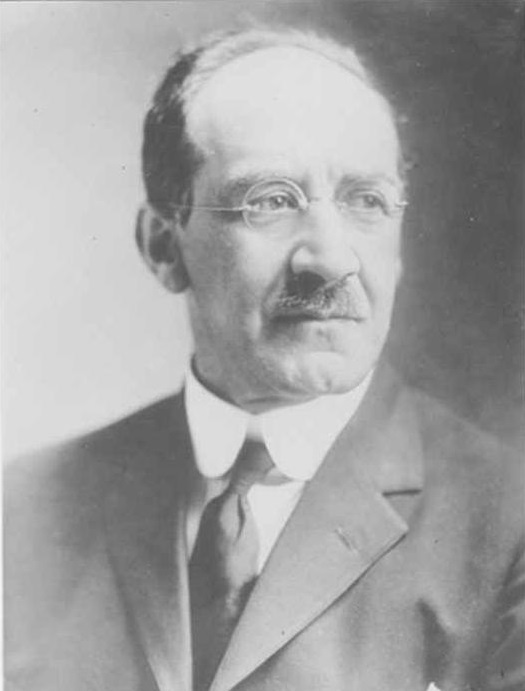
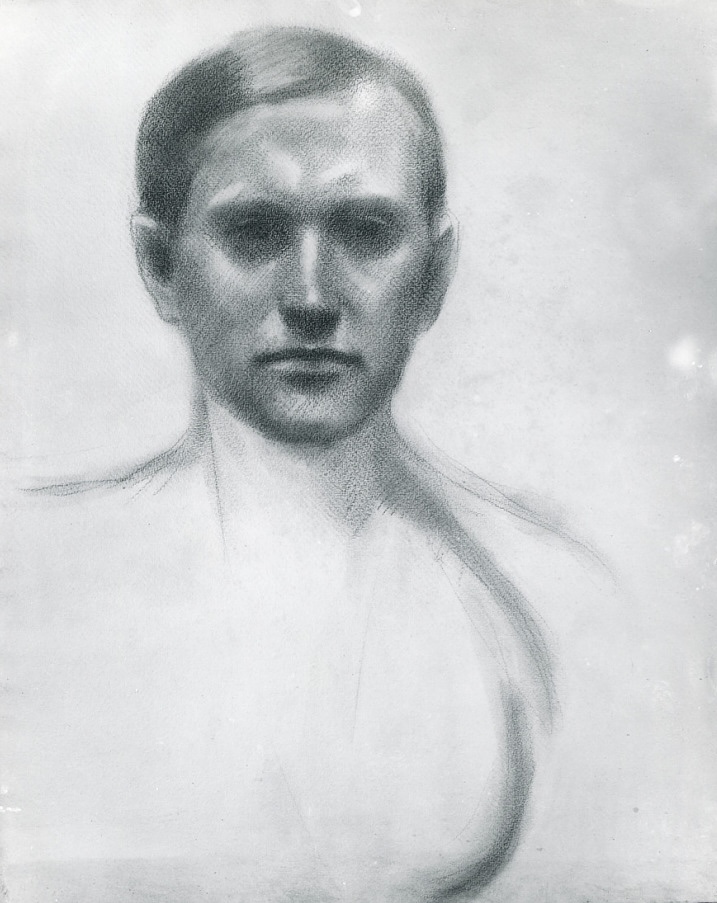
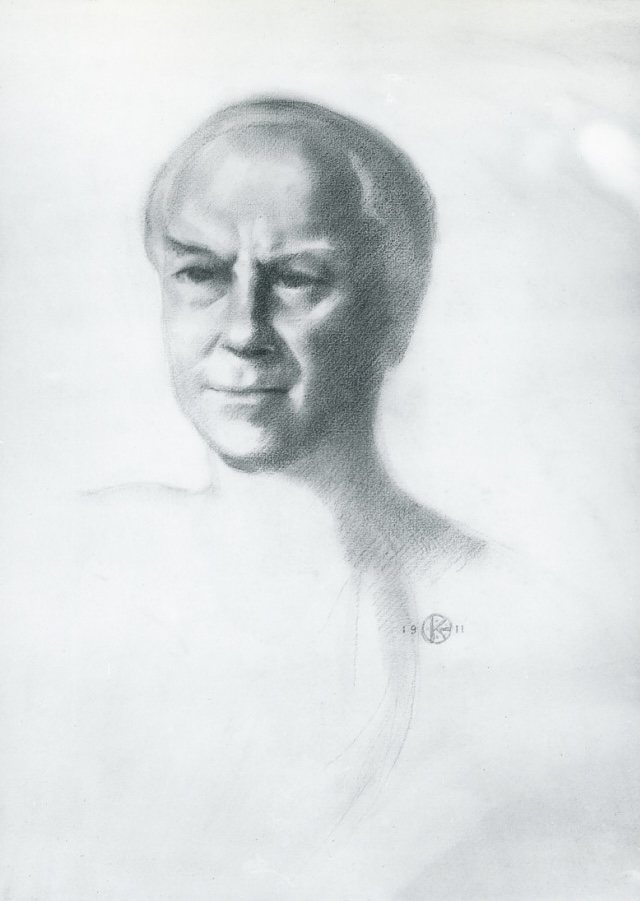
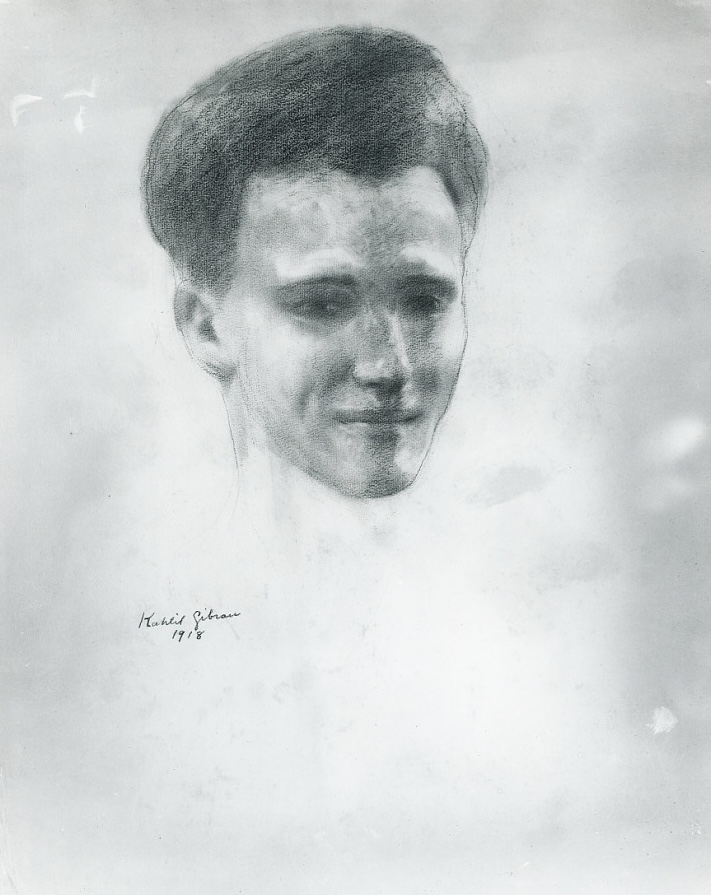
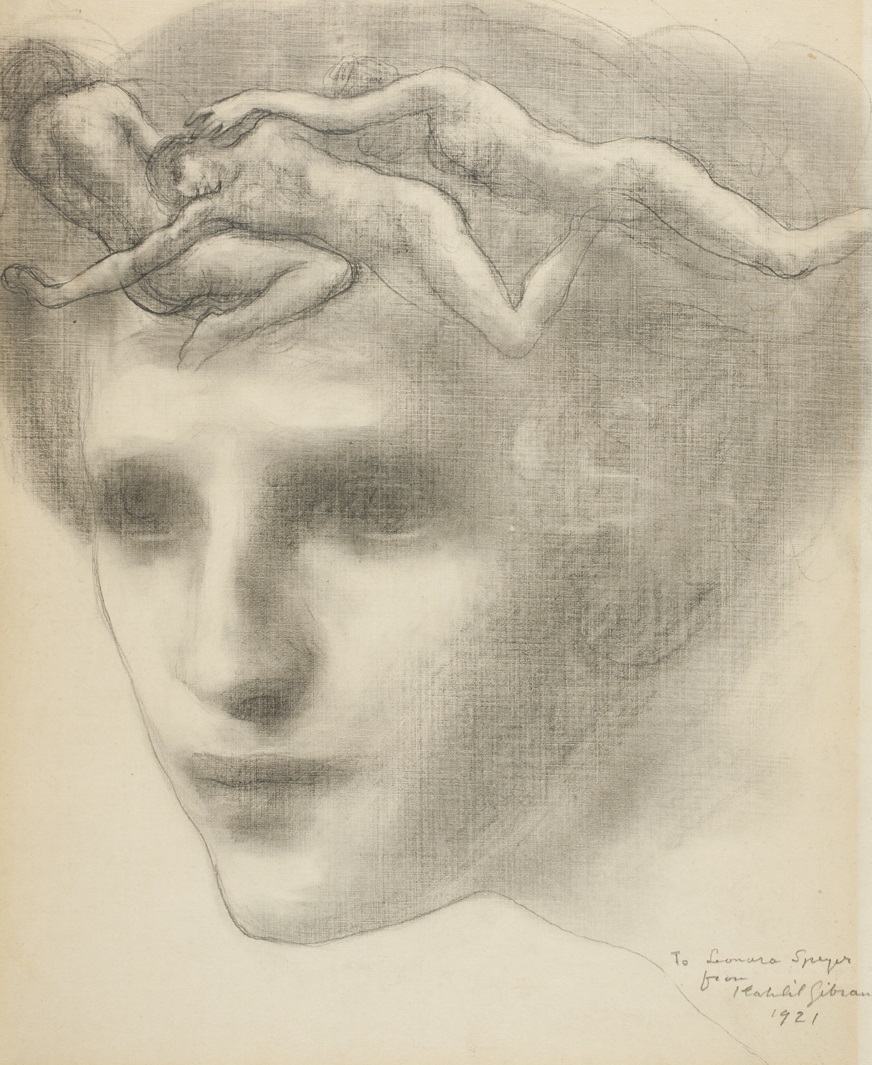
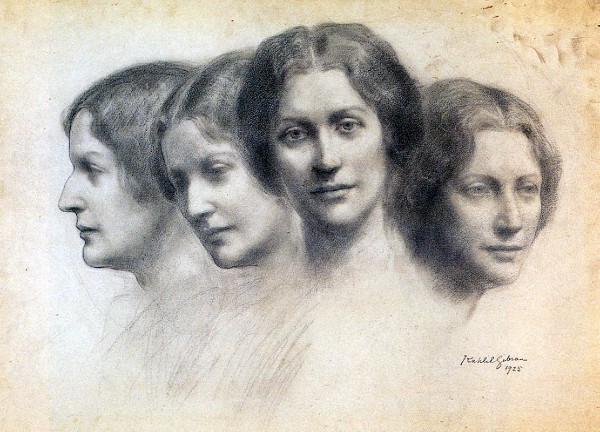
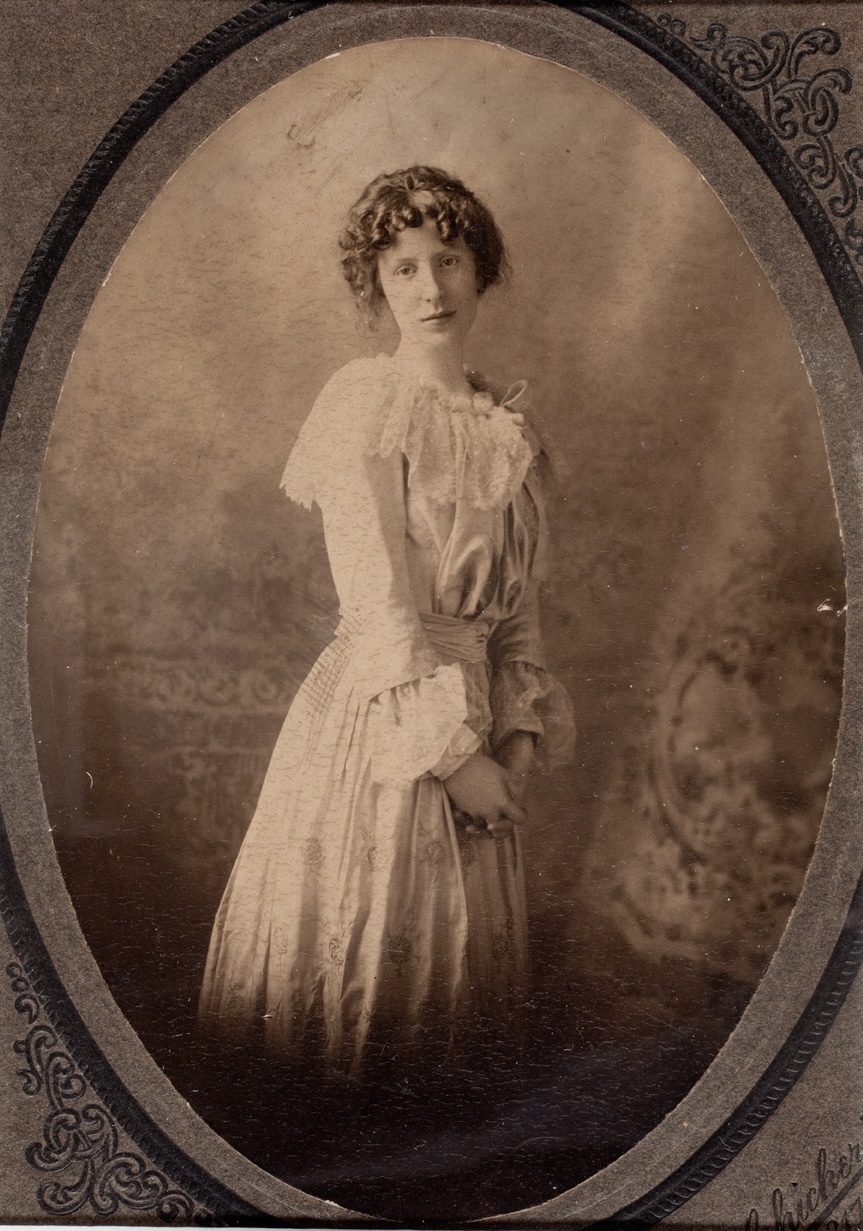
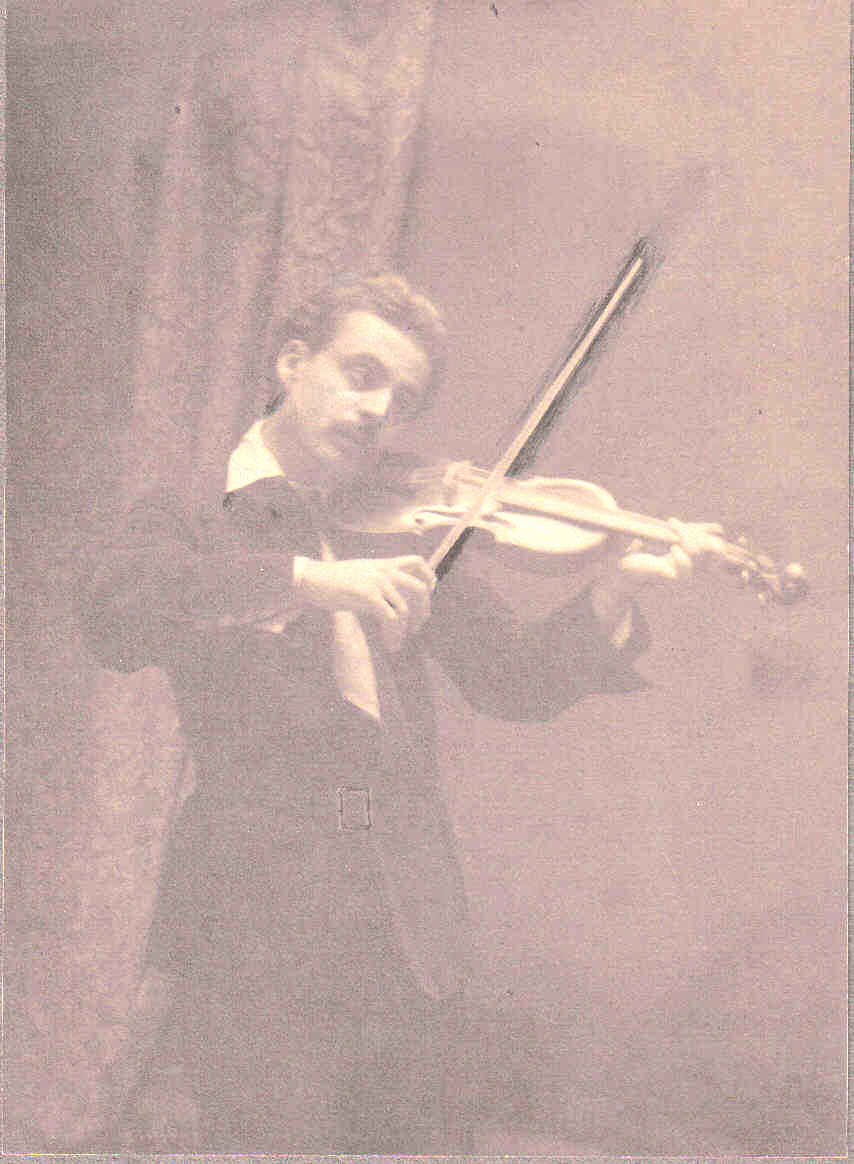
Among the musicians Gibran met, portrayed, or admired were composers, conductors, singers, and instrumentalists from both sides of the Atlantic.
• ❧ KGC ❧ •
1 Kahlil Gibran, Sand and Foam, New York: Knopf, 1926, pp. 22–24. ↩
2 Kahlil Gibran: A Self-Portrait, translated from the Arabic and edited by Anthony R. Ferris, New York: The Citadel Press, 1959, p. 21 (cf. Amīn al-Ġurayyib, “Ǧubrān Ḫalīl Ǧubrān,” al-Ḥāris, 8, 1931, pp. 689–704). ↩
3 The exact date of publication is uncertain, but it was most likely around the summer of 1904. ↩
4 Ǧubrān Ḫalīl Ǧubrān, Kitāb Dam‘ah wa Ibtisāmah, New York: Maṭba‘at al-Atlantīk, 1914, p. 34. ↩
5 Kahlil Gibran, The Prophet, New York: Knopf, 1923. ↩
6 Jean & Kahlil Gibran, Kahlil Gibran: His Life and Works, New York: Interlink Books, 1974, p. 141. ↩
7 Joseph Nahas, Seventy-Eight and Still Musing, with Personal Reminiscences of Gibran as I knew Him, Hicksville, New York: Exposition Press, 1974, p. 38. ↩
8 Yusuf Huwayyik, Gibran in Paris, translated with an introduction by Matti Moosa, New York: Popular Library, 1976, p. 97 (cf. Yūsuf al-Ḥuwayyik, Ḷikrayātī ma‘a Ǧubrān. Bāris 1909–1910, Mu’assasat Nawfal, Bayrūt 1979, pp. 84–85). ↩
9 Harvard University — Houghton Library / Bynner, Witter, 1881–1968. Witter Bynner papers, 1829–1965. MS Am 1891.6 (70–74). Houghton Library, Harvard University, Cambridge, Mass. ↩
10 Mikhail Naimy, Kahlil Gibran: A Biography, New York: Philosophical Library, 1985, p. 55 (cf. Mīḫā’īl Nu‘aymah, Ǧubrān Ḫalīl Ǧubrān: ḥayātuhu, Mawtuhu, Adabuhu, Fannuhu, Bayrūt: Maṭba‘at Lisān al-Ḥāl, 1934, pp. 61–62). ↩
11 Ǧubrān Ḫalīl Ǧubrān, Nubḏah fī Fann al-Mūsīqá, New York: Maṭba‘at Ǧarīdat al-Muhāǧir, 1905. ↩
12 Nadeem Naimy, The Lebanese Prophets of New York, Beirut: American University of Beirut, 1985, p. 37. ↩
13 Khalil S. Hawi, Kahlil Gibran: His Background, Character and Works, Beirut: American University of Beirut, 1963, p. 245. ↩
14 Suheil B. Bushrui & Joe Jenkins, Kahlil Gibran: Man and Poet. A New Biography, Oxford–Boston: Oneworld, 1998, p. 72. ↩
15 Cf. al-Mūsīqá, in al-Maǧmu‘ah al-Kāmilah li-Mu’allafāt Ǧubrān Ḫalīl Ǧubrān, qaddama lahā wa ašrafa ‘alá tansīqihā Mīḫā’īl Nu‘aymah, al-ǧuz’ al-awwal, Bayrūt: Dār Ṣādir, 1949, pp. 43–58. ↩
16 Ǧubrān Ḫalīl Ǧubrān, ‘Arā’is al-Murūǧ, New York: Maṭba‘at Ǧarīdat al-Muhāǧir, 1906. ↩
17 Ǧubrān Ḫalīl Ǧubrān, al-Arwāḥ al-Mutamarridah, New York: Maṭba‘at Ǧarīdat al-Muhāǧir, 1908. ↩
18 Ǧubrān Ḫalīl Ǧubrān, al-Aǧniḥah al-Mutakassirah, New York: Maṭba‘at Ǧarīdat Mir’āt al-Ġarb, 1912. ↩
19 Registered in the United States under the name Eyyoub G. Tabet, a physician and nationalist, he served in New York as president of the Syrian-Lebanese League of Liberation (Laǧnah Taḥrīr Sūriyā wa Lubnān, 1917) — of which Gibran acted as secretary for English-language correspondence — and later became Prime Minister of Lebanon (1936–1937) and subsequently President of the Lebanese Republic under the French Mandate (1943). The details of the story recounted by Gibran, however, appear to be wholly contradicted by the historical evidence. Ayyūb did not attend the same college as Gibran — indeed, he was approximately eight years older — and while Gibran was studying in Beirut, Ayyūb was pursuing his medical specialization in Texas. As for Sulṭānah, there is no record that Ayyūb had a sister by that name. Even if one were to assume that Gibran was in fact referring to Ilīṣābāt (1877–1955), affectionately known within the Tābit family as Ṣābāt, she was not married at the time. She did not marry until 1906 and, far from dying prematurely, lived to the age of seventy-eight (cf. Shereen Khairallah, Remembering Dr Ayyub Tabet (1875–1947), Beirut: Dergham, 2014, pp. 18, 20–21; Francesco Medici, Gibran’s First Love: The Riddle of Sultana Tabet, Kahlil Gibran Collective, 2 May 2021 [link]). ↩
20 Cf. Mary Haskell’s Journal, May 4, 1908 (The Letters of Kahlil Gibran and Mary Haskell. Visions of Life as Expressed by the Author of “The Prophet”, arranged and edited by Annie Salem Otto, Houston: Smith & Company Compositors — Southern Printing Company, 1970, pp. 7–8). ↩
21 The first meeting between Gibran and Day dates back to 1896. ↩
22 The volume is housed in the Houghton Library, at Harvard University. A similar copy, featuring a comparable dust jacket and preserved at the Wilson Library of the University of North Carolina at Chapel Hill, bears an autograph dedication in Arabic by the author, dated March 21, 1908, and addressed to Haskell. It reads: “To Mary Elizabeth Haskell, she who called upon the spirits of heaven, who in turn inspired me and filled my soul with countless melodies, with all my affection. Ǧubrān Ḫalīl Ǧubrān.” This copy of the booklet contains an additional point of interest on its title page: just above the original title, for some reason, Gibran himself handwritten its Italian translation — “Musica” (“Music”). ↩
23 John Lemprière, an English classicist, lexicographer, and theologian, became famous for his dictionary of classical mythology, The Bibliotheca Classica, or Classical Dictionary containing a full Account of all the Proper Names mentioned in Ancient Authors (Reading, England, 1788), which was commonly used as a reference work by teachers, journalists, writers, poets, and playwrights. ↩
24 Josephine Preston Peabody Marks Diaries, Houghton Library, Harvard University, MS Am 2162. ↩
25 Cf. Mary Haskell’s Journal, June 15, 1912 (Beloved Prophet: The Love Letters of Kahlil Gibran and Mary Haskell, and Her Private Journal, edited and arranged by Virginia Hilu, London: Quartet Books, 1973, p. 94). ↩
26 Cf. Iskandar Naǧǧār, Qāmūs Ǧubrān Ḫalīl Ǧubrān, Bayrūt: Dār al-Sāqī, 2008, p. 204. ↩
27 Beloved Prophet, p. 194. ↩
28 Oriental lute. ↩
29 Love Letters. The Love Letters of Kahlil Gibran to May Ziadah, translated and edited by Suheil Bushrui and Salma Haffar al-Kuzbari, Oxford: Oneworld, 2000, pp. 4–5 (cf. al-Šu‘lah al-Zarqā’: Rasā’il Ǧubrān Ḫalīl Ǧubrān ilá Mayy Ziyādah, taḥqīq wa taqdīm Salmá al-Ḥaffār al-Kuzbarī wa Suhayl B. Bušrū’ī, Bayrūt: Mu’assasat Nawfal, 1984, pp. 28–29). Thomas Carlyle (1795–1881), the Scottish philosopher and historian, in his lecture On Heroes, Hero-Worship and the Heroic in History (1841), glorifies the Prophet Muḥammad’s heroism. ↩
30 Translation from the original Arabic into English by George Nicolas El-Hage. Gibran’s letters to the Orthodox Archimandrite are preserved at the Antiochian Heritage Library in Bolivar, Pennsylvania, USA. ↩
31 Naimy, Kahlil Gibran, p. 170 (cf. Nu‘aymah, Ǧubrān Ḫalīl Ǧubrān, p. 188). ↩
32 It is a Mūlayyā, a genre of sung poetry belonging to the Bedouin folk tradition and widespread in the rural regions of the Euphrates Valley. ↩
33 The song’s original Arabic title is Sāla Dam‘aī (“My Tears Have Flowed”). ↩
34 It is a Mīǧānā, the term used to designate the introduction to the ‘Atābā. ↩
35 The translations, together with the original texts and the complete musical scores, were published in the book Folk Songs of Many Peoples with English Versions by American Poets, compiled and edited by Florence Hudson Botsford, Vol. II, New York: The Womans Press, 1922, pp. 370–373, 380–381, 386–387 (cf. Kahlil Gibran, O Mother Mine (Moulaya), “The Syrian World,” I, 9, March 1927, p. 13; I Wandered Among the Mountains, “The Syrian World,” I, 11, May 1927, p. 11; Three Maiden Lovers, “The Syrian World,” II, 2, August 1927, p. 13; Francesco Medici, Three Lebanese Folk Songs Translated into English by Kahlil Gibran, Kahlil Gibran Collective, 29 Jul 2024 [link]). ↩
36 Ǧubrān Ḫalīl Ǧubrān, al-Mawākib, New York: Maṭba‘at Mir’āt al-Ġarb al-Yawmiyyah, 1919. The work consists of a number of short poems, each centered on a specific existential, spiritual, or philosophical theme (such as the soul, death, love, happiness, religion, or justice), and follows a fixed dialogic structure. Each subject is developed in the opening stanzas by an old and melancholy “sage,” whose reflections are answered in the concluding stanzas by a “young man” of a free-spirited and joyful disposition. He crowns his reply with a kind of carefree refrain, invariably marked by the same opening words: “Bring me the flute and sing.” ↩
37 Mary Haskell’s Journal, New York, April 17, 1920; on May 22 of that same year, Gibran shared with the woman an even more sensational piece of news: “The Processions has been sung in Cairo, with thousands of people” (Beloved Prophet, pp. 326 and 336). ↩
38 Joseph Gollomb, An Arabian Poet in New York, “New York Evening Post,” 29 March 1919, Book Section, p. 10 (cf. Barbara Young, This Man from Lebanon. A Study of Kahlil Gibran, New York: Knopf, 1945, p. 80). Claude Debussy (1862–1918), whom Gibran met in Paris in 1910 to create a striking charcoal portrait of him, was among the most authoritative composers of the European classical tradition to use the pentatonic scale, which gives some of his compositions an exotic and Oriental character. On May 5, 1911, in New York, Gibran also met and portrayed the American composer, conductor, and musicologist Arthur Farwell (1872–1952), who is credited, among other things, with the recovery and arrangement of traditional songs and melodies of Native Americans, African Americans, and Hispanic communities. Among the musicians Gibran met (and sometimes portrayed) or simply admired, also worthy of mention are the baritones David Bispham (1857–1921) and Vladimir Resnikoff (1890–1920), the violinist and poet Leonora Speyer (1872–1956), the violinist Mischa Elman (1891–1967), and the pianist Gertrude Barrie (1886–1968). ↩
39 Letter of Gibran to Mary Haskell, Paris, 3 January 1909 (The Letters of Kahlil Gibran and Mary Haskell, p. 19). ↩
40 Cf. Syrian Popular Songs: Oriental Piano Compositions by Alexander Maloof, New York: Maloof Phonography & Music, 1924, pp. 20–21. ↩
41 Cf. letter of Gibran to Ameen Goryeb, Boston, 28 March 1908 (Rasā’il Ǧubrān: ṣafaḥāt maṭwiyyah min adab Ǧubrān al-ḫālid, taqdīm Ǧamīl Ǧabr, Bayrūt: Manšūrāt Maktabat Bayrūt, 1951, p. 23). ↩
42 Nahas, p. 49. ↩
43 Archibald C. Harte, Burial of a Poet, “The Christian Century,” 48, September 30, 1931, p. 1212. ↩
44 Ǧubrān Ḫalīl Ǧubrān, al-Fāriḍ, “al-Funūn,” 2, 2 (July 1916), p. 104 (cf. al-Badā’i‘ wa al-ṭarā‘if, al-Qāhirah: Yūsuf Tūmā al-Bustānī, 1923, p. 129). ↩
All Rights Reserved © Copyright Francesco Medici 2026