What does Kahlil Gibran's The Prophet have to say about prisoners of conscience — those imprisoned not for what they have done, but for what they have said? Layli Miron, a Bahá'í graduate student, finds in Gibran's animated film and its source text a surprisingly urgent political vision.
By Layli Miron · Republished from HuffPost Religion
• ❧ KGC ❧ •
KAHLIL GIBRAN COLLECTIVE
By Layli Miron · Kahlil Gibran Collective · 2016 · kahlilgibran.com
• ❧ KGC ❧ •
I
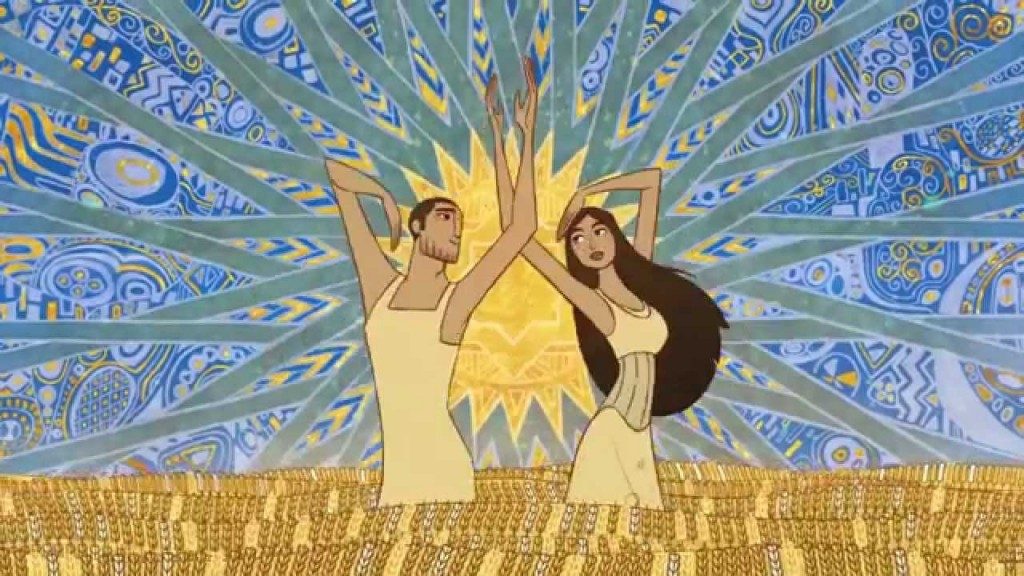
Recently, my husband and I sat spellbound by The Prophet, a gorgeous animated film adaptation of Kahlil Gibran's 1923 book of poems. In the film, the prophetic writer and artist Almustafa — known as Mustafa — is a prisoner of an oppressive government, confined on a Mediterranean island called Orphalese. While the government is not named, various clues point to the Ottoman Empire. The only crime Almustafa has committed is using his faculty for words to advocate for the common folk — which endangers the authorities' power.
The film brought vividly to mind the ongoing issue of prisoners of conscience: people who are imprisoned not because of any crime, but because of who they are or what they believe. Amnesty International, which coined the term in 1961, defines a prisoner of conscience as anyone imprisoned solely because of their political, religious, or other conscientiously held beliefs, or because of their ethnic origin, sex, colour, language, national or social origin, economic status, birth, or other status, provided they have not used violence or advocated violence.
• ❧ KGC ❧ •
II
Gibran himself was no stranger to political imprisonment and exile. Born in Lebanon under Ottoman rule, he watched as poets, writers, and thinkers were silenced, exiled, or executed for daring to speak against the empire. The character of Almustafa carries the weight of that history. His imprisonment is not incidental to The Prophet's message — it is its foundation. Almustafa is free in spirit precisely because no government can imprison the truth he carries. His words, given freely to the people of Orphalese before he departs, cannot be confiscated, burned, or silenced.
What struck me most, watching the film, was how contemporary Gibran's political vision feels. His insistence that justice cannot be imposed from above — that it must be felt from within each person — speaks directly to the condition of those imprisoned for conscience today. "The guilty is oftentimes the victim of the injured," Gibran writes in The Prophet. It is a line that reads differently when you think of a journalist in a prison cell, or a poet in exile.
The animated film — produced by Salma Hayek, directed by Roger Allers, and released in the United States in 2015 — brings this dimension of Gibran's work to a new generation of viewers with extraordinary visual beauty. We recommend it unreservedly, and recommend reading the original text alongside it.
❁
Originally published on HuffPost Religion by Layli Miron, Bahá'í graduate student. Republished by the Kahlil Gibran Collective with acknowledgement to the author.
All Rights Reserved © Copyright Kahlil Gibran Collective 2016