A previously unpublished account of Kahlil Gibran’s meeting with the Russian-trained Orthodox priest John Shamieh, who was often judged as the “Mad Monk” - recorded by their mutual friend Joseph Nahas in his 1975 memoir, A Depression Miracle.
By Francesco Medici
• ➧ KGC ➧ •
KAHLIL GIBRAN COLLECTIVE
By Francesco Medici · Kahlil Gibran Collective · 2026 · kahlilgibran.com
John Shamieh, whose name appears in Russian sources as Alexander Mansurovich Shamieh and, after his entry into monastic life, as Ioann Shamieh, was a Syrian Orthodox priest and theologian of Damascene origin who spent much of his early ecclesiastical career within the Russian Orthodox Church. Born in Damascus to a Syrian family, he pursued his theological education in Russia, studying first at the Moscow Theological Academy and subsequently at the Kazan Theological Academy, where he completed his theological studies in 1898. He subsequently entered monastic life and adopted the name John (Ioann), while maintaining close ties with the Russian ecclesiastical establishment.
In the mid-1890s, Shamieh became involved in missionary work among the growing Syrian and Arab Orthodox community in North America. He came to the United States in connection with the Russian Orthodox ecclesiastical mission and, by 1898, was serving as a hieromonk at the Orthodox mission in Galveston, Texas. He was subsequently transferred to San Francisco, where he continued his pastoral and missionary work among Arabic-speaking Orthodox immigrants.
His American ministry brought him into contact with several of the principal figures of the early Russian Orthodox mission in North America, as well as with the scattered Syrian and Lebanese immigrant communities. His movements between different ecclesiastical centers reflected the fluid character of Orthodox missionary work among Arabic-speaking immigrants at the turn of the century. He later returned to Russia, where he continued his theological and intellectual activities, including teaching and the study of religious questions and movements. His career thus unfolded between the Middle East, Imperial Russia, and the United States, placing him at the intersection of several intellectual, religious, and immigrant networks.
Shamieh was evidently more than a parish priest. His theological training and intellectual curiosity were accompanied by a broad interest in religious thought and comparative theology. His background, combining Syrian origins, Orthodox theology, Russian ecclesiastical education, and experience among Arab immigrants in America, made him an unusual figure within the early Syrian-American community.
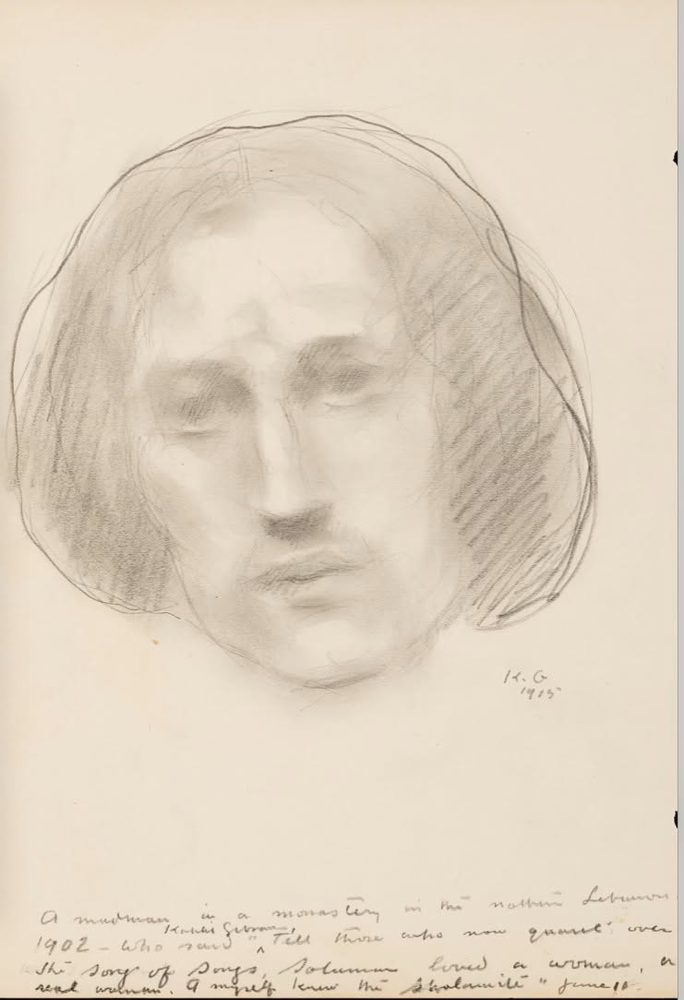
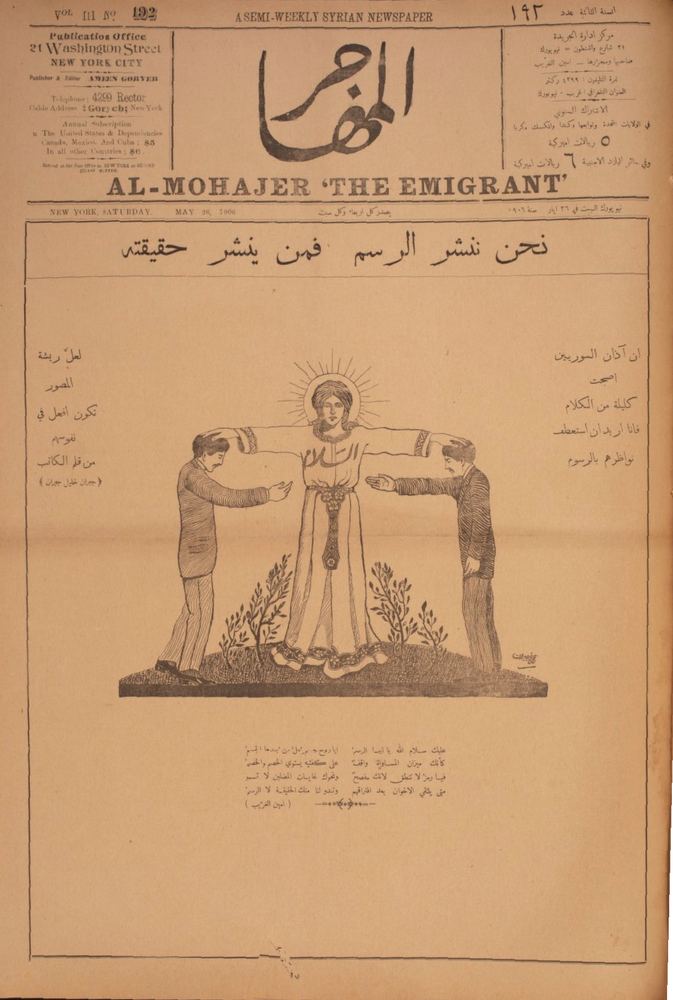
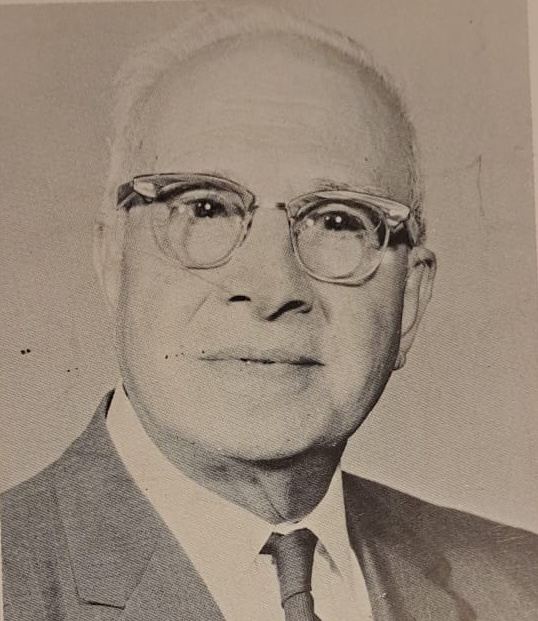
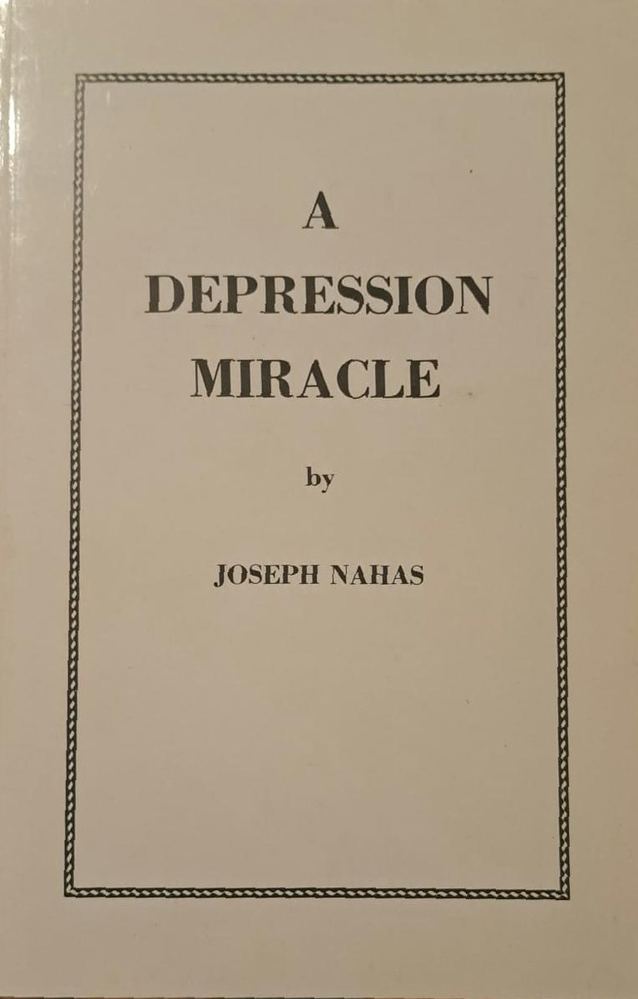
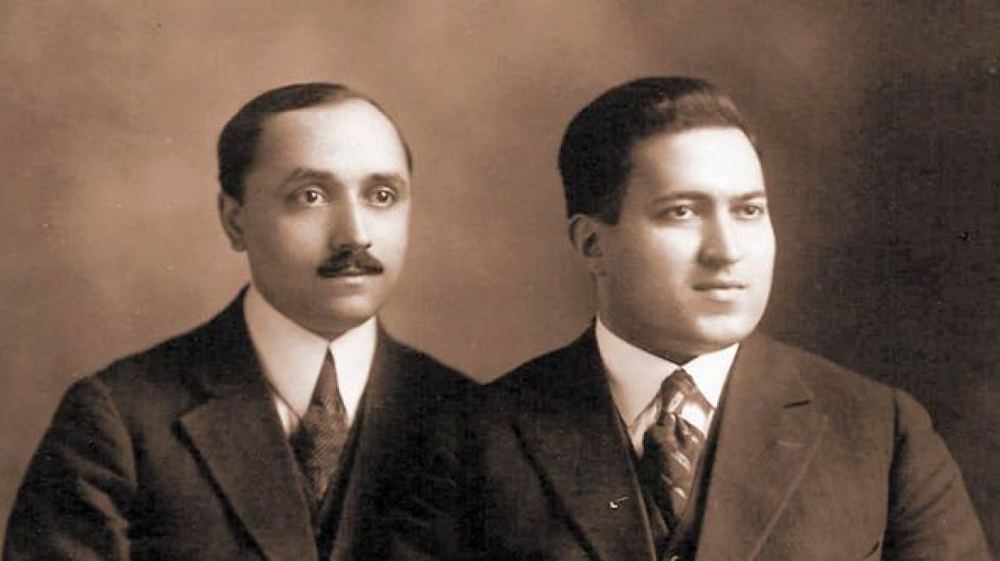
At some point between 1915 and 1920, John Shamieh’s path crossed that of the poet and painter Kahlil Gibran (1883-1931), although the exact date remains uncertain. Their mutual friend, Joseph Nahas (c. 1890-1987),1 played a role in bringing them together. Gibran had first met Nahas several years earlier at the offices of the Arabic-language newspaper Al-Mohajer (“The Emigrant”), where Nahas worked as an assistant to Ameen Guraieb (1880-1971), the paper’s publisher. Nahas later preserved his testimony of the encounter between Gibran and Father John, together with his recollections of the priest and his remarkable life story, in his privately printed volume A Depression Miracle, published in 1975.
The following account is drawn from Nahas’s volume:
• ➧ KGC ➧ •
I
At another visit, the subject of Gibran’s excommunication by the Roman Catholic Church again came up, and I said: “I know one clergyman you wouldn’t want to criticize and whom you should meet.” “Who is the man? Could you tell me more about him?” Gibran asked.
I proceeded to narrate the story of Father John Shamieh as I knew it.
Father John Shamieh was born in Damascus, Syria, of Arabic-speaking Syrian parents. He was baptized in the Russian Orthodox Catholic Church and educated in the local school in Damascus which was then being financially supported by the Russian Imperial Government through diplomatic arrangement with the Turkish Ottoman Empire which in that era was the acknowledged ruler of that part of the country.
John (Yohanna in Arabic) evinced a strong interest in theology and after graduating from the Damascus school was awarded a scholarship which enabled him to be enrolled in the Royal Russian Academy at St. Petersburg, Russia, with an endowment providing all living expenses during his study there.
In less than the normal time, John received his PhD in Divinity proving himself to be a brilliant theologian. Soon after John was ordained a priest and given a parish where he endeavored to preach, teach, and practice Christian life as the Scriptures intended to teach. He, being an astute theologian and a true Christian, practiced Christianity as a living faith and because of his faithful belief he championed the cause of the underprivileged, hesitating not to condemn tyranny in church and in government.
It was no wonder then that because of Father John’s exemplary conduct, he became the idol of the poor and the oppressed and, ironically, a suspected revolutionary by the ruling class in Czarist Russia.
Many high government officials urged that he be defrocked and exiled to Siberia, but the church hierarchy, recognizing his sincerity and zeal, as well as his widespread influence among their people, counselled that he be given a choice to leave the Russian Empire and to accept an assignment elsewhere. He made his choice to come to the United States. The Russian Patriarch provided him with transportation funds and a “letter of confidence” addressed to the reigning Archbishop in the United States.
Arriving at Ellis Island, New York’s emigration center, Father John, with a library of over two thousand volumes on theology, psychology and philosophy—which library he was allowed to take out of Russia—was met by a representative of the Orthodox Catholic Archdiocese, the Very Reverend Basil Kherbawi, Dean of St. Nicholas Cathedral in Brooklyn, N.Y.2
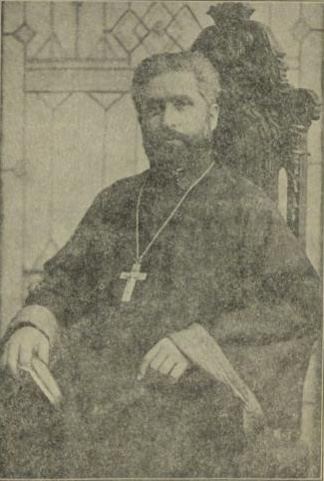
Father John was of medium height, broad of shoulders, swarthy in complexion, truly masculine in facial features with full, black beard and long hair dropping down to his shoulders, as was the traditional custom of the Eastern Church clergy in that era. However, his large brown eyes were most impressive; they seemed to be reaching out with a light of sincerity and humility.
After a brief visit at the Archdiocese, he was assigned a parish near Wilkes-Barre, Pa., and he with his large library proceeded there to find and meet with his small parish composed of poor coal mining families. The meeting was of jubilation shown by members of the parish and sympathy over their state of indigence by their new spiritual leader.
Times were bad during that period. Men out of work; large families to support resulted in meager church plate collections insufficient to defray church expenses, and Father John found himself in a dilemma between abandoning his parish or selling out his library as he went along. He chose the latter. Soon the last volume of the once great library was sold and another dilemma developed. Father John’s decision this time was to secure a job for weekdays and minister to the spiritual need of his parish on Sundays.
Early morning found Father John job-hunting. He first applied for a janitor's job at the courthouse, but was told that when such jobs are available they would be awarded to U.S. citizens—which he was not—because of his recent arrival from Russia. At first he was not discouraged and kept on soliciting jobs menial or otherwise, but the doors of employment including mines were tightly shut in his face. Finally he gave up his quest and decided to seek help from the Archdiocese. Setting aside his pride, he addressed a letter to His Excellency, the Archbishop, explaining his predicament and asking for help to enable him to continue his ministry. The reply was that the treasury of the diocese is bare and that he should ask his parishioners for sustenance.
When the Archdiocese’s rejection of his appeal for relief was received by Father John, he felt dismayed and betrayed by his superiors. As a last resort he decided to set forth his position in a reply to the rejection of his plea stating “that it was not Christian-like to expect the ‘flock’ to support the ‘shepherd’ when such flock is almost emaciated from hunger, and that his Christian duties as shepherd demand of him ministering to his flock’s secular and spiritual well-being, and because of this conviction he attempted to secure a part, or full time job, the proceeds from which would help him to ‘carry-on’, but his efforts after canvassing all possible sources produced no relief, he found no alternative but to resign his pastorate in the hope that some other efforts on the part of the Archdiocese might help provide the needs for this parish.”
One week later, Father John assembled his few parishioners, and tearfully informed them of his decision to resign. It was a sad heartrending meeting.
Having resigned his pastorate in Pennsylvania, Father John lost no time searching for work, spiritual, educational or menial—anything that would help keep body and soul together. He remembered his qualifications as a lecturer on the life within the Russian Empire and thought that such a subject might be of interest to discuss before student bodies in the numerous educational institutions in New York. Accordingly, he made a number of applications, but received no favorable response, which led him to suspect that those institutions, being largely financed by ultra-conservative circles, might have feared that a possible radical tendency in his lectures, if given sanction, would tend to offend the feelings of their generous donors, drying up funds essential for the operation of their institutions.
It was late fall when verdurous foliage had begun to turn to a new raiment of gold and crimson. The day was chilly and rain had been falling since morn-break.
Najeeb Badran, publisher and editor of the Arabic-language newspaper, Al-Nisr (“The Eagle”),3 where I held a position as an Assistant Editor, came to my office and said: “You are a good judge of people, and I have an applicant for a job in my office that I wish you would interview and judge his qualifications to work in the composing room where we have a vacancy. He is of unusual appearance, drenched by rain, haggard, yet seemingly undaunted and alert. I believe him to be an intellectual. Would you rather interview him in your office or mine?”
I thanked him for his compliment and added: “It might be best to have him come to my office; your time is more valuable than mine.”
Presently, a knock on the office door, a “come in” by me, and in walks the subject of our brief chat. His rain-wet, black hair still dripping over his shoulders and the rest of his body, he hesitantly advanced, apologizing for “messing up the floor with his rain-drenched shoes.”
“Sorry for my intrusion,” said the gentleman, “but I need work to survive.” I motioned him to a chair by the desk. He humbly refused by saying, “Bad enough to dirty the floor without soiling the furniture.”
This was my first meeting with Father John Shamieh and, after listening to the narration of his background, I offered him the job of ‘making ready for print’ or ‘makeup’ as we then called it. I took him back to the composing room and explained to him the various duties entailed. He seemed to be familiar with this operation due to his experience while in Russia, where he published a church periodical. He was “grateful for the opportunity to earn his living by the ‘sweat of his brow’ according to the Holy Scriptures,” but he added, “Would it be possible to be paid by the day?” This conditional acceptance puzzled me, but after a few minutes’ reflection, I, too, remembered the Scriptures saying, “Worry not about the morrow, for the morrow would worry about itself,” and I agreed to comply with his request.
The following morning Father John reported for work, performed his duties as expertly as if he had been with us for years. At the end of that day he stopped at my office on his way out and asked if his work was satisfactory. I assured him that it was, and that we are pleased to have him in the organization. He thanked me, then hesitated for a moment before asking: “Do I get my day’s pay now?”
I was afraid that he was quitting!… but again, I remembered our agreement to pay him at the end of each day for that day’s work, and I went to the desk for his dollar.
The daily pay was only one dollar, but the purchasing value of the dollar then was much more than it is now. For instance, his room rent was less than $1.25 per week ($5 monthly), and being an abstemious vegetarian, his daily meals consisted of a light breakfast of cereal, milk, and tea; no lunch, and for supper a boiled or poached egg, some green vegetables, one slice of bread, and a cup of tea. With such a diet and no tonsorial expense (he trimmed his own hair and beard), he was able to get along on six dollars’ weekly income, which was then the standard pay for such a job as he was holding.
Since Father John did not eat lunch, the greater part of that hour was spent at my office (at my request) to discuss philosophy, which was my major subject at the University—and his. The discussions were of a casual nature at first, but gaining in depth as we went along: “Do you believe in Deism, or in Pantheism?” I once asked. His reply was: “There is no conflict between the two doctrines, unless we create the difference through our illusion.”
For weeks tranquility reigned in the press-room. Father John’s congeniality, his learning and clerical rank earned for him the respect of other workers there—all, with the exception of one: Naseeb Karam, an anti-religionist Marxist who seemed to hold Father John in contempt. This Karam was a part-time type-setter for the Al-Nisr and part-time had his own magazine composed and printed there.
One day Karam went out for lunch, leaving the forms of his magazine on the “make-up bench” where the forms of Al-Nisr were also to be made-up, and when he failed to return on time, Father John found himself in a quandary. He needed the make-up bench space to get his forms of the paper ready for printing as per schedule, yet he was reluctant to move Karam’s forms in his absence. Finally, after waiting more than forty-five minutes past the scheduled time for his paper forms to be made-up, he decided to lock Karam’s forms and set them aside until his return, which he did, and proceeded to work on the Al-Nisr’s forms.
Two hours later than he should have returned, Karam staggered in, fumes of liquor reeking on his breath and, seeing that his magazine forms were off the make-up bench, he turned on Father John and angrily asked: “Did you remove my forms?” Father John admitted that he did, saying: “It was necessary to get the paper out on scheduled time, and you were late returning from lunch.” Karam, his eyes flashing with anger, let out a volley of profanity and struck Father John on the side of his face.
There was no retaliation by Father John, who simply said: “Thank you! I am sorry,” then walked away.
This incident was reported to me by one of my workers who averred that he and other workers were chagrined and were planning on “teaching Karam a lesson he would never forget.” I endeavored to mollify the worker by saying that two wrongs never make a right, and that I would take care of Karam in an orderly manner. Then I called Karam into my office, reprimanded him, and warned that such conduct as his is shameful, and any repetition of today’s incident could result in his discharge.
A few days later Sergeant Jerry Fitzsimon of the New York Police Department came to my office and said: “Say, that wild bearded man of yours was a threat to peace yesterday. The patrolman on the beat was about to arrest him because he was chasing a group of young men for four blocks, threatening to ‘teach them a lesson in behavior.’ He claimed that ‘they sinned against God by making fun of his long hair and beard.’” Fitzsimon continued: “You had better tell him that, instead of taking the law into his own hands and resorting to violence, it would be better and legal to report his grievances to us. We get paid for keeping the peace.” I chuckled, explaining to the Sergeant that the so-called “wild man” was a clergyman, wearing long hair and full beard according to the traditional custom of his clerical order in the Greek Catholic Church. Upon hearing this explanation, Fitzsimon made the sign of the cross saying: “May the Saints forgive me! I didn’t know that he is a priest. I must remember my sin at my next confession and please apologize to the reverend Father for me.”
Later, when Father John at the end of that day came in for his “daily wages” I took time to relate to him Sergeant Fitzsimon's narrative, adding that it surprised me because of his apparent violence on the street as compared with his humility a few days past when Karam, a frail and scrawny wastrel, did slap his face without retaliation on his part, except for a thankful apology… “The difference between the two incidents is that I was wrong removing Karam’s forms without his permission. So, frail and weak as Karam was, still, being in the right makes him strong and me weak. On the other hand the gang of thugs accosting me and making fun of God’s creation were in the wrong because they sinned against God--and being wrong made them weak!… I being in the right could have licked them, were they even a Legion in numbers. The proof is that they took to their heels in fright.”
Such was Father John’s faith in the literal teaching of the Holy Scriptures and their application to everyday life.
Several months went by. Observing that Father John looked wan, I suspected that he might not have been eating well, so I took a ten-dollar bill out of my wallet and handed it to him. He asked: “What is this for?” I said: “Just a gift.” He looked at me, shook his head disapprovingly and said: “Sorry, but I cannot accept any unearned gifts. I must earn my bread by the sweat of my brow.” “All right, then accept it as a loan,” I coaxed. Again he shook his head saying: “Thank you for your kindness, but I cannot accept a loan which I am not positive of ever being able to repay. However, if you permit me an alternative, I would be willing to accept it on condition that you agree to my bringing to you a set of Encyclopaedia Britannica to hold as security against non-repayment of the loan.”
After a lengthy discussion, I found myself unable to dissuade him from accepting the loan without security and knowing that he must be needing the money, I accepted his proposal. The following day found the set in my office where it remained after the termination of my employment there. Still later I learned from some friends that the ten dollars he borrowed was given to a neighboring poor family threatened with eviction because of non-payment of two successive months’ rent.
Such was Father John, called by some a madman and by others a saint. Now you be the judge.
• ➧ KGC ➧ •
II
Gibran listened attentively, his chin resting on the palm of his right hand and his eyes half closed, which led me to suspect that he was drowsy or half asleep, but I was wrong, for at the conclusion of my recitation, he went back asking questions about the various incidents narrated, then he said: “I want to meet that brother of mine!”
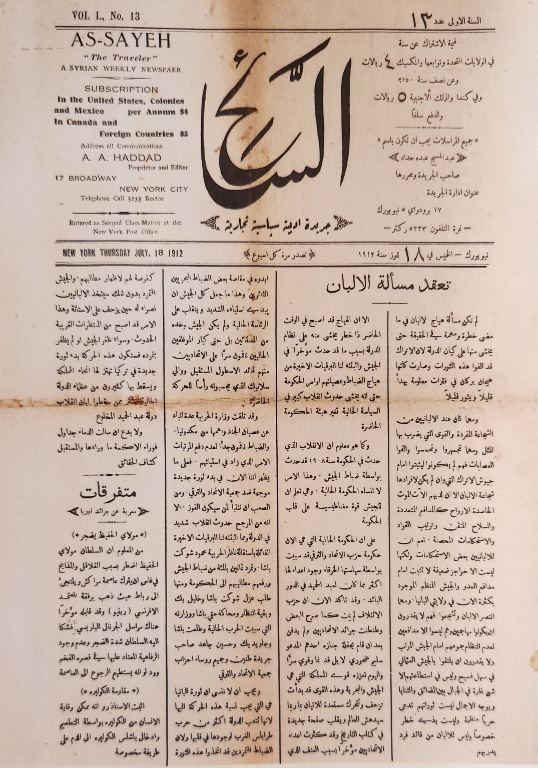
Both Abdul Maseeh Haddad, publisher of the Arabic newspaper, As-Sayeh (“The Traveler”),4 and Naseeb Arida, publisher of Al-Akhlak (“The Character”) which was also being published in the Arabic language,5 had previously met Father John on numerous occasions, and both had thought that he was “amusing” because of his “eccentricity” and his abstract thinking, which to them seemed so far away from reality—an opinion I did not share; so I welcomed Gibran’s announced desire to meet Father John, and I proceeded to make arrangements for the meeting which later took place on a Sunday afternoon at Gibran’s studio in Greenwich Village.
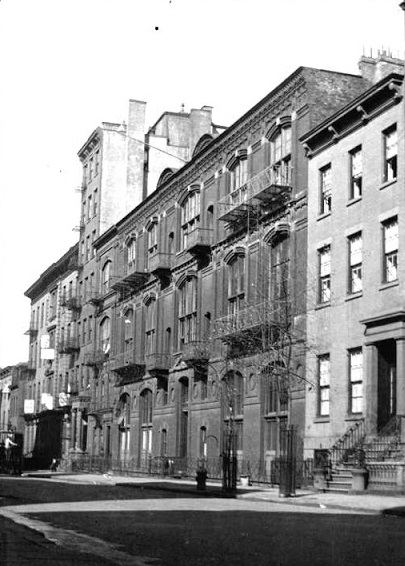
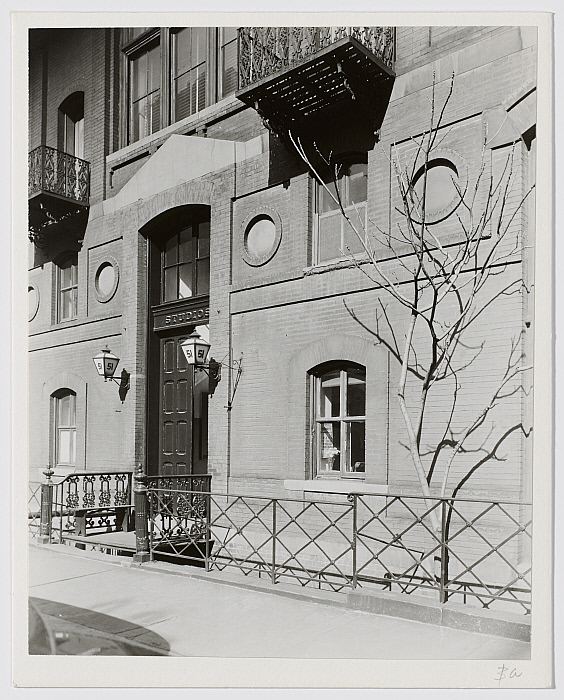
As Father John and I entered the studio, we saw some of Gibran’s drawings and paintings—mostly nudes—but sans any vulgar allusion to sex. Gibran, after welcoming us, hastened to say: “I trust that this display of my work does not shock your puritanical sense of modesty.” To which Father John replied: “No one needs to apologize for God’s creation. Art is a medium imparting a thought—a message—and it is the thought that could either be bad or good. I don’t see anything in your art that could be termed different from our chanting Mass at church, through which medium—the words of the ‘Holy Writ’—we of the cloth try to impart the message of love and peace as God ordains.”
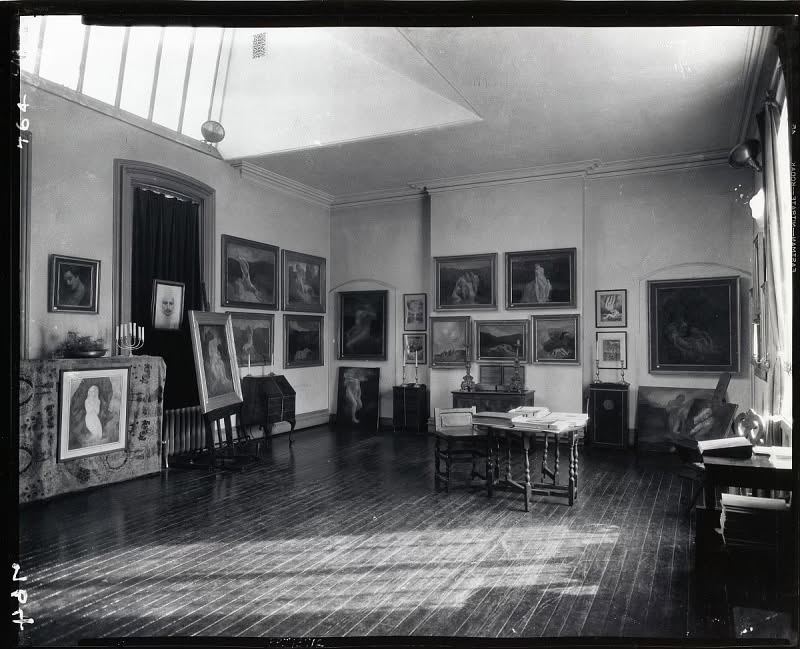
Gibran asked: “May I consider this to be a compliment? It had never occurred to me to vision the similarity between art and church services.” To which Father John replied: “It is meant to be!”
“You know, Father—or would it be better to call you ‘brother’ which to me sounds of nearer relation,” started Gibran, but Father John interposed: “We are all brothers with varying outlooks. I would feel complimented in being called brother rather than Father, which term should be reserved for Him, the creator of the universe.” “Thank you,” said Gibran, then continued: “I started to say that other wearers of the cloth have condemned and denounced me as being a proponent of heresy because I dared to point an accusing finger at what is so evident in human misbehavior. The Mother Church, which is supposed to preach the truth of the Most High and His love, took the drastic step of excommunicating me!… The autocratic rulers of the Ottoman Empire, working hand in hand with the clergy and church within its domain, denied me the right to set foot on the soil of my birthplace—all of which does not frighten, nor silence me… I shall continue to condemn hypocrisy and oppression with all my might, which at times seems insignificant, but with the help of some brothers of mine, such as he (pointing his finger at me) who gave me an insight into your remarkable background, which convinces me that you are one of the dedicated brothers—the workers in the field of humanity, who are destined to add another hewn stone to the structure of the Temple of the Most High—with such help I shall not fail.”
“It is gracious of you and quite heartening to me to be considered one of those dedicated workers,” said Father John as he bowed his head in a gesture of appreciation, then he continued: “I feel that there is a common tie which binds us, for I, too, have experienced the heel of autocracy on my neck. I have been exiled from the land where the common man was shackled to poverty by the rulers of that land, and I, too, have suffered from the indifference of my clergyman-superiors, but I don’t feel discouraged—perhaps disappointed with the evident apathy of those wearing the Shepherd’s mantle, carrying the Staff, and the crosier, yet caring not about the welfare of their sheep.” Here Father John stopped to clear his throat, then to continue: “However, I am gratified in knowing of your crusade against hypocrisy and tyranny. I have read some of your articles in Arabic, and I subscribe to your efforts in pointing to the lust and barbarously cruel customs inherited from the dark ages where ‘each one was for himself, and the devil to take the hindmost’.” Again Father John paused to brush back his long hair and to wipe off perspiration collected on his forehead, then continued: “And I feel confident that you are in the right and because you do have the truth for an ally, you will eventually be the victor. Remember that Jesus was also denounced by the clergy of His time on earth. There are some misguided, power-hungry humans who fear that the revelation of truth might deprive them of that power, and they stop at nothing to destroy their opponents. Didn’t they crucify Jesus in their retaliatory fight to retain their repugnant and destructive power? Such people are the product of human weakness. They become stumbling blocks for the righteous—and unfortunately such stumbling stones scattered in your way are numerous, and your toes will feel their impact, but in the end you will be the victor through your immortal writings.”
At that moment, Naseeb Arida and his younger brother, Saba (who later was found dead on a park bench and whose death much grieved Gibran), dropped in. Both were of pudgy stature, both were counted among the intellectuals and admirers of Gibran. Sensing that they might have some important matters to discuss with him, Father John and I took leave, promising to come back for another chat.6
❁
1 Nahas’s date of birth is uncertain, but it most likely falls between 1890 and 1896. ↩
2 Basil Moses Kherbawi (1872–1947) was an Orthodox priest, intellectual, historian, and author of Lebanese origin, and one of the most prominent figures in the early Syrian-Lebanese community in the United States. Born in Tyre, he studied at the American University of Beirut and, after a period at the Presbyterian Seminary for Boys in Antioch, emigrated to the United States in 1899. Settling in Brooklyn, he became archpriest and Dean of St. Nicholas Syrian-Greek Orthodox Cathedral, a position he held for approximately thirty years. He was a prolific author and an important scholar of the history of Arab immigration and the Arab diaspora in America. His principal work, The History of the United States and the History of Syrian Emigration, published in New York in 1913, is an Arabic-language volume divided into two sections: a history of the United States viewed from a perspective attentive to the immigrant experience, and a history of Syrian emigration, rich in biographical information about professionals, merchants, and other members of the Syrian-Lebanese communities in the United States. Kherbawi also published a History of Russia in Arabic, issued in 1914 and reportedly praised by Tsar Nicholas II, and contributed in 1919 to Neighbors, an Episcopal Church study of religion and immigration that also provided statistical data on Lebanese and Syrian residents in the United States. ↩
3 It was founded in 1914. ↩
4 It was founded in New York City in 1912. ↩
5 It was founded in New York City in 1914 by Yacoob Raphael. ↩
6 Joseph Nahas, A Depression Miracle, Lake Hamilton, Arkansas, 1975 (privately published), pp. 44–62. ↩
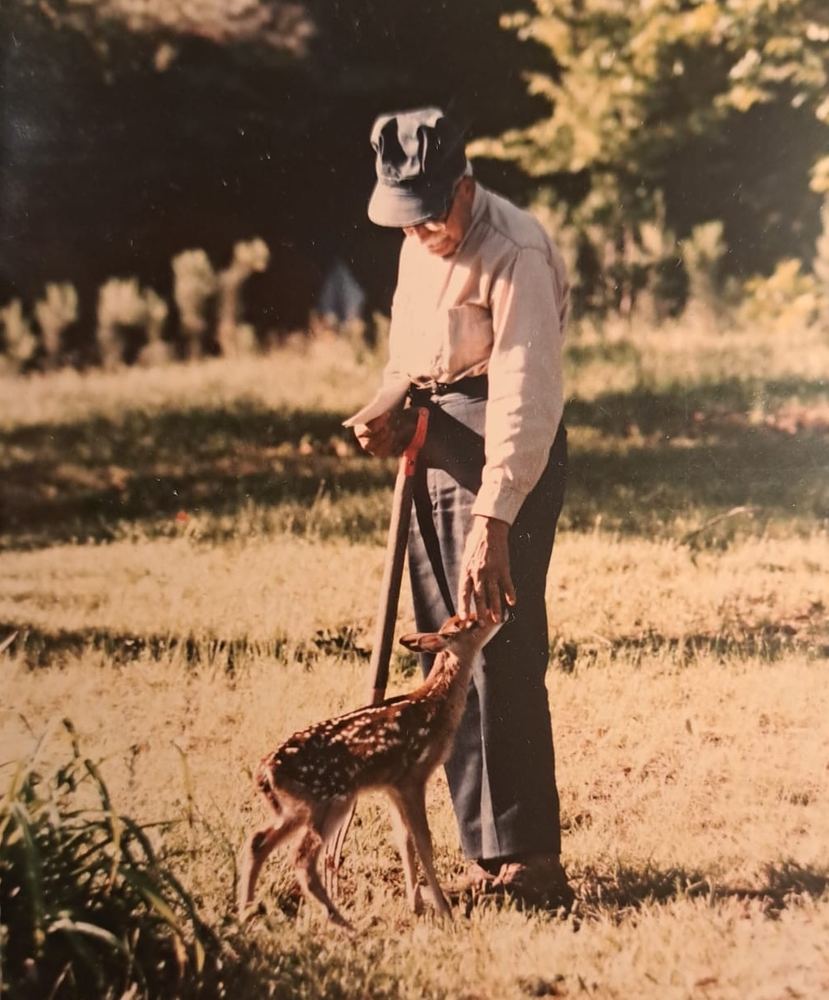
* The author of this article wishes to thank Kathy Nahas Pratt, granddaughter of Joseph Nahas, for kindly providing a rare and valuable copy of the volume, inscribed and signed by her grandfather, from which the testimony about Father John and his meeting with Gibran is drawn, and for generously donating the precious photograph of him, reproduced here as well.
All Rights Reserved © Copyright Francesco Medici 2026