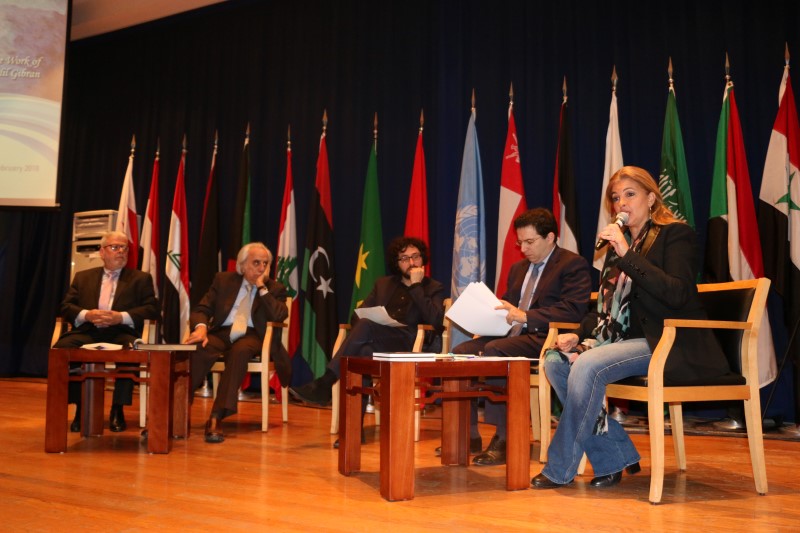
On 20 February 2018, the UN Economic and Social Commission for Western Asia held a special event at UN-House, Beirut, to mark the World Day of Social Justice — exploring how the themes of equality, injustice, and collective responsibility run through the life and work of Kahlil Gibran. Francesco Medici presented the keynote intervention.
By Francesco Medici
• ❧ KGC ❧ •
KAHLIL GIBRAN COLLECTIVE
By Francesco Medici · Kahlil Gibran Collective · 2018 · kahlilgibran.com
• ❧ KGC ❧ •
I
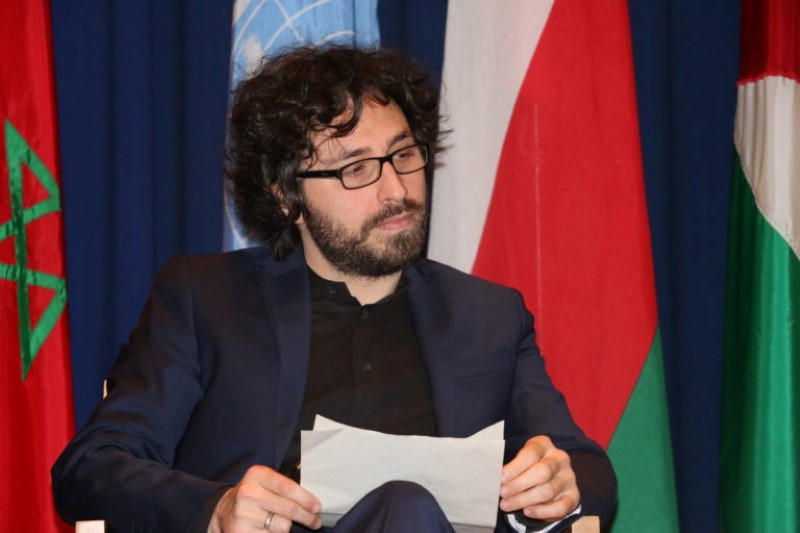
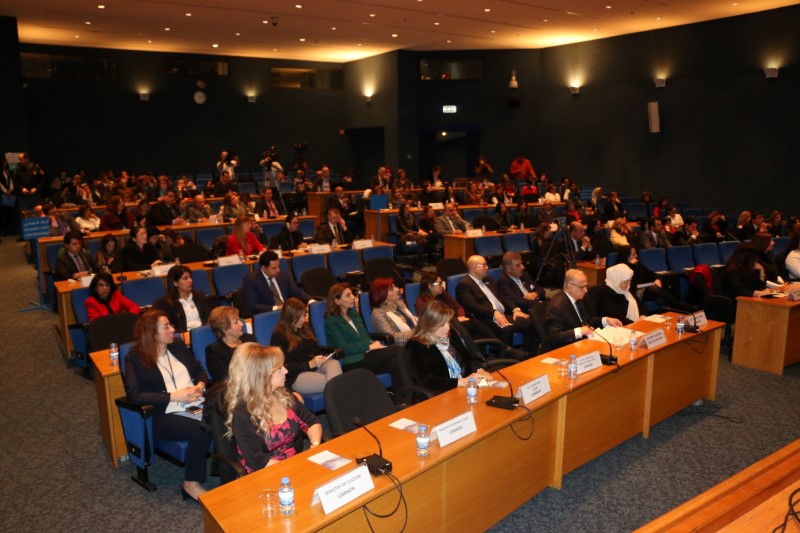
February 20th marks the World Day of Social Justice, and the UN Economic and Social Commission for Western Asia (ESCWA) marked the occasion with a special event in Beirut celebrating equality and justice in the work of Kahlil Gibran. Kahlil Gibran scholar and literary critic Francesco Medici joined the panel as a guest speaker, alongside Dr. Henri Zgheib, Lebanese poet; Dr. Tarek Chidiac, President of the Gibran National Committee; and Alexandre Najjar, author. Moderating was journalist Ms. Roula Mouawad. The event was attended by members of the diplomatic community, government representatives, and artists and socioeconomic experts from across the region.
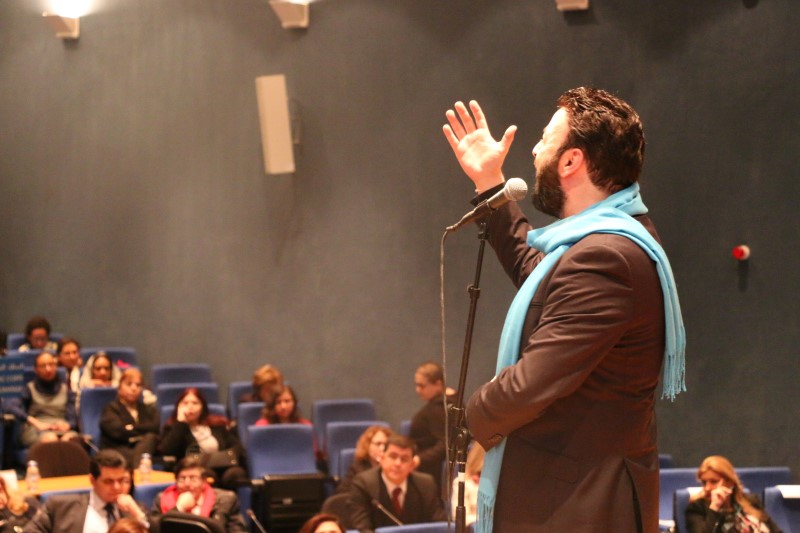
Tenor Gabriel Abdel Nour performed a musical repertoire highlighting Gibran's messages of equality and justice, drawing from the themes of The Prophet.
• ❧ KGC ❧ •
II
The following is Francesco Medici's full intervention at the ESCWA event, as delivered on 20 February 2018. Moderated by Ms. Roula Mouawad.
At the last International Gibran Conference (4–6 January 2018, Beirut) you presented a paper on your discoveries about Gibran — unknown or rare material relating not only to his work but also his biography. Did you find any significant episode in his life that relates to the theme of this special world day?
I thank you for this question because I think that today we are celebrating not only Gibran the writer, artist, philosopher, activist, and social reformer — but also Gibran the man, who lived consistently with his principles.
There is a little-known and touching anecdote about him that I would like to share with you, told by Yusuf Nahas, a friend and colleague of his at the office of the Arabic-language newspaper Al-Mohajer (The Emigrant):
One hot, humid day, Gibran and I went out to lunch at a restaurant in Battery Place. A crew of laborers was engaged in digging up the cobblestones of Washington Street and repaving it with heavy bricks. Among the group were a number of elderly men; one, in particular, must have been in his late seventies. He would stop, gasp, then withdraw a red bandana out of his pants pocket to mop up perspiration covering his deeply wrinkled face, then stoop down to carry his next load.
Gibran chokingly murmured, "The inhumanity of so-called humans! Why should such an old man be suffered to perform such arduous labor, while thousands of men, young and strong, are there" — pointing in the direction of the Stock Exchange on Broadway and Wall Street — "engaged in gambling, oblivious to the misery of many millions of others needing sustenance?"
As I turned my head to face Gibran, I saw tears trickling down his cheeks… Needless to say, he refused to lunch and was gloomier than ever during that entire day.
This is the episode, but the question is: why did Gibran weep? To be sure, we know he was a sensitive man, but the real reason for his tears is another. He was tortured by guilt.
One of the pillars of his religious and social creed was what in Sufism is called "collective responsibility." It is Gibran himself who clarifies this mystical concept during a conversation with his patroness Mary Haskell:
I never can divorce myself from the criminal. When I read of a forgery, I feel that I am the forger, and of a murder that I, too, have committed murder. If one of us does a thing, we all do it. What collective humanity does is done by each of us. What is in one of us is in all of us.
In The Prophet, Gibran compares collective humanity with a "procession" walking toward its self-perfecting, where each individual is responsible for others' actions:
The wrong-doer cannot do wrong without the hidden will of you all. And when one of you falls down he falls for those behind him, a caution against the stumbling stone. Ay, and he falls for those ahead of him, who though faster and surer of the foot, yet removed not the stumbling stone.
Nobody is lower, nobody is higher. Nobody is a sinner, nobody is a saint. We are all one single whole. If somebody commits a wrong, we all have committed it.
• ❧ KGC ❧ •
III
In his writings, Gibran appears to prefer to denounce what is unjust rather than to show us the path of justice. Why? And how does he perceive injustice?
Gibran is never so presumptuous as to think he can teach us the truth — what is right and what is wrong — because he knows well that truth is an experience, not something that can be borrowed from other people. Again in The Prophet, we read: "Say not, 'I have found the truth,' but rather, 'I have found a truth.'"
What is injustice? Almustafa says:
It is when your spirit goes wandering upon the wind,
That you, alone and unguarded, commit a wrong unto others and therefore unto yourself.
Here Gibran is repeating that we are a connected whole. Only one who acts solely to take care of himself, outside this organic unity, can commit injustice.
For Gibran, the very idea of judging others is absolutely irreligious. Who are you to judge? You cannot see the consciousness of another — only their act. Your judgment therefore is not only superficial but inhuman. Judging is nothing but a desire to condemn what we ourselves want to do but fear the consequences of, or to praise what we wish to become but are unable to be. A man of true understanding is without judgment.
In al-Mawakib (The Processions), Gibran writes:
Death and prison we mete out,
To small offenders of the laws,
While honor, wealth, and full respect
On greater pirates we bestow.
Who kills the body he must die,
Who kills the spirit he goes free.
The whole system of human law is fallacious. If somebody kills a body, only then can the law see it. But if somebody is slain in the spirit, the law has no way to find out. And everybody, at least once, has been murdered in the spirit.
❁
All Rights Reserved © Copyright Francesco Medici / Kahlil Gibran Collective 2018