Five and a half centimetres tall, 359 pages, all twelve of Gibran’s illustrations reproduced. A Leipzig press has printed the smallest Prophet ever made.
By Philippe Maryssael · Arlon, Belgium, 28 May 2021
• ❧ KGC ❧ •
KAHLIL GIBRAN COLLECTIVE
By Philippe Maryssael · Kahlil Gibran Collective · 2021 · kahlilgibran.com
• ❧ KGC ❧ •
I
Welcome to the world of miniature books! The true meaning of a miniature book is that it will impress you with its readability and perfect quality right down to the last detail.
In 2014, the German publishing house Miniaturbuchverlag in Leipzig published the smallest ever edition of Khalil Gibran’s masterpiece.
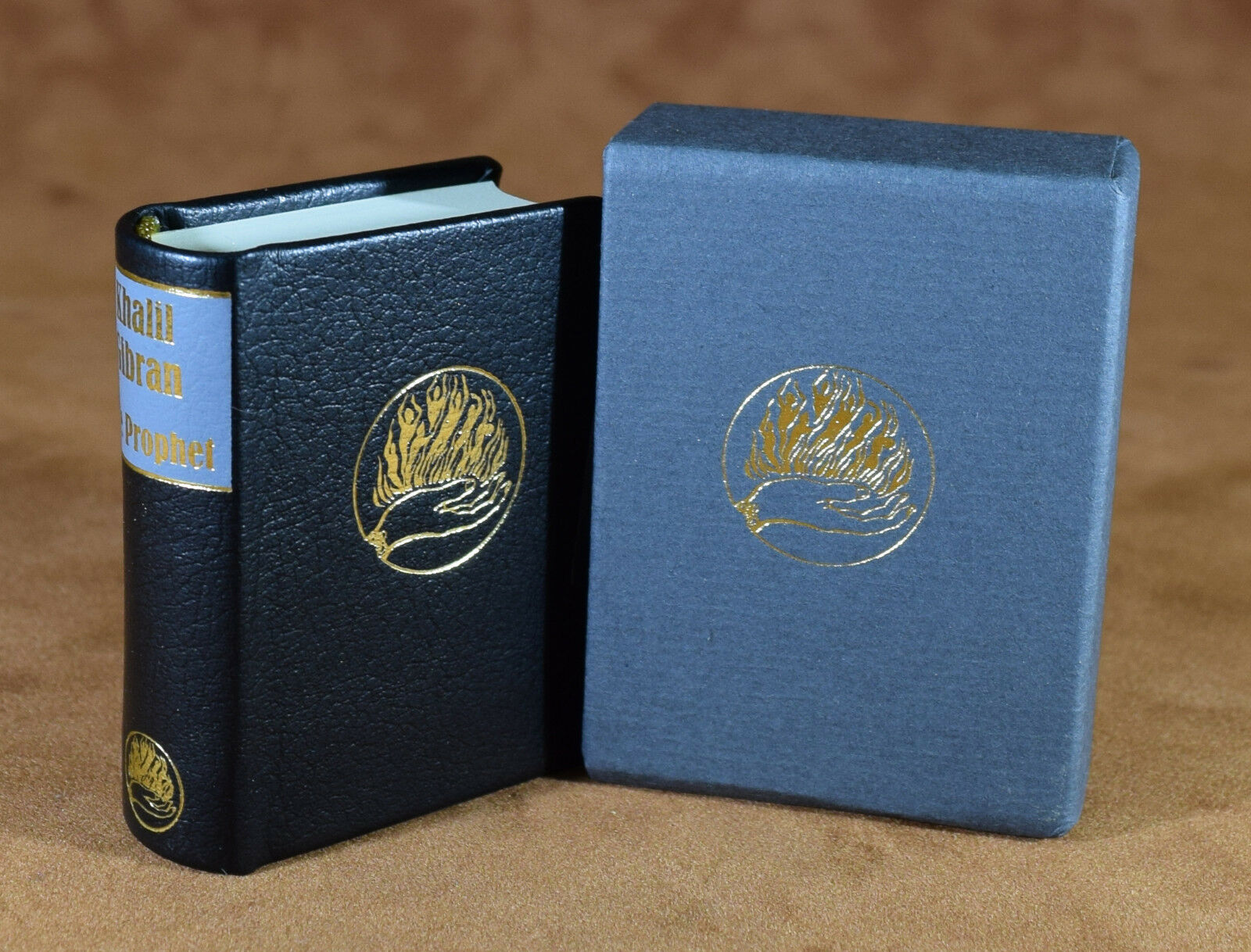
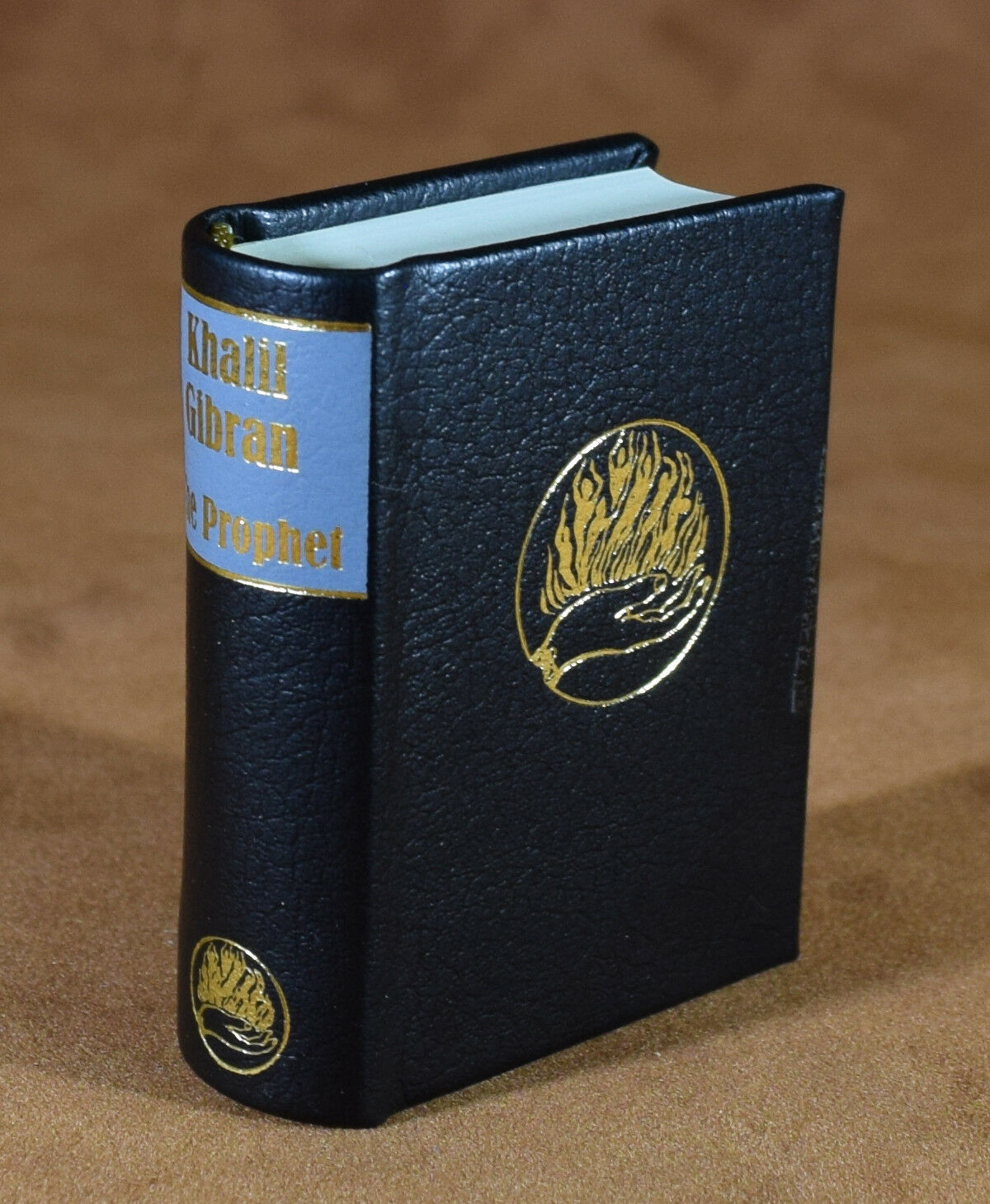
Based on the 4th printing of the standard edition published by Alfred A. Knopf in 1923, this minibook is but 5.5 cm high, 4.2 cm large and 1.9 cm thick (2.17 inches x 1.65 inches x 0.75 inches). It is protected by a slipcase. And the famous Hand of Fire design, although in a different design, is reproduced in gold leaf on the case and in the book.
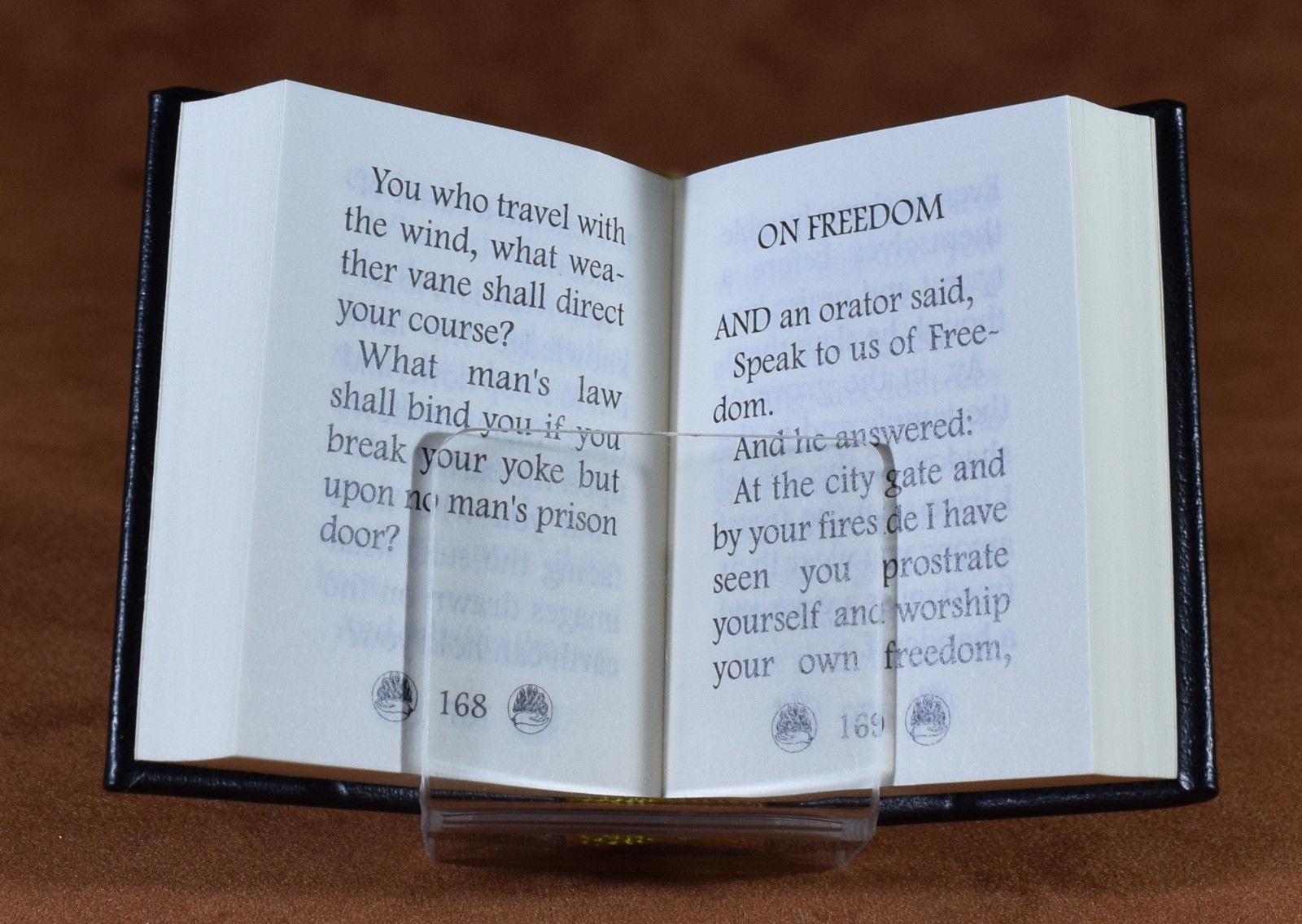
All twelve original illustrations by Khalil Gibran are also reproduced throughout this 359-page minibook.
❁
Edition
Miniaturbuchverlag, Leipzig, Germany, 2014
ISBN 978-3-86184-259-0 for the regular edition
ISBN 978-3-86184-260-6 for the limited, gilt-edged edition
About the Author
Philippe Maryssael was born in Brussels, Belgium, in 1962. He studied translation in Brussels in the early 1980s. He later studied terminology and terminotics, the set of techniques involving the use of computer software in conducting terminology research on vast text corpora and deploying terminology database and translation memory solutions in support of the translation business.
His first job was as a bank clerk in Brussels. After a couple of years, he became a professional translator and terminology pioneer in the insurance and financial sectors before he moved to Luxembourg and joined a European financial institution as a translator-reviser, terminologist, and computer-aided translation and terminology tools specialist. There, after a decade, he changed the course of his career and became a business process manager involved in paving the way to the institution-wide dissemination of business process optimization and re-engineering practices.
In July 2017, he decided to retire. The time was right for him to indulge in his life-long interest in the writings of Kahlil Gibran. He started collecting first editions of the books that Gibran wrote in English. He also started comparing the numerous French translations of his works. The natural next step was his intention to provide personal translations of Gibran’s English books into French and to have them published. His first published work came out at the end of 2018: Le Fol, a bilingual presentation of the text of The Madman and his new translation, with an in-depth analysis of Gibran’s use of the English language and a study of several themes across his entire body of books.
In February 2020, Philippe Maryssael published his second book by Gibran, Le Sable et l’Écume, translated into French from Sand and Foam (1926). His third book, Le Prophète, translated from Gibran’s masterpiece The Prophet, has been available since December 2020.
More information on Philippe Maryssael and his translation projects can be found on his personal website at http://www.maryssael.eu/en/.
All Rights Reserved © Copyright Philippe Maryssael 2021