Kahlil Gibran Collective · Articles
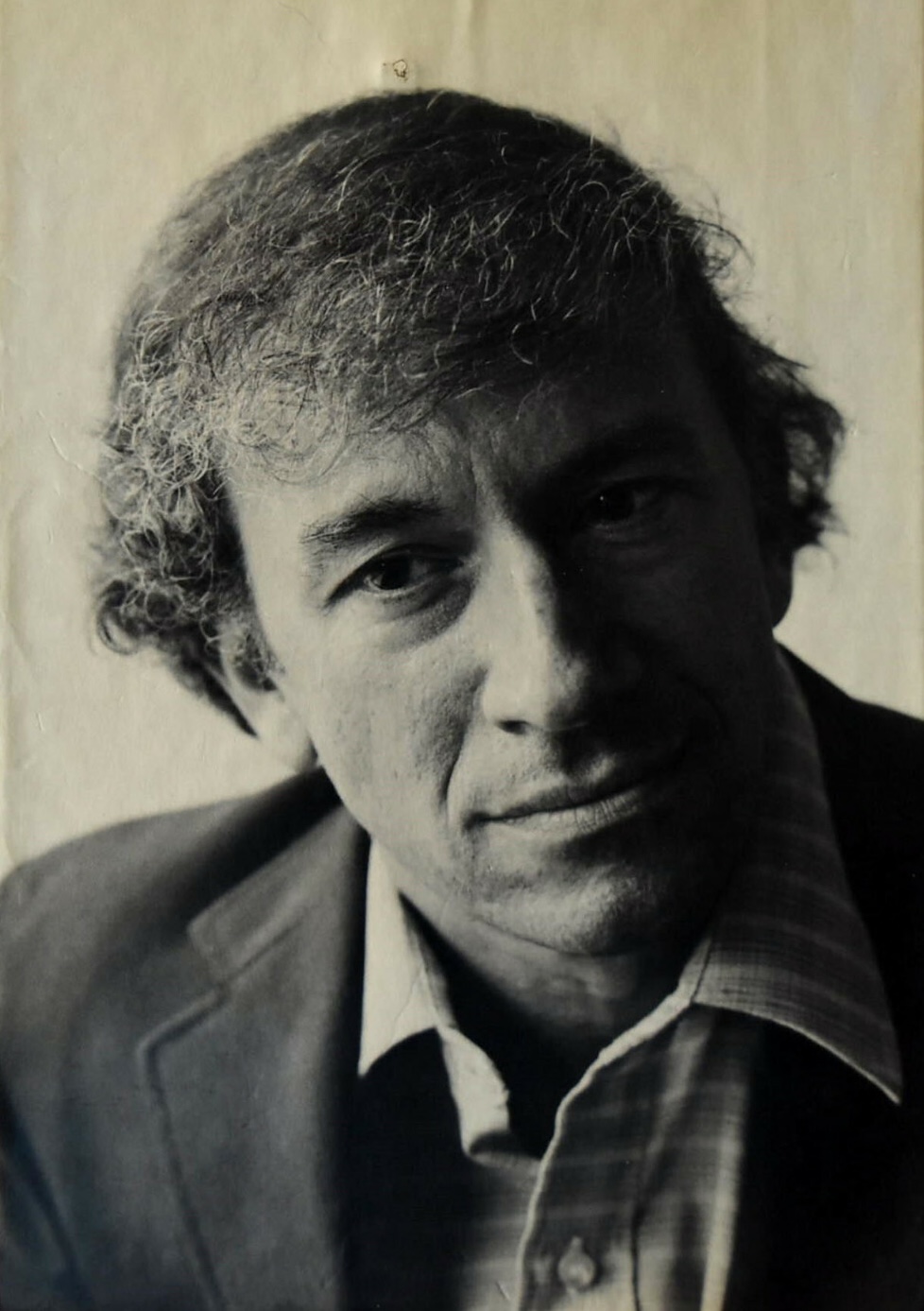
Stefan Kanfer (1933–2018), American journalist, critic, editor and author.
The 1972 New York Times article "But is it not strange that even elephants will yield – and that 'The Prophet' is still popular?" by Stefan Kanfer (1933–2018), an American journalist, critic, editor, and author, is a long and highly polemical essay-review of Kahlil Gibran's The Prophet, targeting its enormous popularity, especially among American university students and youth culture in the 1960s and 1970s. It begins with an ironic depiction of so-called "Campus Cordials," students with a militant and politically engaged appearance who nonetheless carry The Prophet in their backpacks, introducing the central paradox: a book that presents itself as profound and spiritual has become a cross-cultural cult object, almost a handbook of easy wisdom. From there, Kanfer develops a strongly critical argument. He claims that Gibran's success does not stem from genuine philosophical or literary depth, but from his ability to produce vague, comforting, and pseudo-profound maxims that can be adapted to almost any situation. The Prophet is reduced to a series of sentimental and repetitive aphorisms on love, marriage, death, and beauty, which the author judges as rhetorically inflated and intellectually shallow. Gibran is accused of turning banal ideas into elevated language, creating an artificial sense of spirituality that nevertheless appeals strongly to readers.
At the same time, the essay explains why this kind of writing became so successful: it provides emotional comfort in an increasingly complex world, replacing critical thought with reassuring and easily memorized formulas. For this reason, Gibran is portrayed as a cultural institution, widely consumed despite his intellectual limitations. The final judgment is clearly negative: the text argues that this "soft" and simplified philosophy weakens the ability to think critically and engage with reality, and it contrasts Gibran with an ideal of more rigorous, analytical, and demanding language. In short, the article not only criticizes The Prophet itself, but also uses it as a symbol of a broader cultural tendency toward emotional, simplified, and anti-rational modes of thought.1
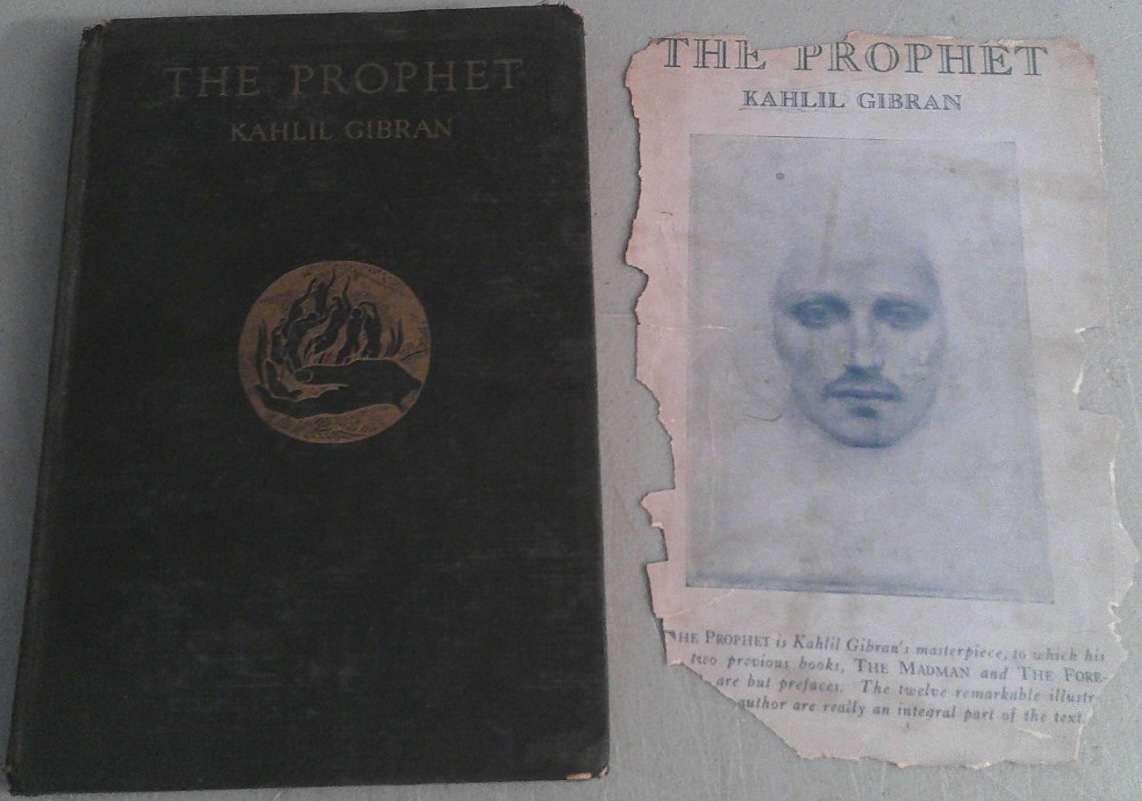
First edition dust jacket of Kahlil Gibran's The Prophet, Alfred A. Knopf, New York, 1923 — one of the most recognisable book covers of the twentieth century.
Kanfer's essay sparked a lively debate among both scholars and the newspaper's readers. About twenty days after the article was published, the "Letters to the Editor" section of the New York Times featured, among others, a comment by the freelance writer and journalist June Robbins (1921–1993), which – despite some curious remarks, inaccuracies, and imprecisions – contains a valuable testimony concerning Gibran and his colleague, associate, and close friend Mikhail Naimy (1889–1988), also known as Mischa. June recounts the close friendship between her father, Oscar Arthur Stumpe (1894–1956), and Naimy, who had been his comrade-in-arms on the Franco-German frontier during the First World War.
Stumpe was an attorney from St. Louis, Missouri, who practiced law in Virginia, Washington and, as a partner in the law firm of 'Lorenz, Stumpe & Lorenz' in New York. An Army sergeant in WWI, he was decorated by the American, French and Australian Governments for rescuing wounded men in action in France. In her letter, June recalls the visits that Naimy, together with Gibran, used to make to her family, probably at their home in Greenwich Village, New York City.
In addition to Joseph Lorenz, another of her father's fellow servicemen as well as a future colleague at the law firm in New York, June also mentions the American journalist and government official Stephen Tyree Early (1889–1951). After serving in World War I with an infantry regiment and the Stars and Stripes,2 the latter returned to the US and served as the third White House press secretary under President Franklin D. Roosevelt from 1933 to 1945 and as the acting press secretary under President Harry S. Truman in 1950.
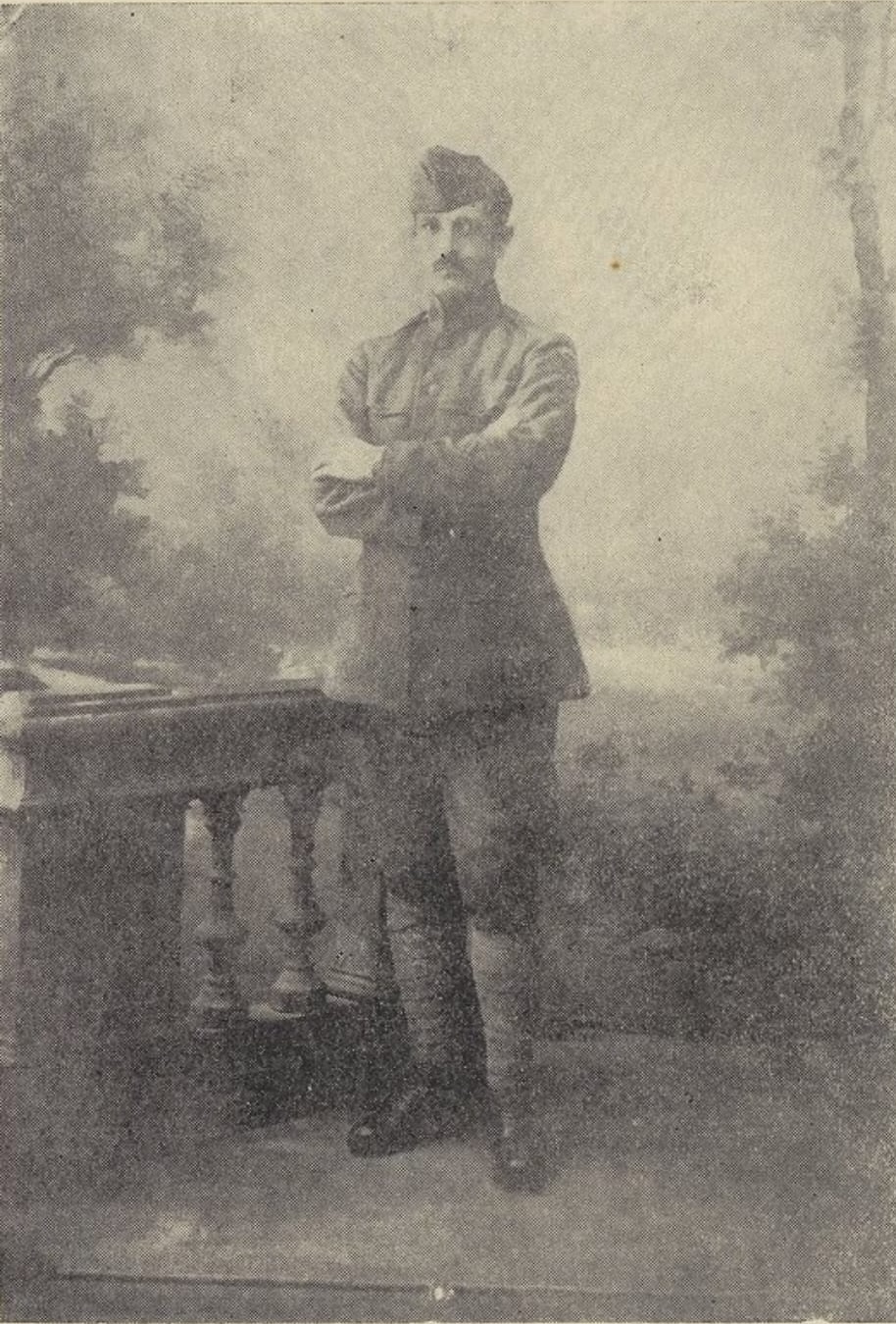
Mikhail Naimy (Mischa) in military uniform, 1919.
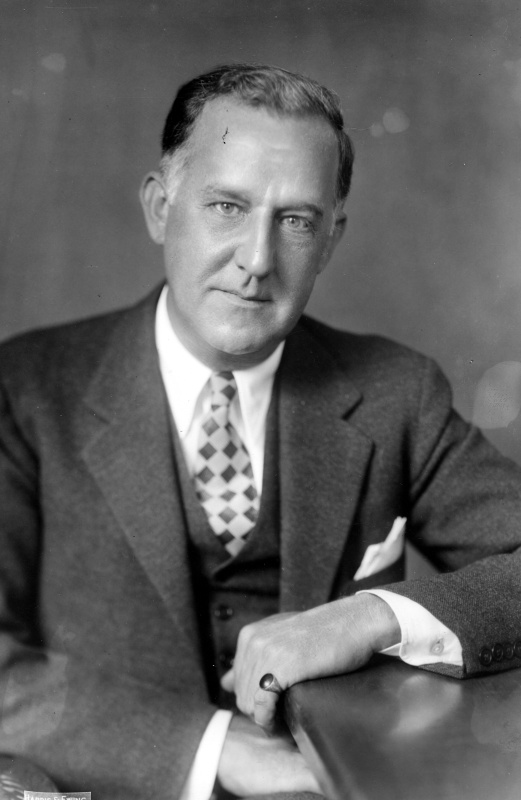
Stephen Tyree Early (1889–1951), White House Press Secretary under President Franklin D. Roosevelt. Photo courtesy of Beth Gore.
The full text of June Robbins' letter is reproduced below. Please refer to the footnotes for any corrections, clarifications or additional information.
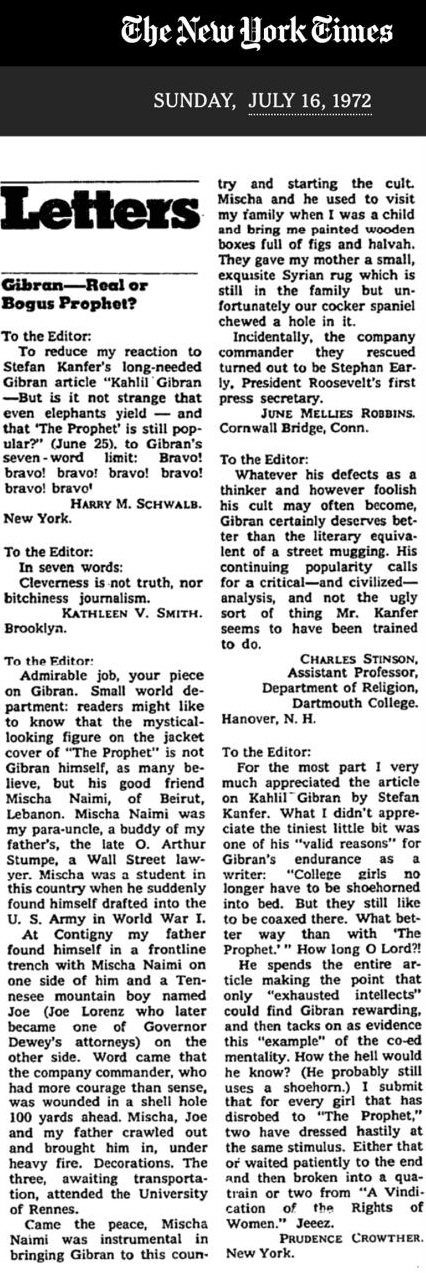
June Mellies Robbins' letter to the editor, New York Times, Sunday, 16 July 1972.
To the Editor
Admirable job, your piece on Gibran. Small world department: readers might like to know that the mystical-looking figure on the jacket cover of "The Prophet" is not Gibran himself, as many believe, but his good friend Mischa Naimi, of Beirut, Lebanon.3 Mischa Naimi was my para-uncle, a buddy of my father's, the late O. Arthur Stumpe, a Wall Street lawyer. Mischa was a student in this country when he suddenly found himself drafted into the U.S. Army in World War I.4
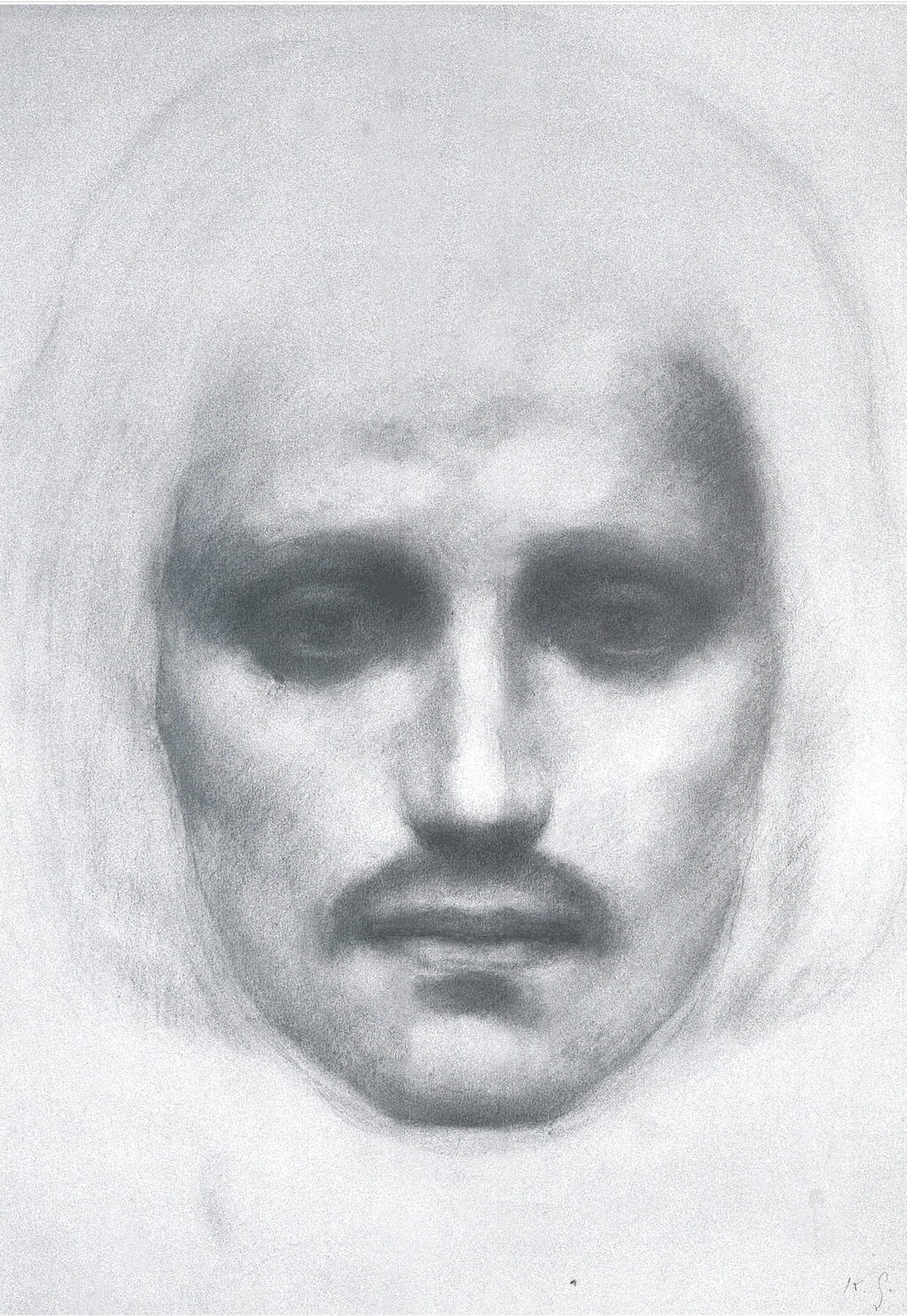
Gibran's original charcoal drawing of Almustafa — the face that would become the cover of The Prophet.
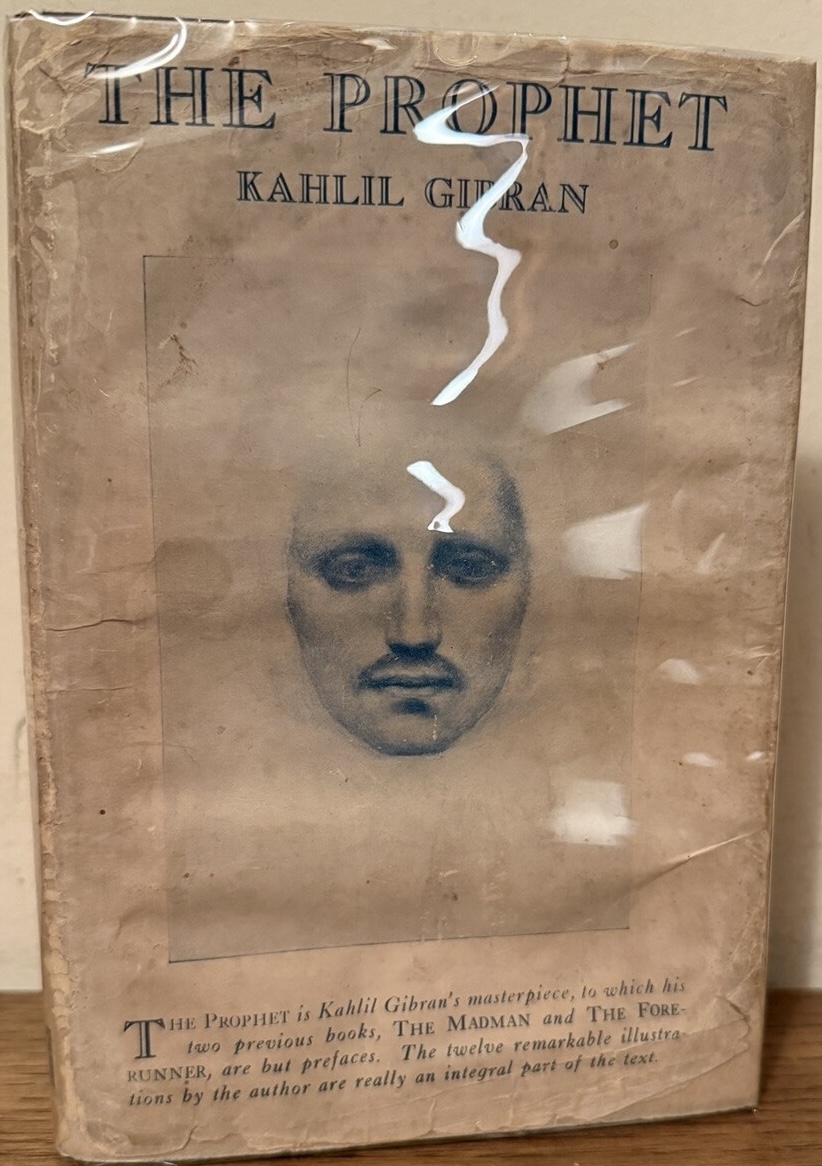
The face of Almustafa as it appears on the cover of The Prophet — widely believed to be modelled on Naimy, not Gibran.
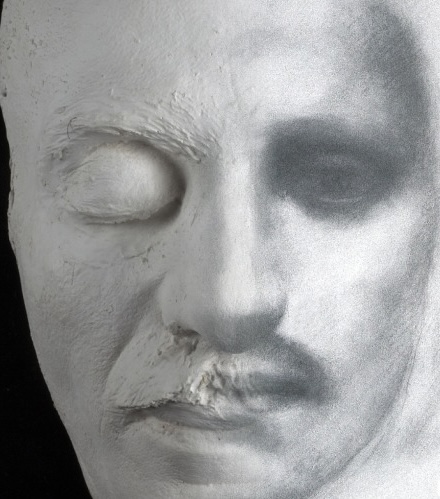
A composite comparison: Gibran's death mask alongside the face of Almustafa from the cover of The Prophet.
At Contigny my father found himself in a frontline trench with Mischa Naimi on one side of him and a Tennessee mountain boy named Joe (Joe Lorenz who later became one of Governor Dewey's attorneys) on the other side. Word came that the company commander, who had more courage than sense, was wounded in a shell hole 100 yards ahead. Mischa, Joe and my father crawled out and brought him in, under heavy fire. Decorations. The three, awaiting transportation, attended the University of Rennes.5
Came the peace, Mischa Naimi was instrumental in bringing Gibran to this country and starting the cult.6 Mischa and he used to visit my family when I was a child and bring me painted wooden boxes full of figs and halvah.7 They gave my mother a small, exquisite Syrian rug which is still in the family but unfortunately our cocker spaniel chewed a hole in it.
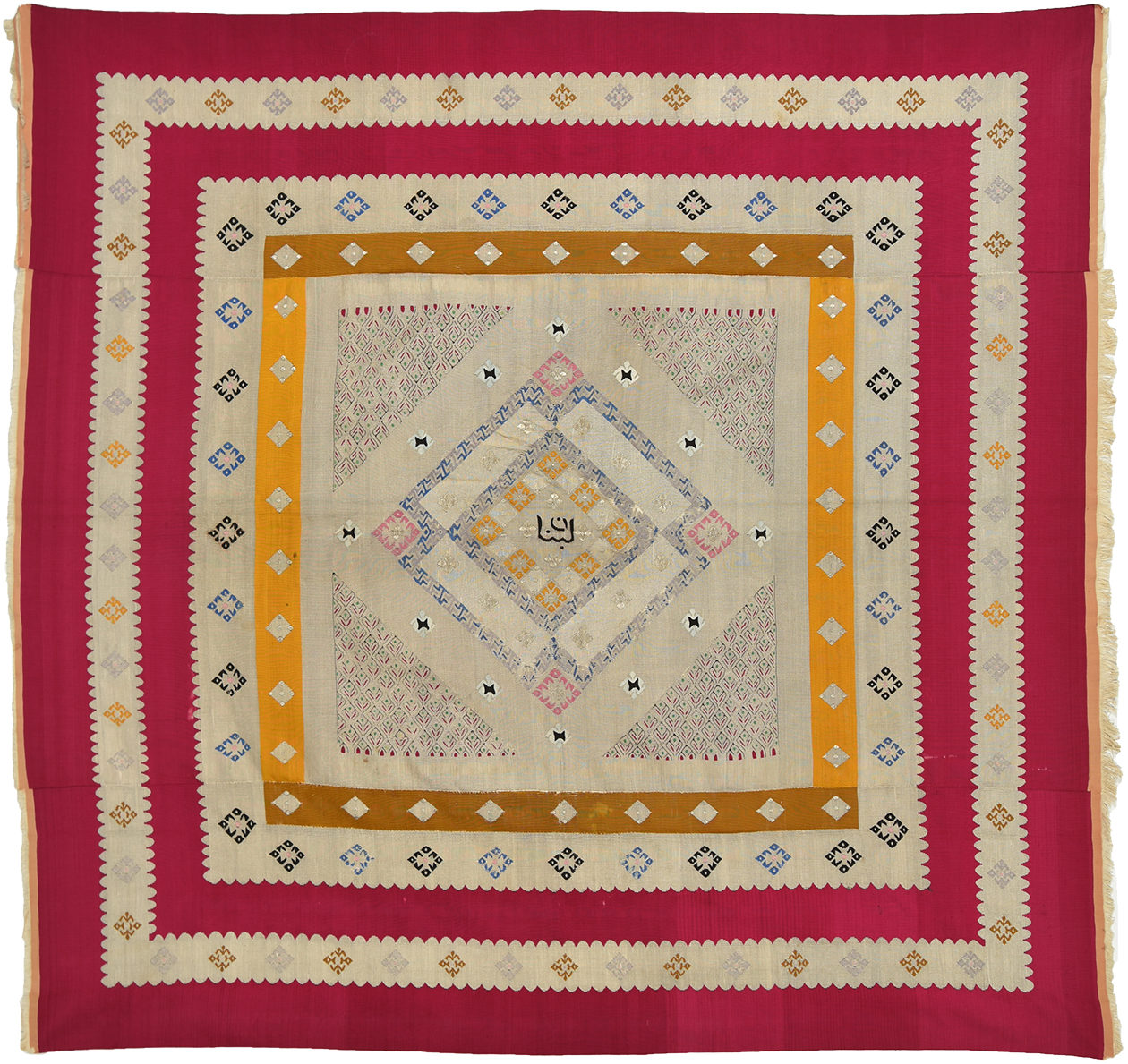
Syrian tapestry featuring the word 'Lebanon' in Arabic script — similar to the rug gifted by Naimy and Gibran to the Stumpe family.
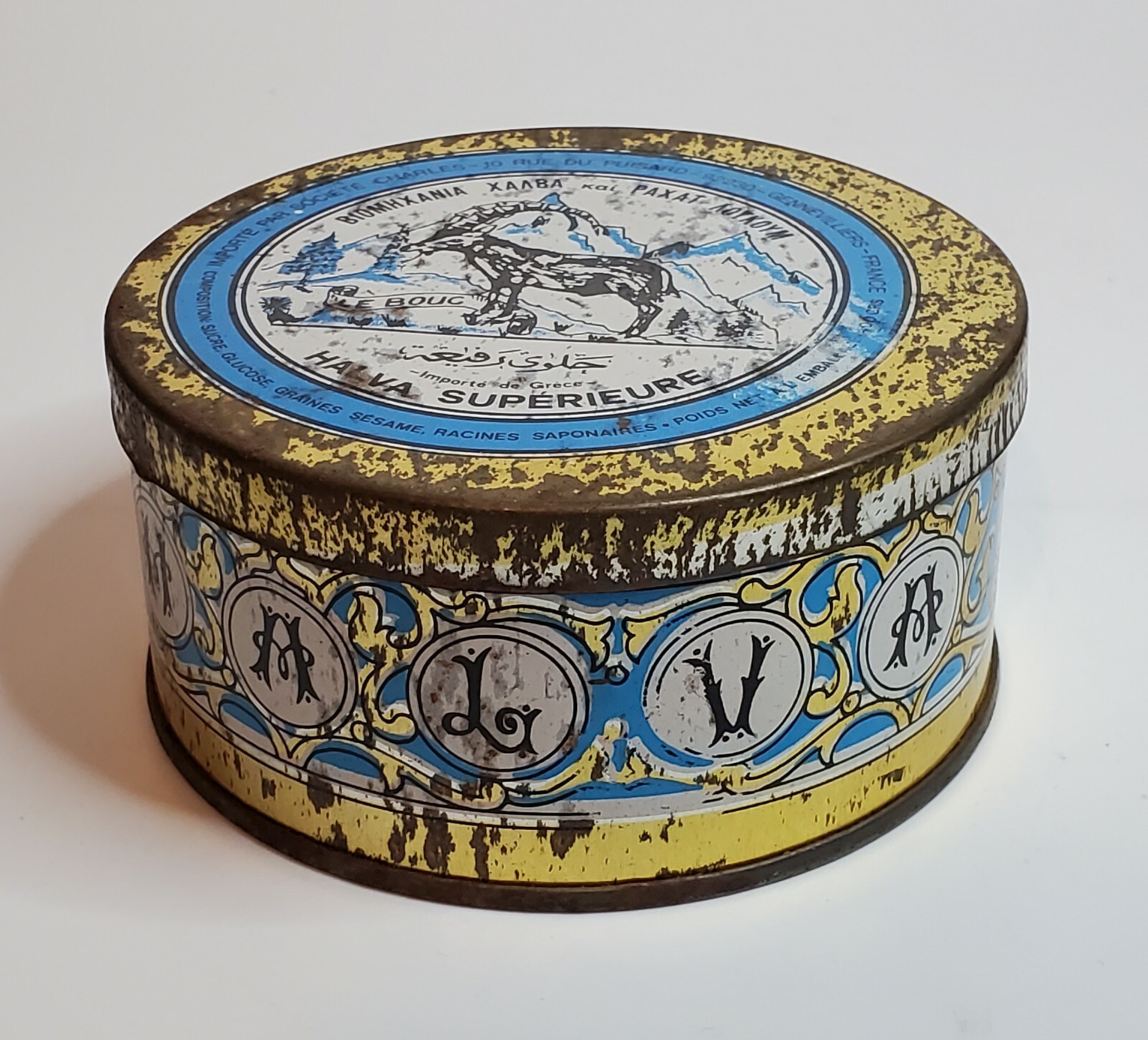
A vintage halva–tahine tin, early 1900s — of the type brought as gifts by Naimy and Gibran on their visits to the Stumpe family.
Incidentally, the company commander they rescued turned out to be Stephen Early, President Roosevelt's first press secretary.
June Mellies Robbins
Cornwall Bridge, Conn.8
Notes