Kahlil Gibran Collective · Articles
7 May 2026
New York City's Permanent Recognition of the Mahjar Writers and Their World
Todd Fine holds a PhD in History and is the founder of the Washington Street Historical Society.
He edited a critical edition of Ameen Rihani's The Book of Khalid with Syracuse University Press.
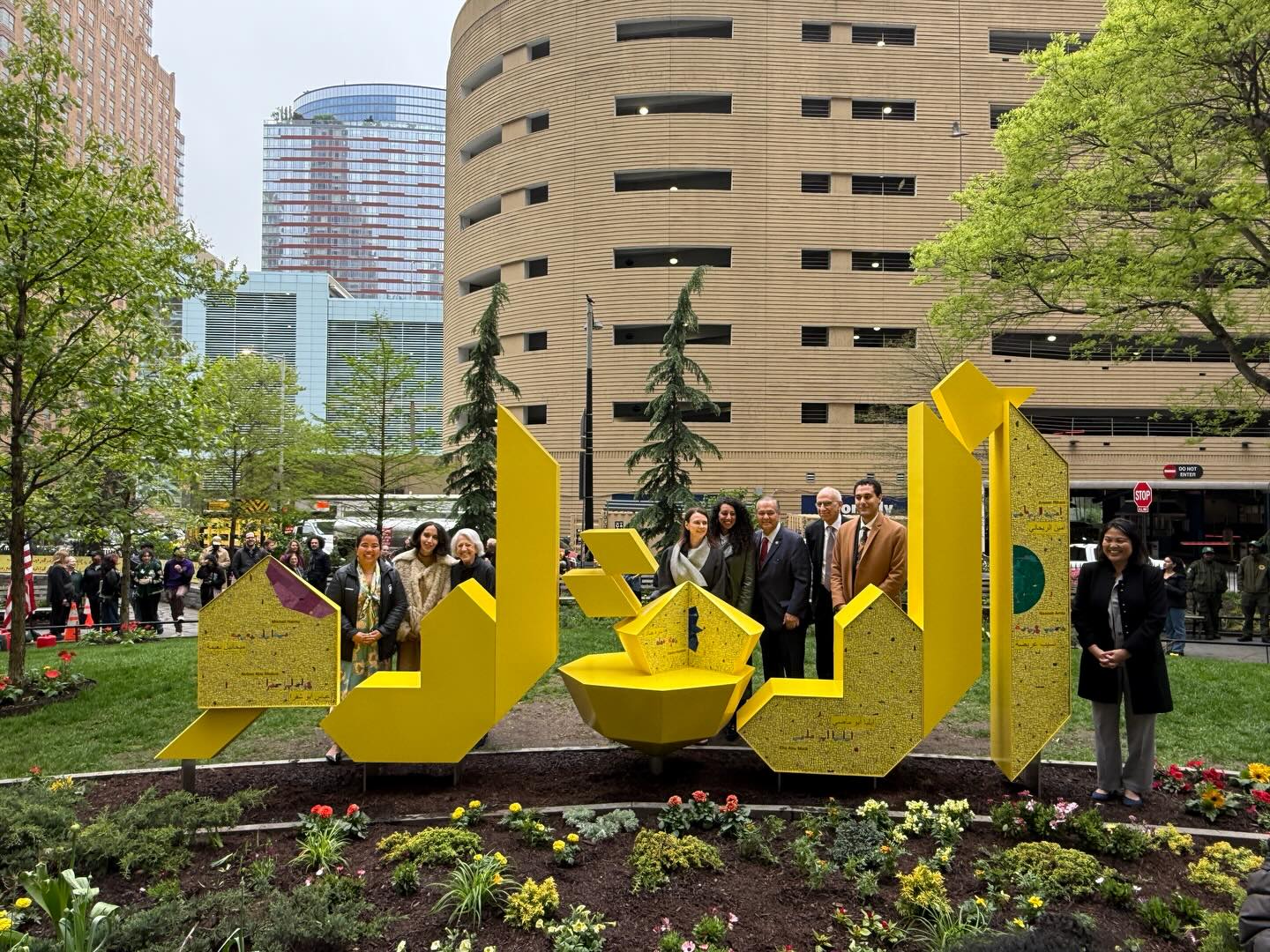
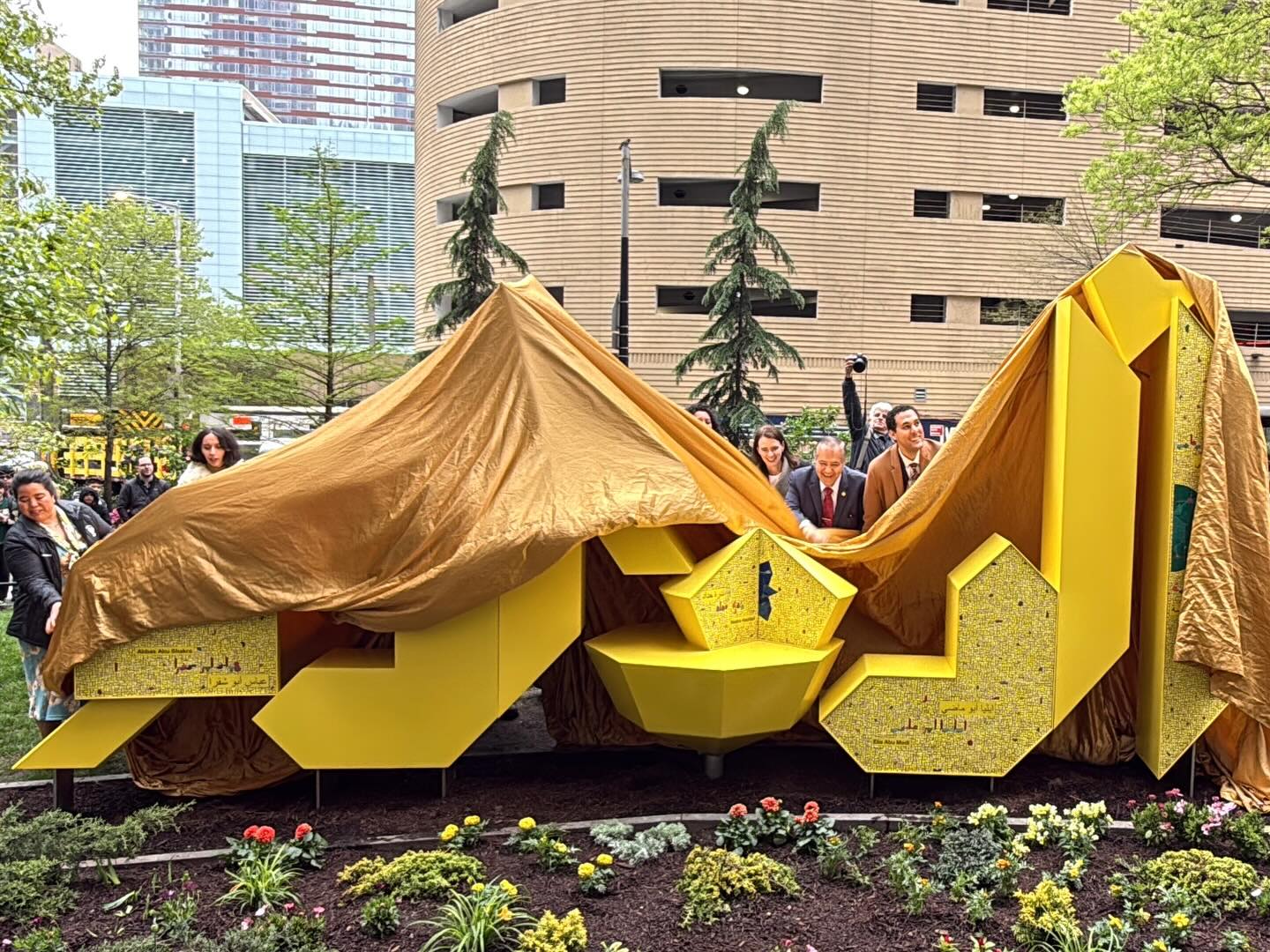
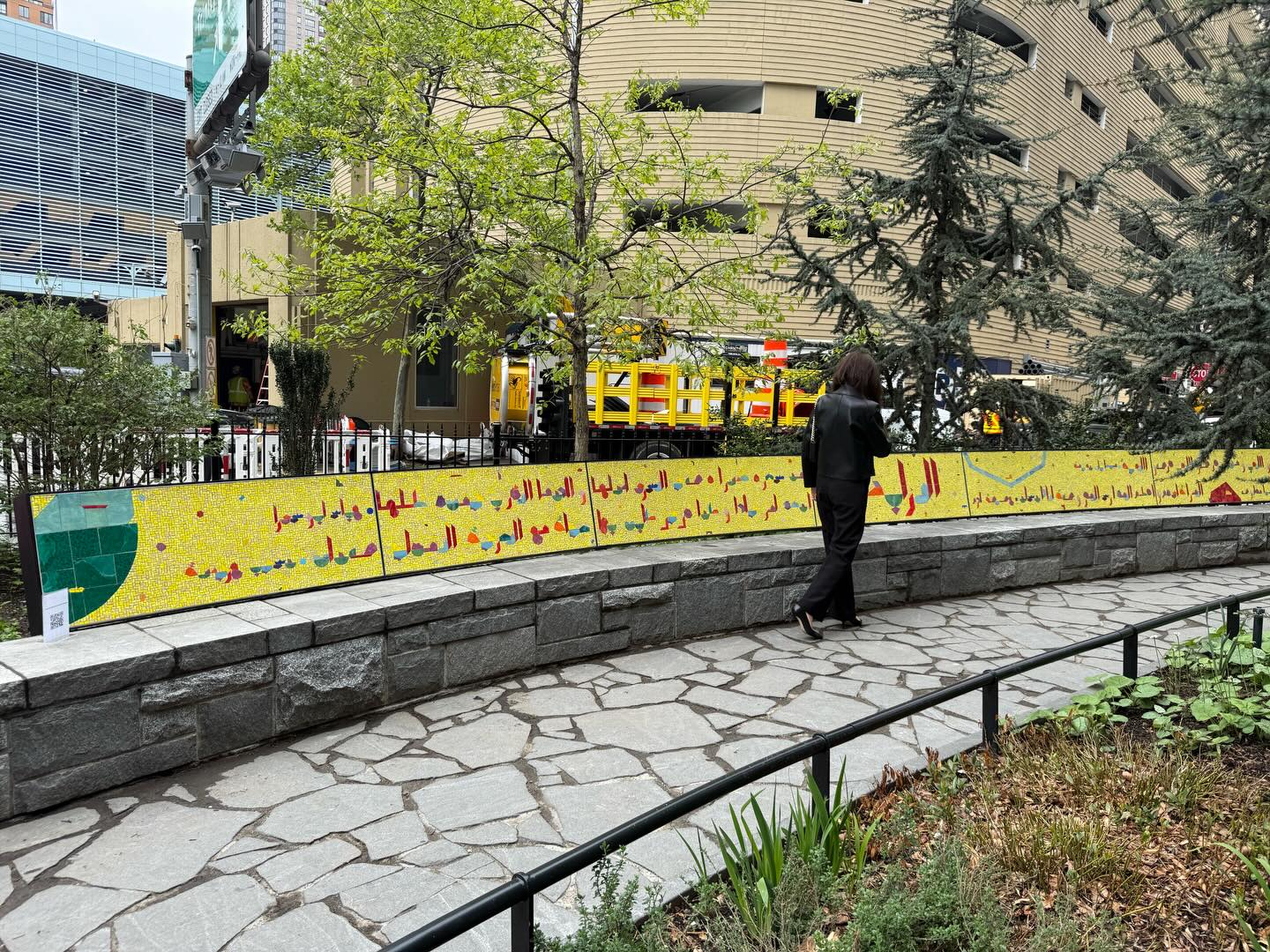
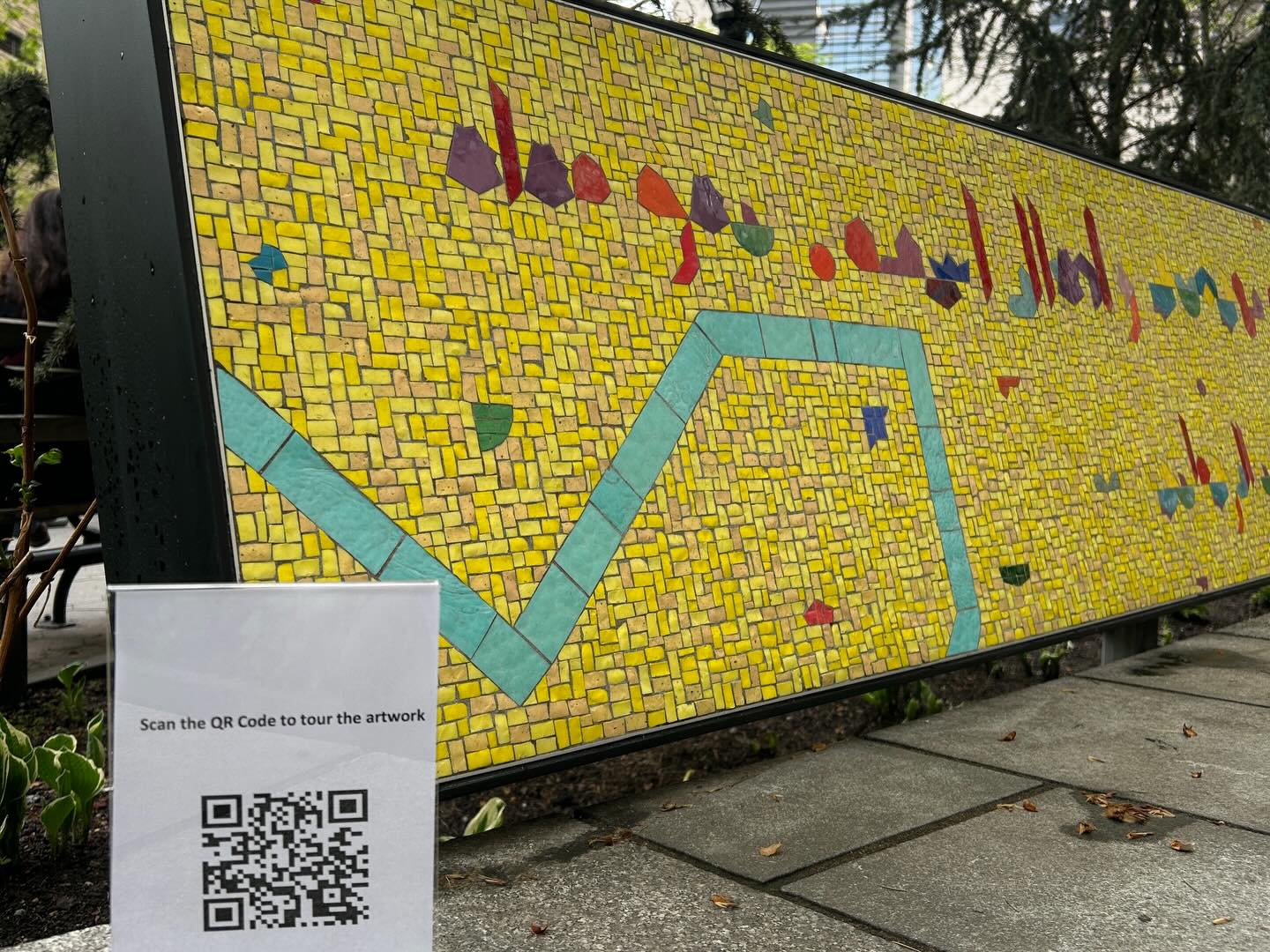
Last Thursday, 30 April, the City of New York unveiled a public monument dreamed about for years: a permanent recognition of Kahlil Gibran, Ameen Rihani, Mikhail Naimy, and the entire cohort of Mahjar writers associated with the Lower Manhattan neighborhood sometimes called "Little Syria." The monument, designed by French-Moroccan artist Sara Ouhaddou, is composed of two parts: a central sculptural representation of the word Al-Qalam (the pen) in yellow-painted stainless steel with mosaic panels bearing the names of the major writers in both English and Arabic, and a set of two long mosaics of quotations from the writers rendered in an abstract alphabet on curved benches along the sides of the plaza.
"The whole world is my homeland, and the human family is my tribe."
— Kahlil Gibran, as inscribed on the monumentThe setting, Elizabeth H. Berger Plaza, is a recently-built public space with several horticultural nods to Lebanon, located near the historic Washington Street where some of the writers lived and the Arabic-language newspapers were published. Close to Wall Street, Battery Park, and the World Trade Center, it is extraordinarily well-placed for millions of tourists and downtown residents and workers to encounter the ideas and symbols of this literature.
The Artist and the Commission
The visual artist Sara Ouhaddou, whose work has received growing international attention, was selected through New York City's Department of Cultural Affairs "Percent for Art" process. A large pool of around 45 artists — assembled by city staff and the nonprofit Washington Street Historical Society — was filtered to five finalists, four of whom presented proposals before the public and a panel of experts. Ouhaddou's talent with graphics and design, her engagement with Arabic textual representation, and a practice well-suited to sculpture and mosaic helped her win the commission in January 2017.
The permanent monument, which cost $1.6 million to build and to endow for ongoing maintenance, makes a number of key symbolic gestures. Rather than honour any single writer, it affirms the full breadth of the Arabic literary movement in New York City. The focus on the word itself and the pen allows the monument to recognise all writers and journalists associated with the Mahjar literary movement and the Arabic-language newspaper scene. Notably, it explicitly acknowledges Afifa Karam and Agabia Malouf, bringing in women writers who are commonly overlooked.
Alluding to the literary group known as the "Pen League," the monument centres the word al-Qalam — the tool that God uses to teach and awaken humanity in the Qur'an — building on the power of the Word (al-Kalimah) in Jewish and Christian traditions as well. The striking yellow colour alludes to the light and illumination theme common in Mahjar literature and the Arab Awakening, the Nahda. The monument seizes the visitor's attention, suggesting that something powerful in this cultural movement emanated outward as light. The use of architectural motifs, meanwhile, offers a counterpoint to the surrounding skyscrapers, comparing the legacy of the written word to the iconic buildings of Lower Manhattan.
Ceremony and Celebration
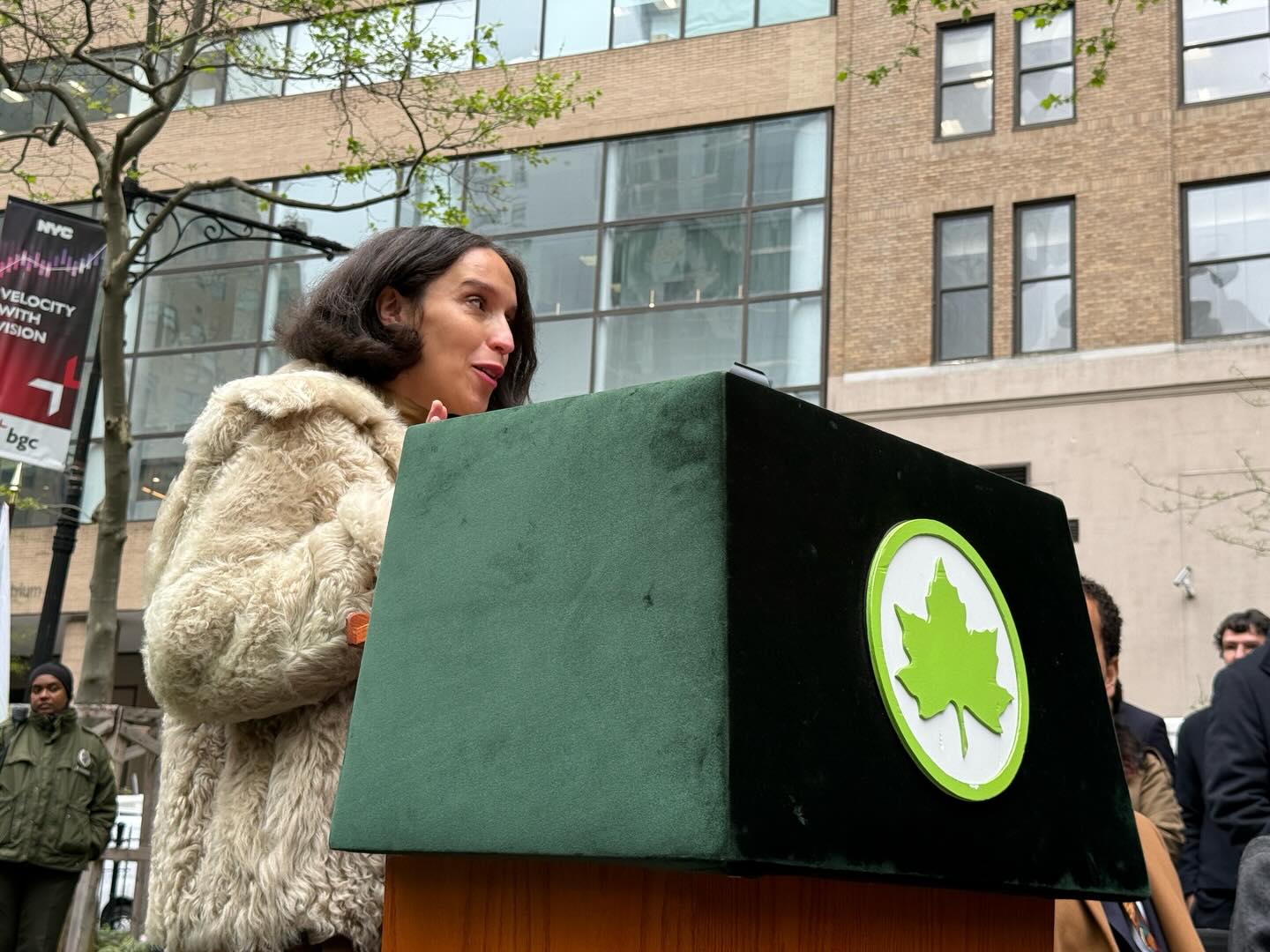
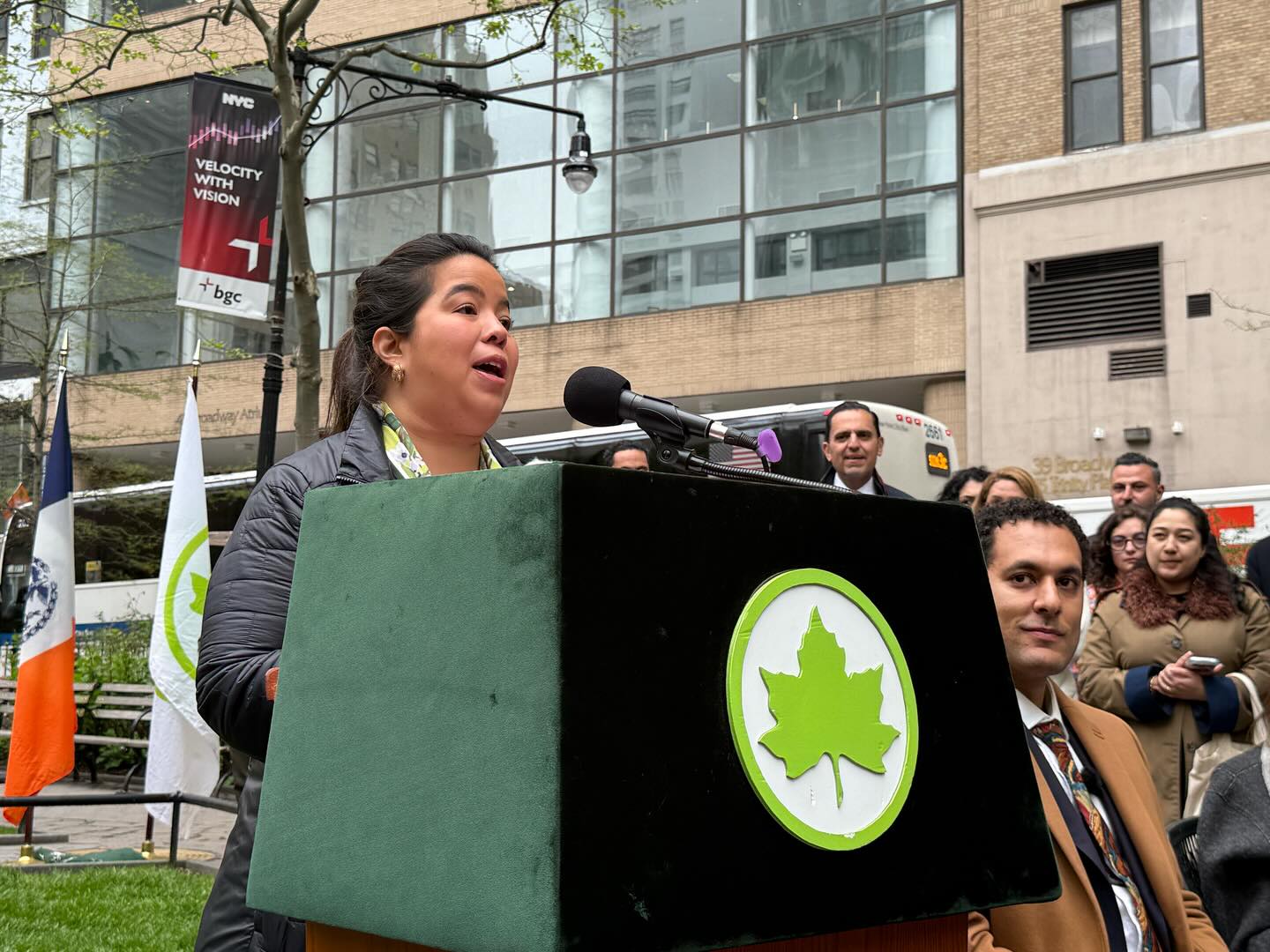
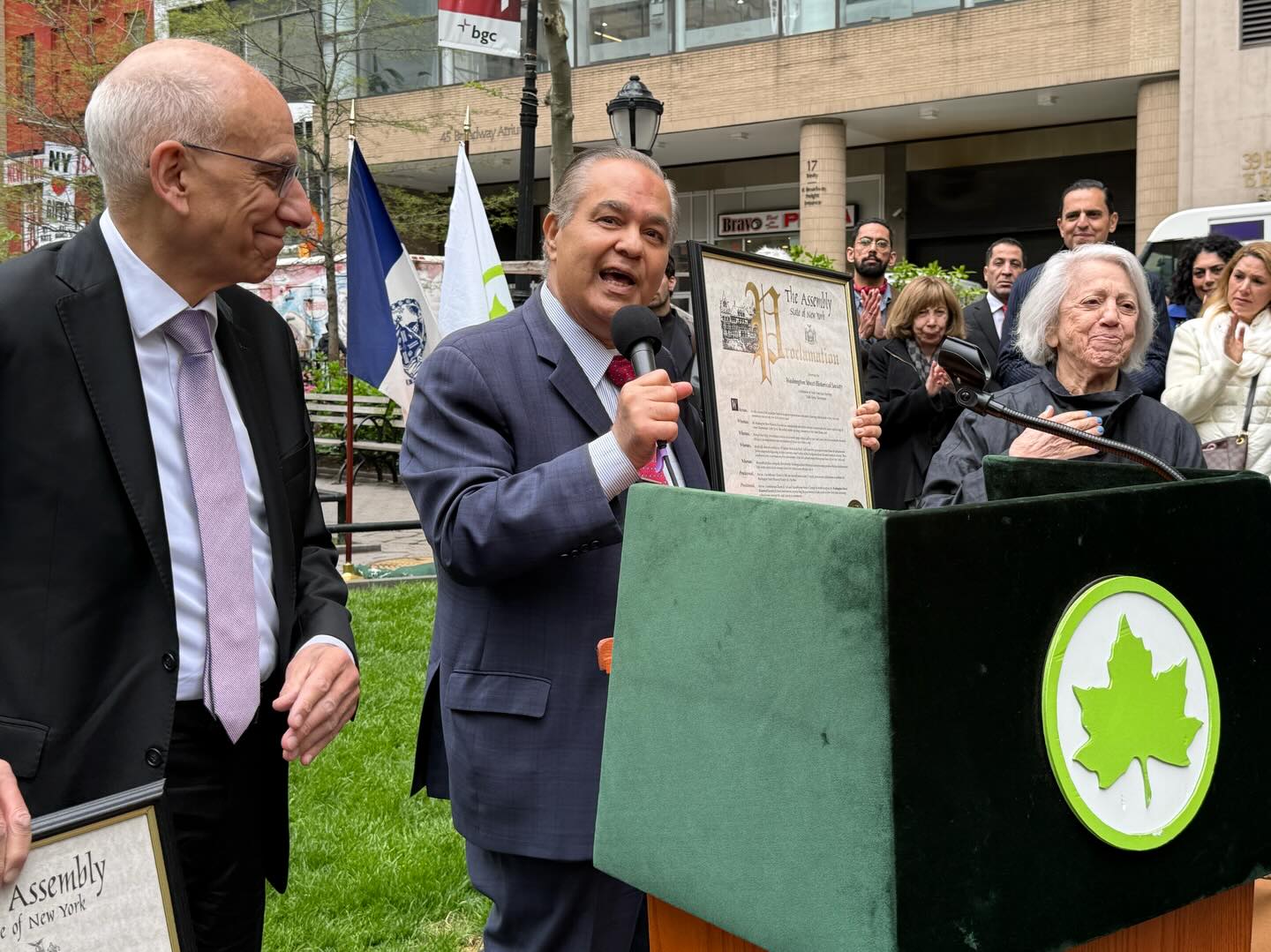
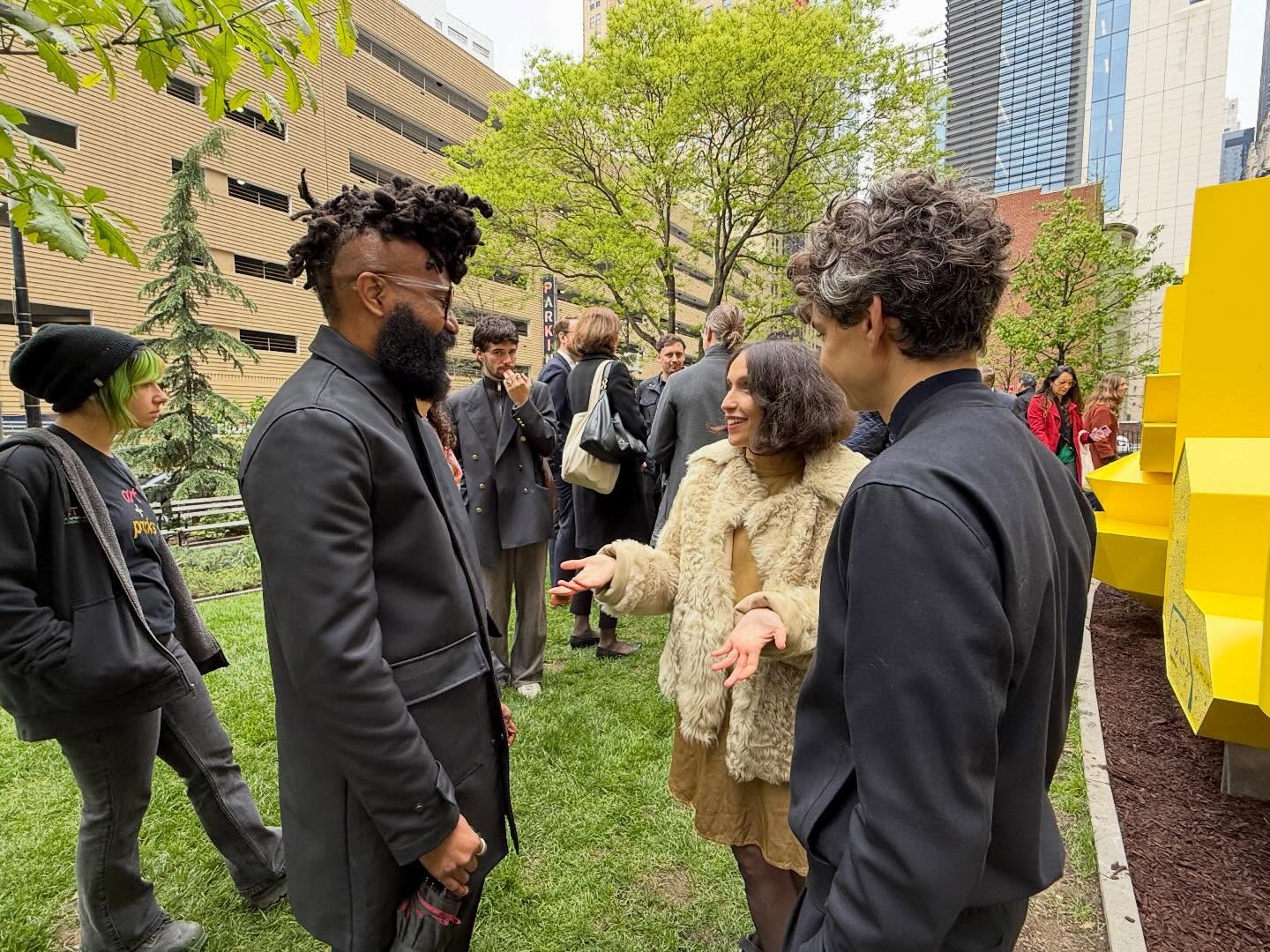
The unveiling drew a large and enthusiastic crowd to the plaza. Parks Commissioner Tricia Shimamura delivered remarks on behalf of the City, welcoming the monument as a lasting contribution to the public landscape of Lower Manhattan. A New York State Assembly Proclamation was presented to the Washington Street Historical Society in recognition of their decades of advocacy for this cultural recognition.
Design, Debate, and Meaning
During the project's development and even after the unveiling, some observers raised criticisms of the monument's design. They argued that the geometric Arabic script in Ouhaddou's work is not easily processed even by native readers, and that perhaps the monument should have included visual representations of the writers themselves. While these disagreements may never be fully resolved, several important responses deserve note.
Little Syria itself was a site for experimentation with the Arabic script. The artist has referenced being inspired by the adaptation of the Linotype typesetting machine by the editors of the newspaper Al-Hoda, and by modernist experiments with geometric Arabic scripts by the Pen League and by contemporary literary journals. The City's Percent for Art processes at this time sought contemporary artists to engage with a theme and create their own works, rather than pursue traditional memorial designs of statues or bas-relief. This work was designed for the art culture and institutions of New York City and built around their prerogatives.
Ouhaddou — whose own family was illiterate — believes that, given the current explosions over immigration and assimilation, a levelling, aesthetic encounter with an abstracted Arabic makes its own comment on the immigrant experience, on the politicised encounter with the Arabic language, and on the nature of language itself, written and spoken. While some may continue to disagree with engaging these themes while honouring masters of Arabic poetry, there remains a great deal to consider in the Arab-American context, especially at such a politically-contested location near the World Trade Center. Poetry seeks to transcend the mechanics of language into an aesthetic or direct experience — a purpose which this work may comment upon, and in which the Pen League poets of Gibran, Rihani, and Naimy were very deeply interested.
Watch: The Unveiling Ceremony
Video · NYC Parks Department
The full unveiling ceremony for Al-Qalam: Poets in the Park at Elizabeth H. Berger Plaza, Lower Manhattan, 30 April 2026. The video documents the remarks of artist Sara Ouhaddou, NYC Parks Commissioner Tricia Shimamura, representatives of the Washington Street Historical Society, and members of the Arab-American community, followed by the ceremonial unveiling of the sculpture.
A Legacy in Light
The final truth is that this project took a very long time to achieve and overcame many hurdles. Its meaning and significance will only manifest fully in time — perhaps in ways we can hardly anticipate now. As we continue to seek to understand these poets and the world they made, this work, in its multifaceted and contingent creation in the great city of New York, gives us another shadow of their legacies to consider.
Image Credit : New York City Department of Cultural Affairs.