In a privately printed memoir of 1975, the Lebanese emigrant Joseph Nahas recalled a lunch shared with Kahlil Gibran at Hitchcock’s Beanery, across the street from New York’s City Hall, and the blunt verdict the poet delivered on the marble statue standing outside it.
By Francesco Medici
• ❧ KGC ❧ •
KAHLIL GIBRAN COLLECTIVE
A Little-Known Anecdote Recounted by Joseph Nahas
By Francesco Medici · Kahlil Gibran Collective · 2026 · kahlilgibran.com
Hitchcock’s Beanery was a celebrated New York institution, an inexpensive eating house located at the corner of Beekman Street and Park Row, in the heart of historic Newspaper Row. Run by Billy Hitchcock, it was famous for its beef and beans and became a distinctive meeting place for the newspaper world. Its shirt-sleeved waiters served an unusually varied clientele of printers, stereotypers, reporters, editors and politicians, who mingled freely in an informal and lively atmosphere. More than simply a place to eat, Hitchcock’s functioned as an unofficial extension of the newsroom—a gathering place where journalists, printers and politicians exchanged news, opinions and gossip.
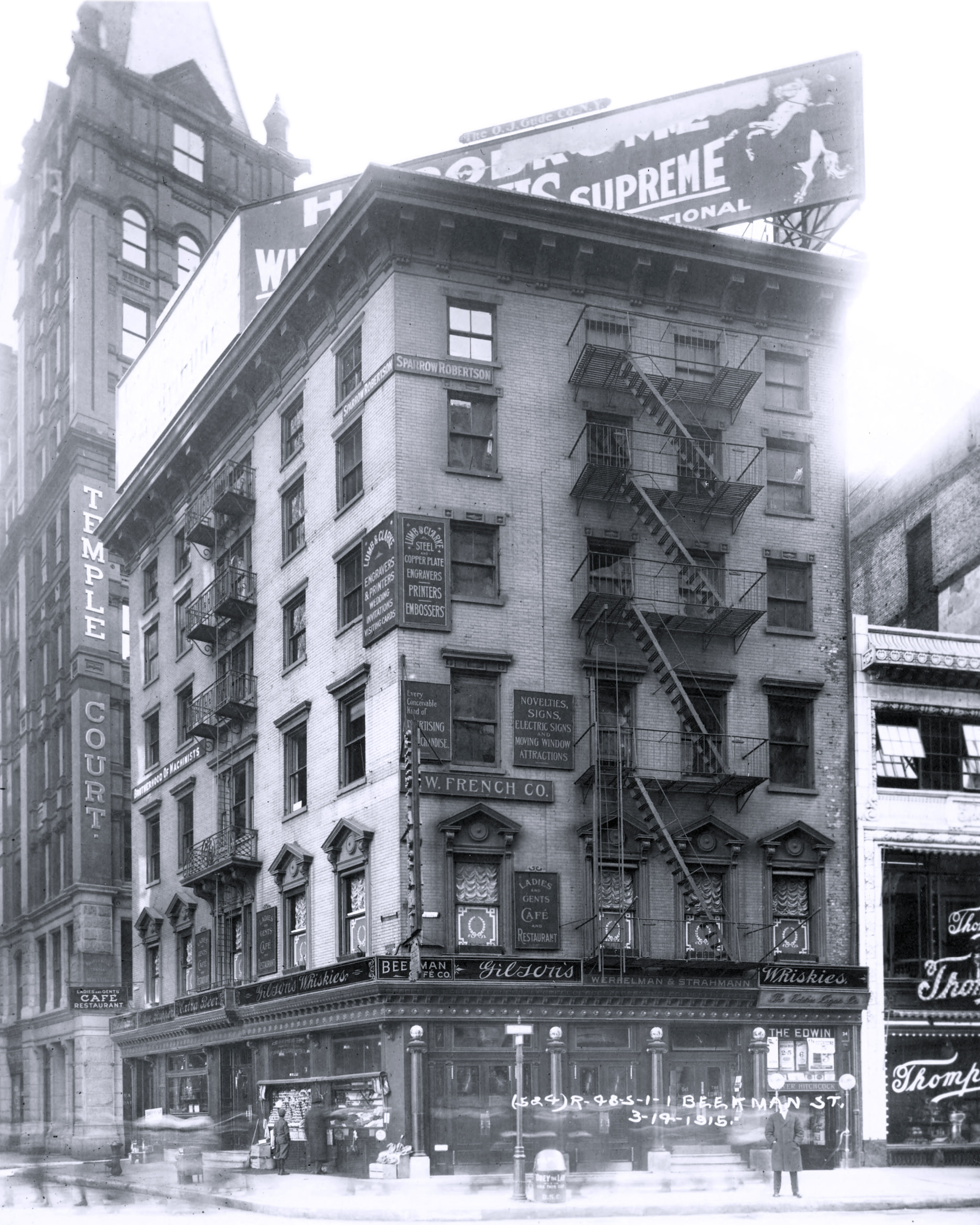
The establishment provides the setting for an encounter that likely took place by the early 1920s, between the poet and painter Kahlil Gibran and his friend and fellow countryman Joseph Nahas (1890–1987),1 with whom he had become acquainted several years earlier at the office of the Arabic-language newspaper Al-Mohajer (“The Emigrant”), where Nahas was employed as an assistant to Ameen Guraieb (1880–1971), the paper’s publisher.
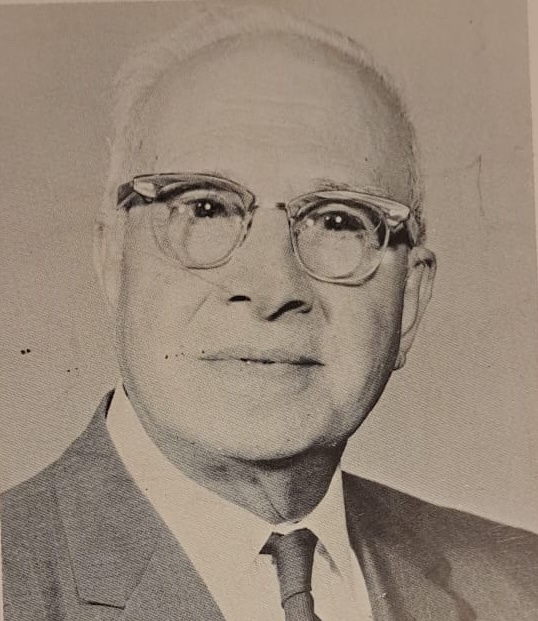
Nahas himself recounts this little-known episode, which appears to have remained largely unknown to readers and scholars of Gibran, in his privately printed volume A Depression Miracle, published in 1975.2 His account begins as follows:
I invited Gibran to be my guest for a luncheon at Hitchcock’s Beanery which was located across the street from New York’s City Hall.
Reaching there, and seated, we both ordered “Beef and Beans,” for which Hitchcock was famous, and it was not unusual for New York’s Mayor and members of his staff to partake lunch there. Its proximity to City Hall and the good, moderately priced food were the double attraction.
Seeing the white marble statue standing in front of City Hall, Gibran suggested that we “take a close look at it” after our lunch, and I agreed. So, finishing our lunch, we walked across the street to inspect the statue which depicted a nude, young man standing upright and several nude females at his feet clinging to his legs in an effort to drag him down to their level. The marker at the foot of the statue read: “Civic Virtue.”
• ❧ KGC ❧ •
I
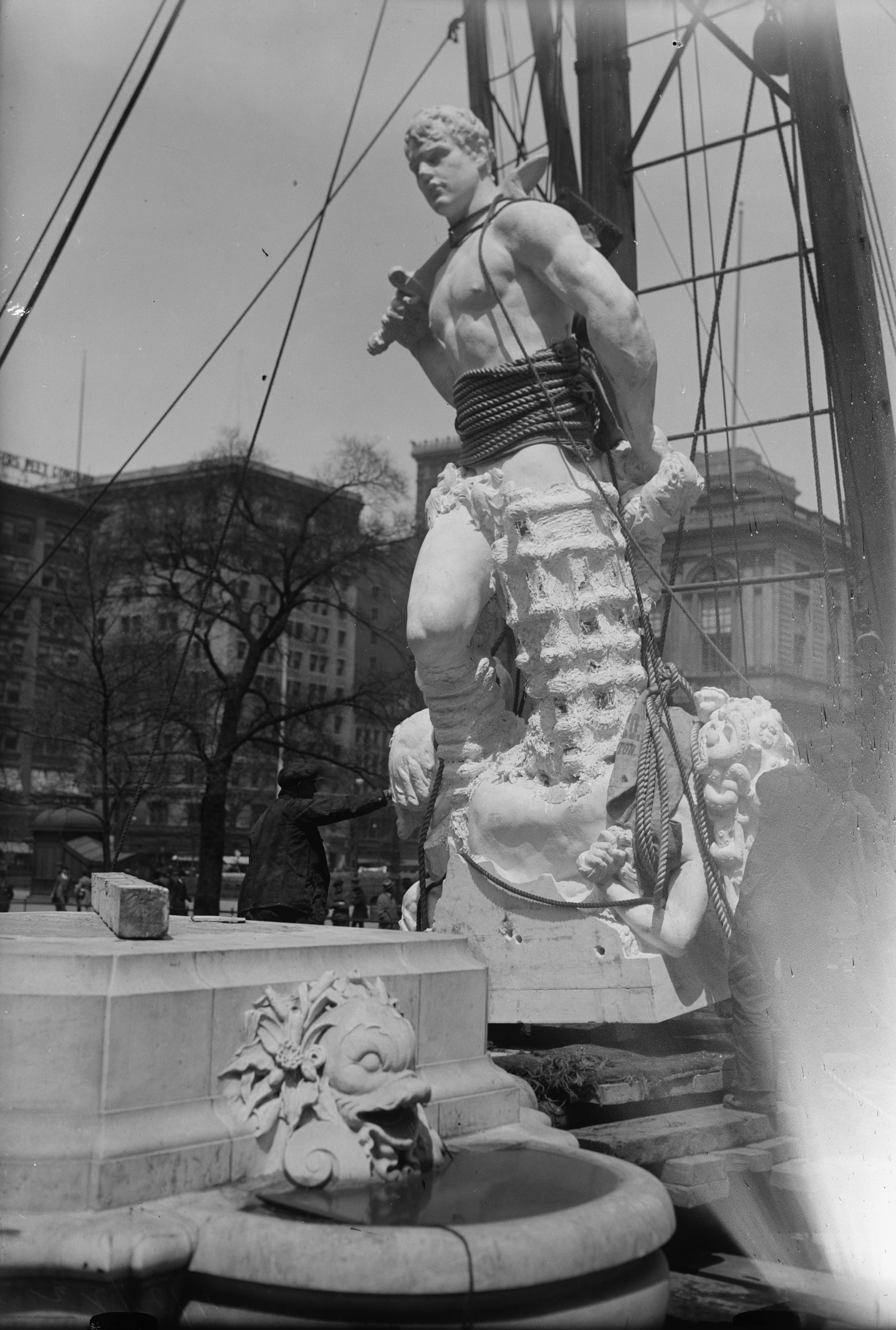
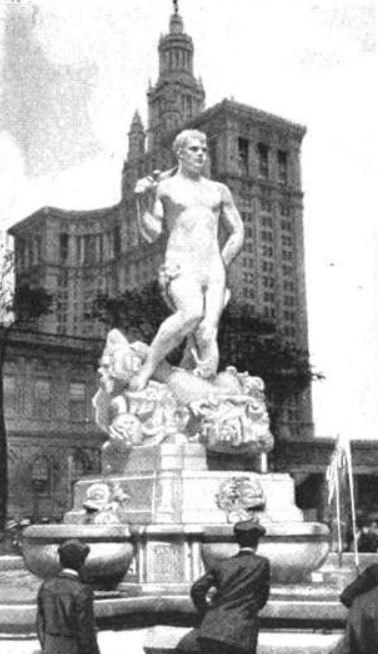
Commissioned in 1909 by New York City Mayor George B. McClellan Jr. (1865–1940), Civic Virtue Triumphant Over Unrighteousness is a sculptural group and fountain created by sculptor Frederick William MacMonnies (1863–1937) and originally installed in City Hall Park, in front of City Hall. The group stands more than 17 feet high. At its center is the figure of “Civic Virtue,” a heroic nude male often mistakenly identified as Hercules, with a sword resting on his shoulder. Beneath him are two writhing female figures representing the sirens of “Vice” and “Corruption.” With the heads and upper bodies of women and serpent-like tails, the two sirens are shown ensnared in their own nets, having failed to capture “Civic Virtue.”
The sculpture was first set on a square pedestal decorated with dolphin heads, from which water flowed into basins projecting from its sides. The water then spilled into a pool in the shape of an irregular cross, all resting on a three-stepped base.
• ❧ KGC ❧ •
II
This is how Joseph Nahas’s account concludes:
Gibran closely scrutinized the sculpture, shook his head from side to side and murmured: “Misapplied talent!” I hastened to ask, “What do you mean, Gibran?”
He replied: “It is pure chauvinism! I wonder why such a talented sculptor did not think of his mother, sister, wife, sweetheart, or daughter when working on this statue. He could have done much better had he reversed the symbol—had he pictured the male to be half-prone, struggling to get up and a female figure bending down to help him to an upright position. His good work would then be acclaimed a masterpiece of art. He has a good talent, but he misused it.”
It is clear from the context that, by “pure chauvinism,” Gibran meant what we would today call “male chauvinism.” Indeed, the sculpture had already sparked controversy before its unveiling in 1922, largely because of its portrayal of the female figures, which many regarded as misogynistic. Just two years earlier, the ratification of the Nineteenth Amendment had granted women the constitutional right to vote, marking a pivotal moment in the history of women’s rights in the United States.
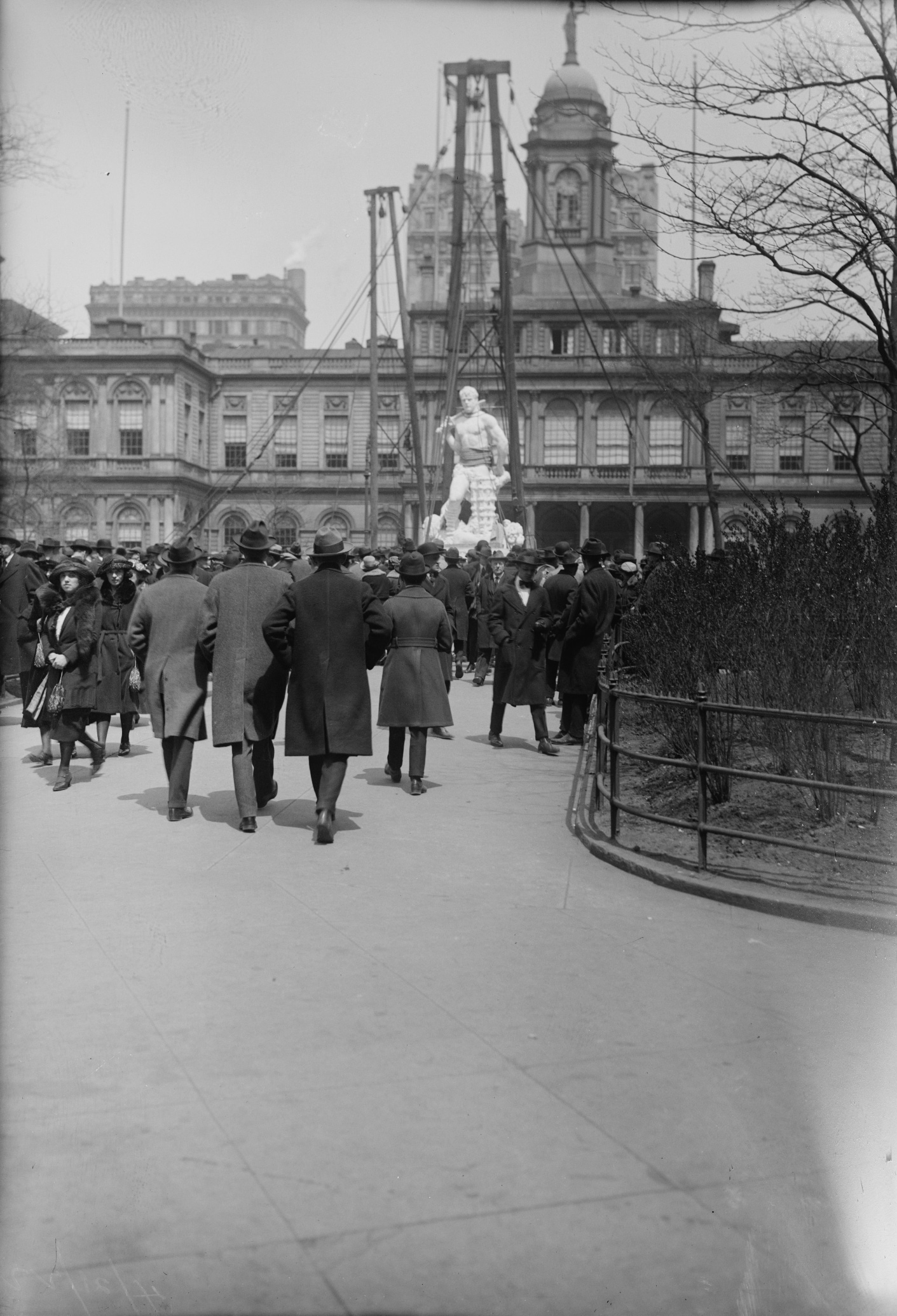
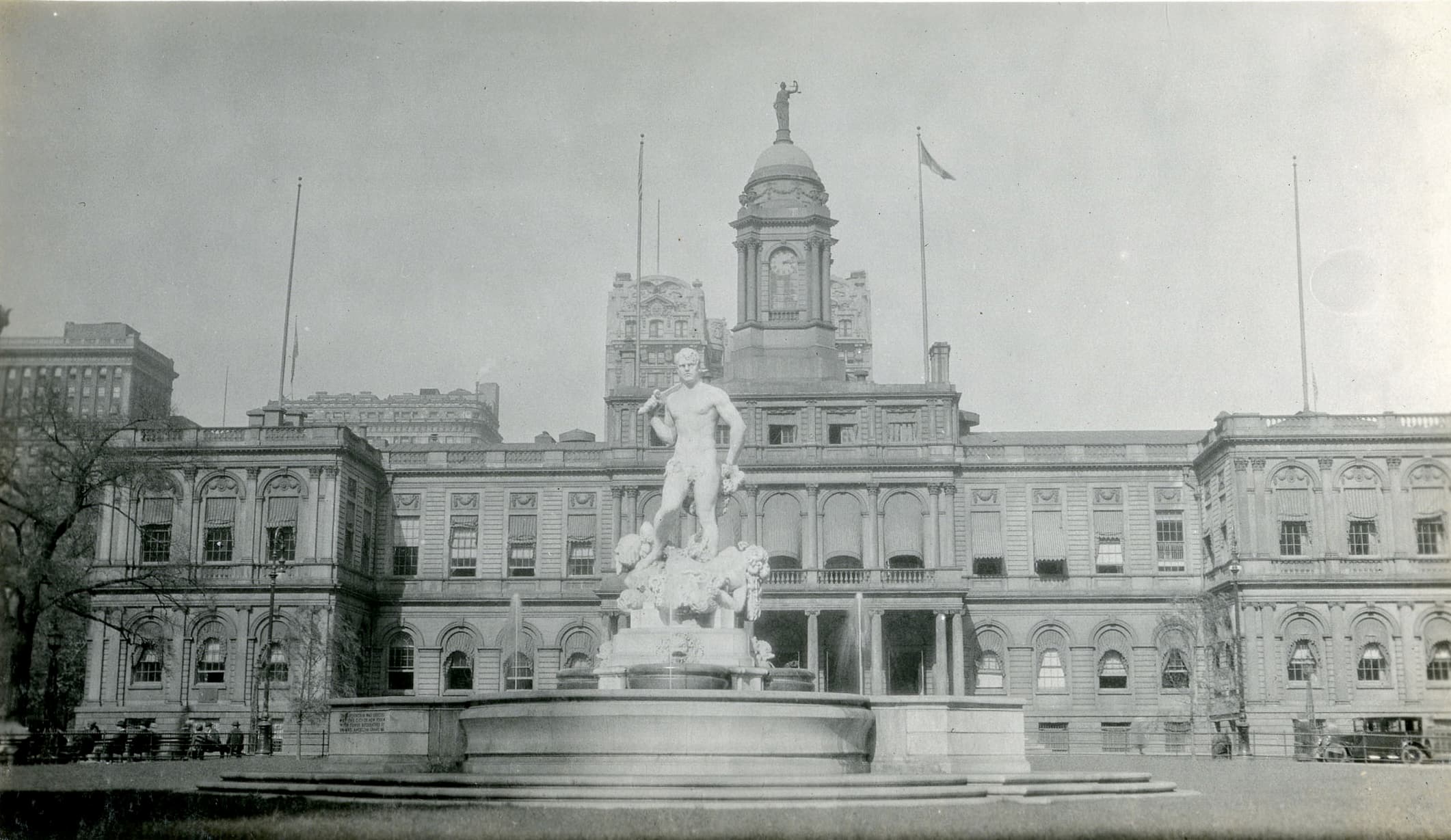
The growing public criticism of the sculpture soon reached MacMonnies, who responded as follows:
What do I care if all the ignoramuses and quack politicians in New York, together with all the damn-fool women get together to talk about my statue? Let ’em cackle. Let ’em babble. You can’t change the eternal verities that way. Can it be, that the women are angry because some man finally found the strength to resist temptation? In most instances of romantic sculpture, we have the man succumbing to the temptress. I think women should be pleased when strength is found to withstand their wonderful wiles. Antiquity is all the other way. From Paris to Patagonia—universal allegory pictures sirens, temptresses, as woman. If you suppress allegory you suppress all intellectual effort. I gather that allegory has long been extinct in City Hall.
These were, then, words of a decidedly different tenor from those Gibran had addressed to Joseph Nahas. Throughout his life, as a man, artist and poet, Gibran had championed women’s rights, both in the East and in the West, having taken up their cause from his youth, well before the nationwide extension of voting rights in the United States.
• ❧ KGC ❧ •
III
The events that unfolded in the following decades would, in a sense, seem to have vindicated Gibran. Mayor Fiorello H. La Guardia (1882–1947), who served from 1934 to 1945, was openly hostile to the sculpture, which he derisively nicknamed “Fat Boy.” When a new Borough Hall was built in Queens in 1940, he took the opportunity to have the fountain relocated there. It was installed in Kew Gardens, beside the new municipal building, in February 1941 and formally unveiled on May 29 of that year.
The fountain continued to attract controversy in the years that followed. It became the scene of a feminist demonstration in 1972, and in 1987 Claire Shulman (1926–2020), the first woman to serve as Queens Borough President, called for its removal, arguing: “A municipal building is not an appropriate place for a statue that portrays women as evil and treacherous.” By then, both the marble sculpture and the fountain had fallen into considerable disrepair, while the borough lacked the funds for restoration.
The controversy resurfaced in 2011, when Congressman Anthony Weiner held a press conference at the site and called for the sculpture’s removal, suggesting it be sold on Craigslist. Green-Wood Cemetery subsequently offered to take it, and on December 15, 2012, the sculptural group was removed from Queens Borough Hall and transferred to the cemetery in Brooklyn, where it was installed on a new foundation.
Some feminists have since suggested “reversing” the composition by replacing the male figure with a woman, possibly Liberty, and the nude female figures with naked men representing a sex offender and a murderer.
❁
The author wishes to thank Kathy Nahas Pratt, granddaughter of Joseph Nahas, for kindly providing him with a rare and valuable copy of the volume, inscribed and signed by her grandfather, from which the anecdote about Gibran is taken.
1 Nahas’s date of birth is uncertain, but it most likely falls between 1890 and 1896. ↩
2 Joseph Nahas, “The Statue,” in A Depression Miracle, Lake Hamilton, Arkansas, 1975 (privately published), pp. 43–44. ↩
All Rights Reserved © Copyright Francesco Medici 2026