The Madman, Kahlil Gibran’s first book written in English, was published in September 1918. When the first batch sold out, Alfred A. Knopf had another printed, and then another. When were those later batches printed? Philippe Maryssael reads the copyright pages for the answer, and asks readers to help fill the gaps.
By Philippe Maryssael
• ❧ KGC ❧ •
KAHLIL GIBRAN COLLECTIVE
By Philippe Maryssael · retired translator and terminologist, translator of Kahlil Gibran and contributor to the Kahlil Gibran Collective · Arlon, Belgium · 2026 · kahlilgibran.com
The Madman · Knopf printings 1918 – 1982
• ❧ KGC ❧ •
I
The Madman, Kahlil Gibran’s first book written in English, was published in September 1918. The number of copies printed at the time has not been identified, but it can be assumed that Gibran’s publisher had a limited number printed. There is no reason to think that they were less “prudent” than when printing Gibran’s masterpiece The Prophet five years later, with approximately 1,250 copies for the initial print run.
The Madman was Gibran’s very first book in English, and the publishing house Alfred A. Knopf had been in existence for only three years, since it was founded by Alfred and Blanche Knopf in 1915. Quite a few changes occurred across the different print runs.
1915
Knopf founded
Sept 1918
The Madman published
29
Printings by 1982
9
Still undated
• ❧ KGC ❧ •
II
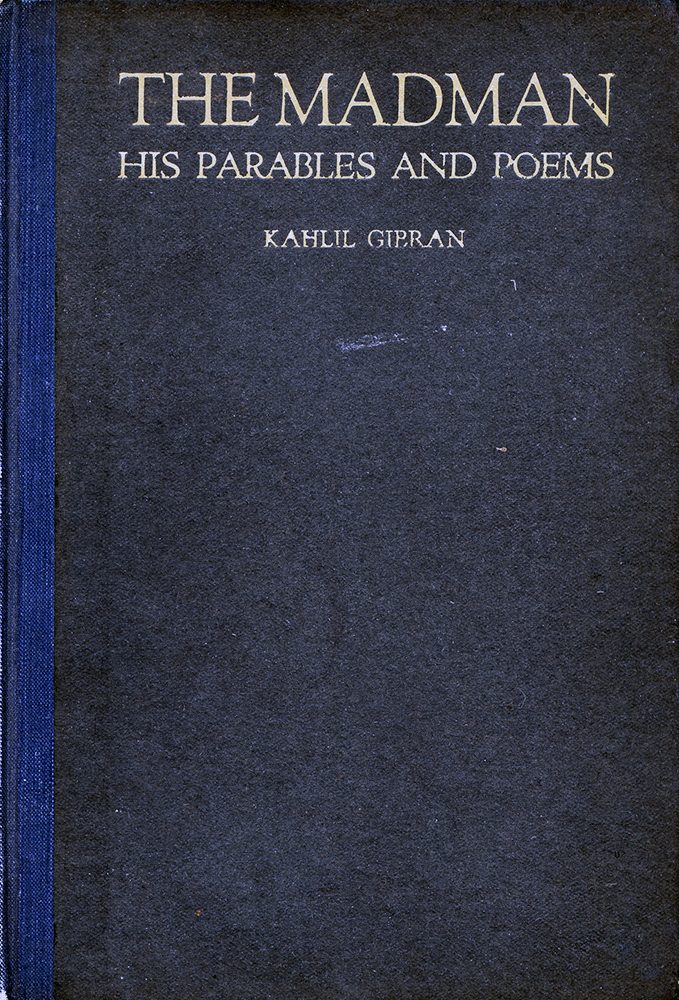
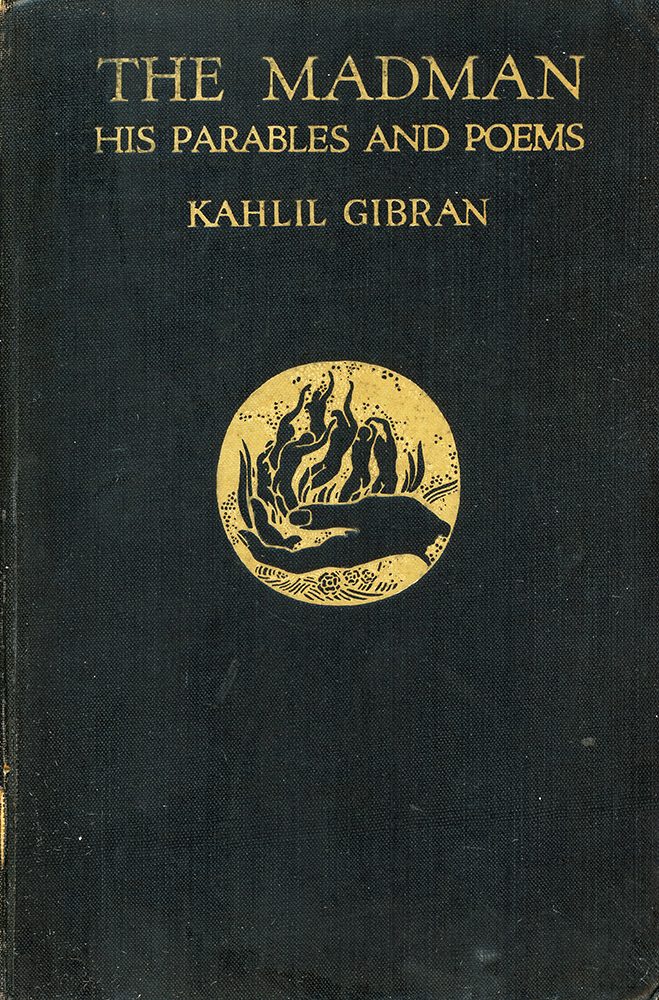
The front cover of the book’s first printing is radically different from the all too familiar one we know from the subsequent printings of The Madman and from all of Gibran’s following books. Gibran’s gold-leaf Hand of God design did not appear on the front cover before the second print batch in July 1920. To be more accurate, the front cover of Gibran’s Twenty Drawings, from December 1919, also features the design, though in a slightly different format.
The Hand of God did not appear on the cover of The Madman until July 1920.
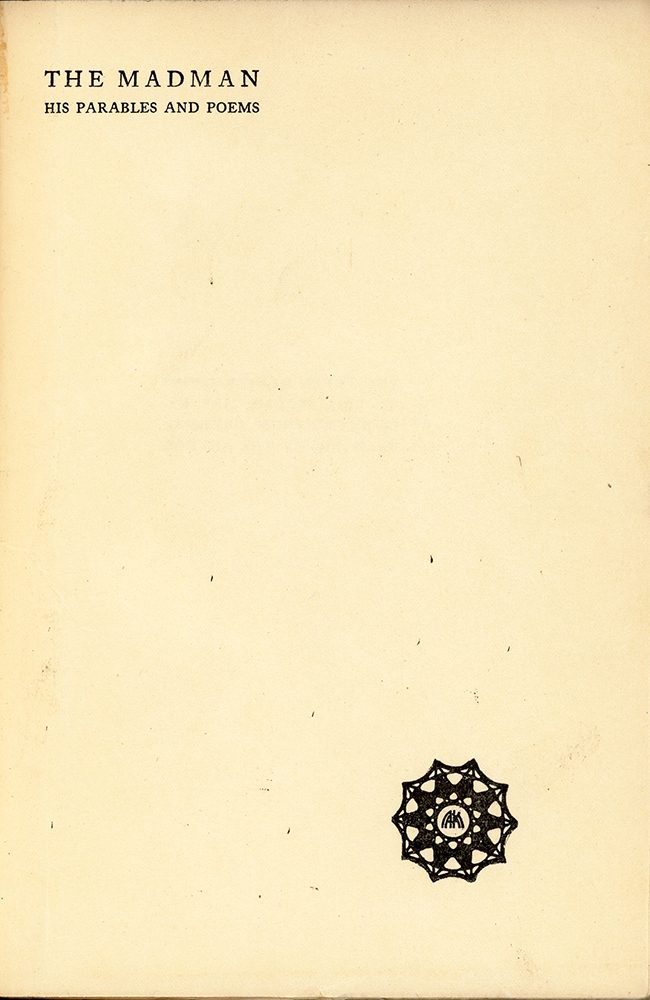
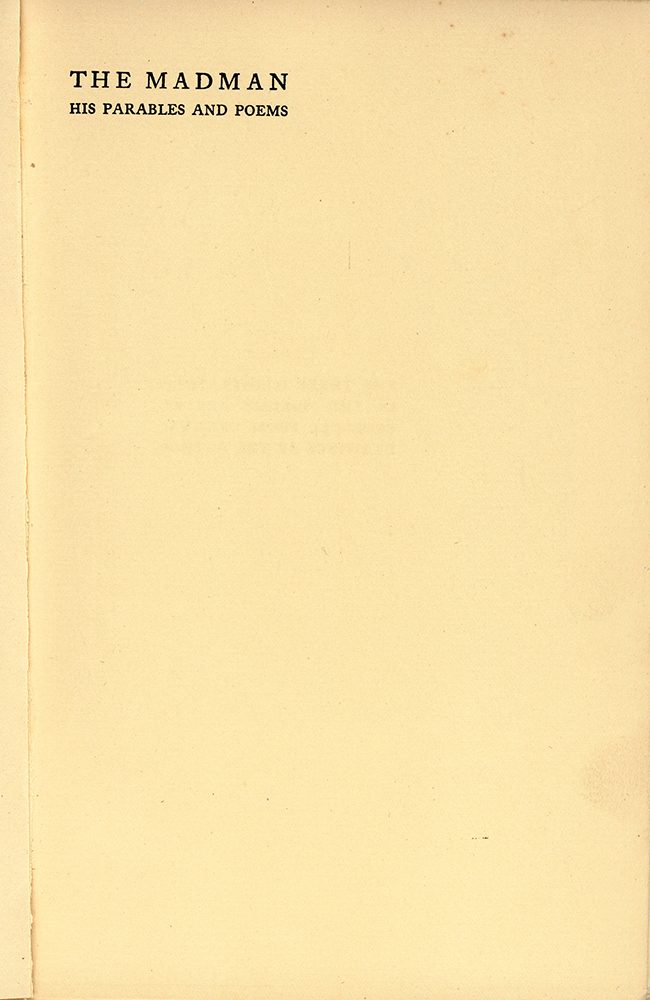
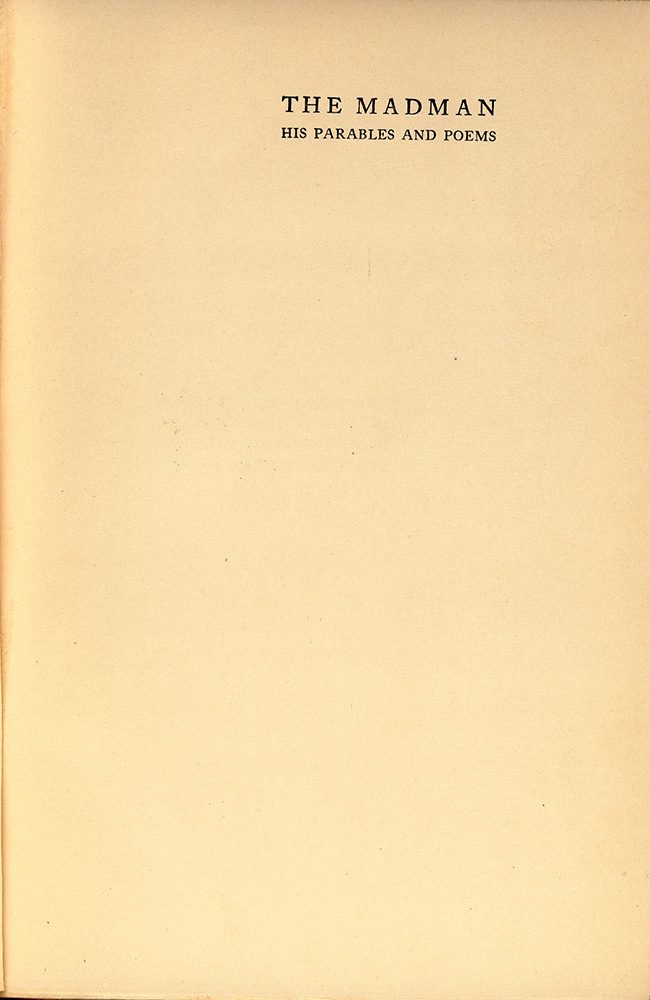
Opening the book leads to other surprises. The first page containing text differs between the first, second and third printings. In the first printing there is an AAK rosette design (AAK stands for Alfred Abraham Knopf). In the second printing the rosette was removed. In the third and subsequent printings, the text at the top of the page shifted from the left to the right.
• ❧ KGC ❧ •
III
The frontispiece illustration facing the title page is in sepia in the first printing and in black and white in all subsequent printings. The book’s other two illustrations are likewise in sepia in the first printing and in black and white in the later ones.
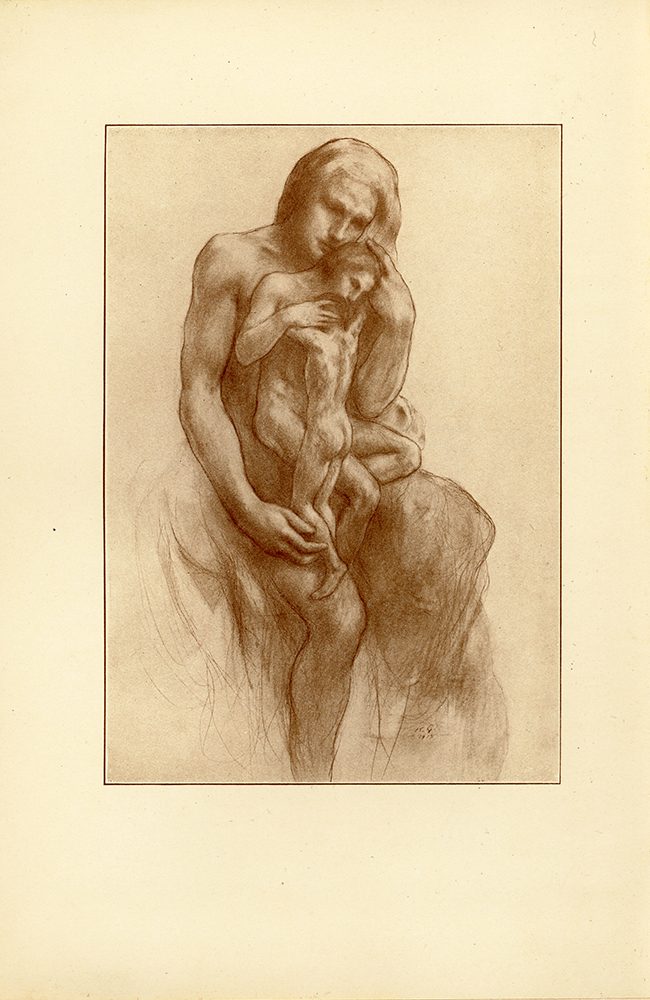
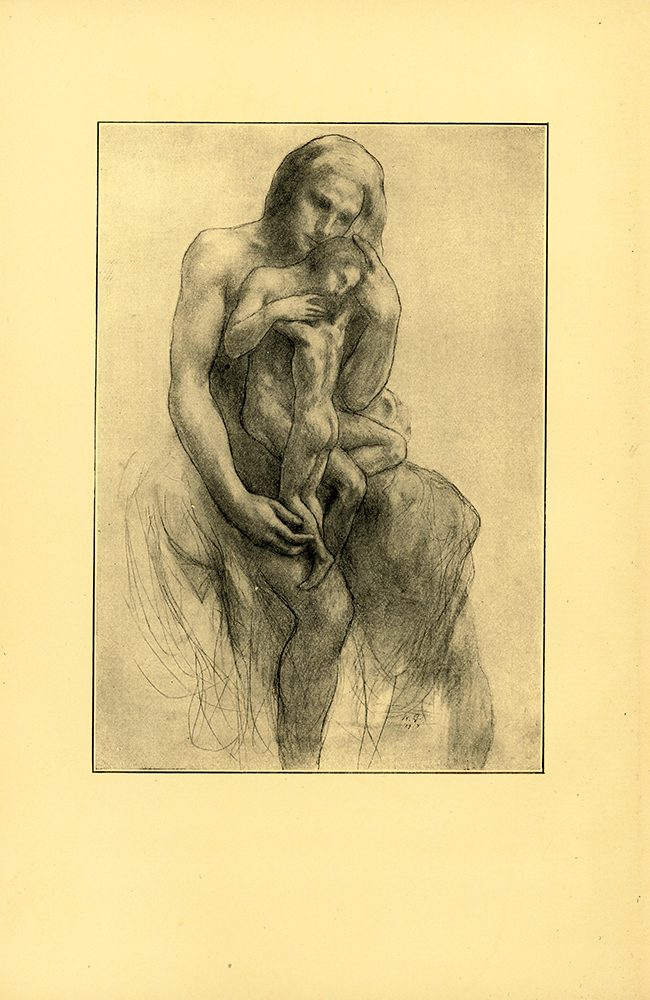
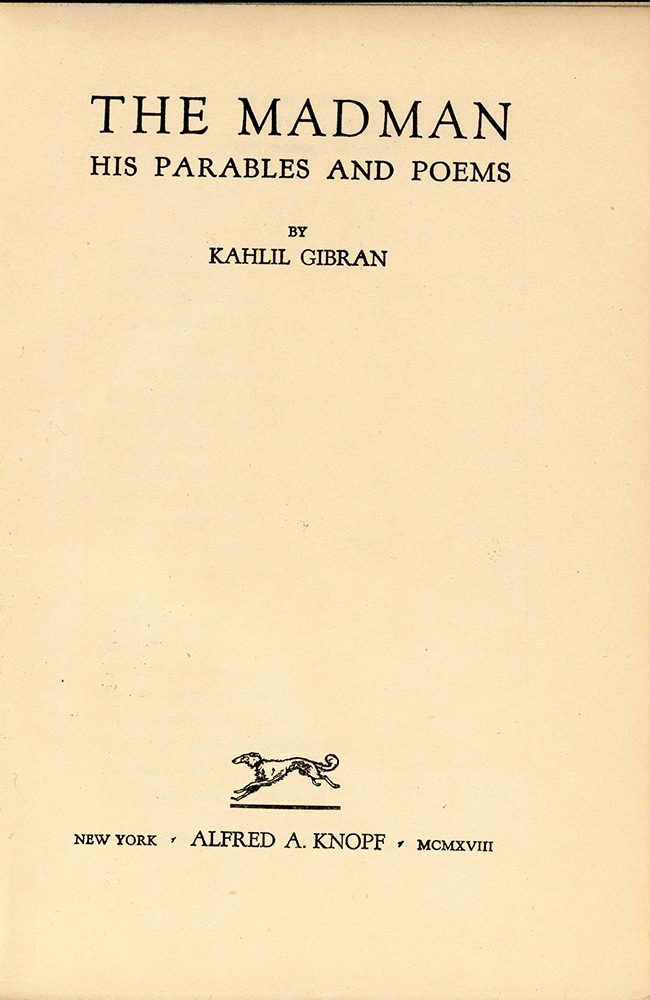
The title pages of the first, second and third printings also show notable differences. The first and second printings have strictly identical title pages. They carry the original Borzoi design selected by Blanche Knopf (see Everyman & His Dog: Gibran’s Borzoi, posted on 13 November 2023), whereas in the third printing and all subsequent ones, the Gibran-designed Borzoi adorns the title page.
The second printing dates from July 1920, yet the year on its title page, in Roman numerals, is MCMXVIII (1918) instead of MCMXX (1920). In the third printing, the year is MCMXXIV (1924).
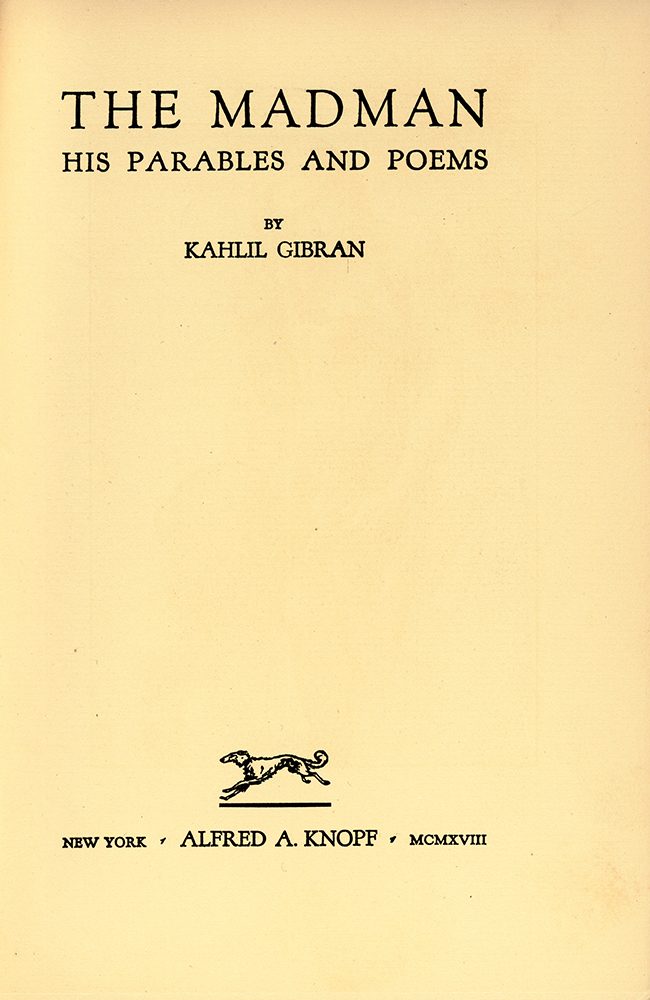
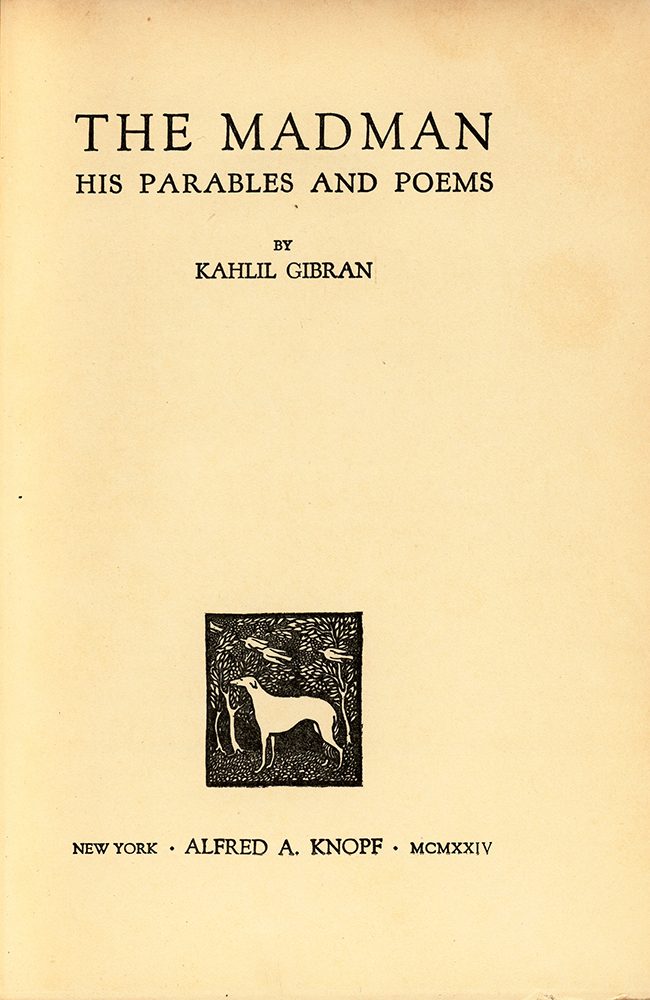
Collector’s Key
How to tell the first three printings apart
| Feature | 1st — 1918 | 2nd — 1920 | 3rd — 1924 |
|---|---|---|---|
| Front cover | Original design, no Hand of God | Gold Hand of God | Gold Hand of God |
| Opening text page | AAK rosette | No rosette | Page-top text on the right |
| Illustrations | Sepia | Black and white | Black and white |
| Title-page Borzoi | Knopf original | Knopf original | Gibran’s design |
| Title-page year | MCMXVIII | MCMXVIII (not MCMXX) | MCMXXIV |
| Copyright page | Published, September 1918 | Adds October 1918 and July 1920 | October 1918 removed; second printing now September 1920 |
• ❧ KGC ❧ •
IV
Now come the copyright pages, and the purpose of this article. The copyright pages in all of Gibran’s books record the dates on which the books were printed over time. As each batch sold out and a new one was printed, a new date was added.
From the first print run to the seventh, which is the first posthumous one, the printings and their dates read as follows.
1st · Sept 1918 The Madman was published in September 1918.
2nd · July 1920 On the copyright page of the second printing, it would seem that The Madman was published in September 1918 and a month later, in October 1918. The second printing is dated July 1920.
3rd · Jan 1924 On the copyright page of the third printing, the October 1918 date from the previous copyright page has been removed. Quite obviously, it must have been a mistake in the typesetting of the second printing’s copyright page. Also quite surprisingly, the date given for the second printing was changed from July 1920 to September 1920. There may have been delays in the release of the second printing, and the copyright page of that release was not adapted accordingly. From the third printing onwards, the date of the second printing has remained unchanged (September 1920).
4th · Dec 1925 The fourth printing was released in December 1925.
5th · June 1927 The fifth printing was released in June 1927.
6th · Oct 1929 The sixth printing was released in October 1929.
10 April 1931 Gibran dies in New York.
7th · Aug 1938 The seventh printing was released in August 1938, almost nine years after the sixth. It is the first posthumous printing.
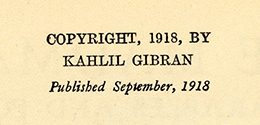
1st · 1918
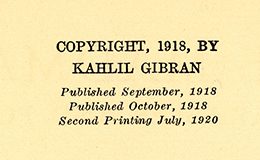
2nd · 1920
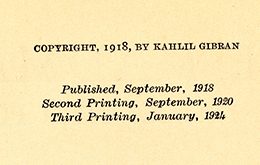
3rd · 1924
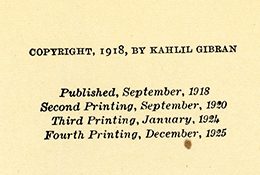
4th · 1925
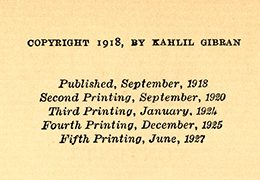
5th · 1927

6th · 1929

7th · 1938
A gap of almost nine years separates the sixth printing from the seventh, the first after Gibran’s death.
• ❧ KGC ❧ •
V
What about the eighth and subsequent printings? Based on the copies of The Madman in the personal collections of Glen Kalem-Habib and myself, and on information gathered from websites such as eBay and AbeBooks, the following list could be compiled.
| Printing | Date |
|---|---|
| 1 | September 1918 |
| 1 | |
| 2 | |
| 2 | September 1920 |
| 3 | January 1924 |
| 4 | December 1925 |
| 5 | June 1927 |
| 6 | October 1929 |
| 7 | August 1938 first posthumous |
| 8 | 1944 month missing |
| 10 | January 1947 |
| 12 | December 1954 |
| 15 | January 1963 |
| 16 | May 1964 |
| 17 | September 1965 |
| 18 | December 1966 |
| 19 | March 1968 |
| 20 | April 1969 |
| 22 | November 1970 |
| 24 | February 1973 |
| 27 | September 1978 |
| 29 | June 1982 |
Known printings on a timeline
Six printings in Gibran’s lifetime, a nine-year pause after his death, then a steady rise that peaks in the 1960s, with a new printing almost every year.
• ❧ KGC ❧ •
VI
There are gaps in the list. Information on the 9th, 11th, 13th, 14th and several later printings is missing, as is information on more recent Knopf releases of The Madman. We are working on updating the list.
The ledger so far: printings 1 to 29
date known still missing
Our efforts would be far more effective if you, the readers of this article, would kindly help us fill in the gaps by sending photographs of the copyright pages of copies in your possession.
Own a copy of The Madman?
Photograph the copyright page (the reverse of the title page) and send it to
Printings 9, 11, 13, 14, 21, 23, 25, 26, 28 and anything after 1982 are especially wanted.
This article will be updated as soon as we receive new information, and your contributions will be duly acknowledged.
Thank you very much in advance.
Further Reading on the Kahlil Gibran Collective
❁
All Rights Reserved © Copyright Philippe Maryssael 2026
Photographs from the collections of Philippe Maryssael and Glen Kalem-Habib.