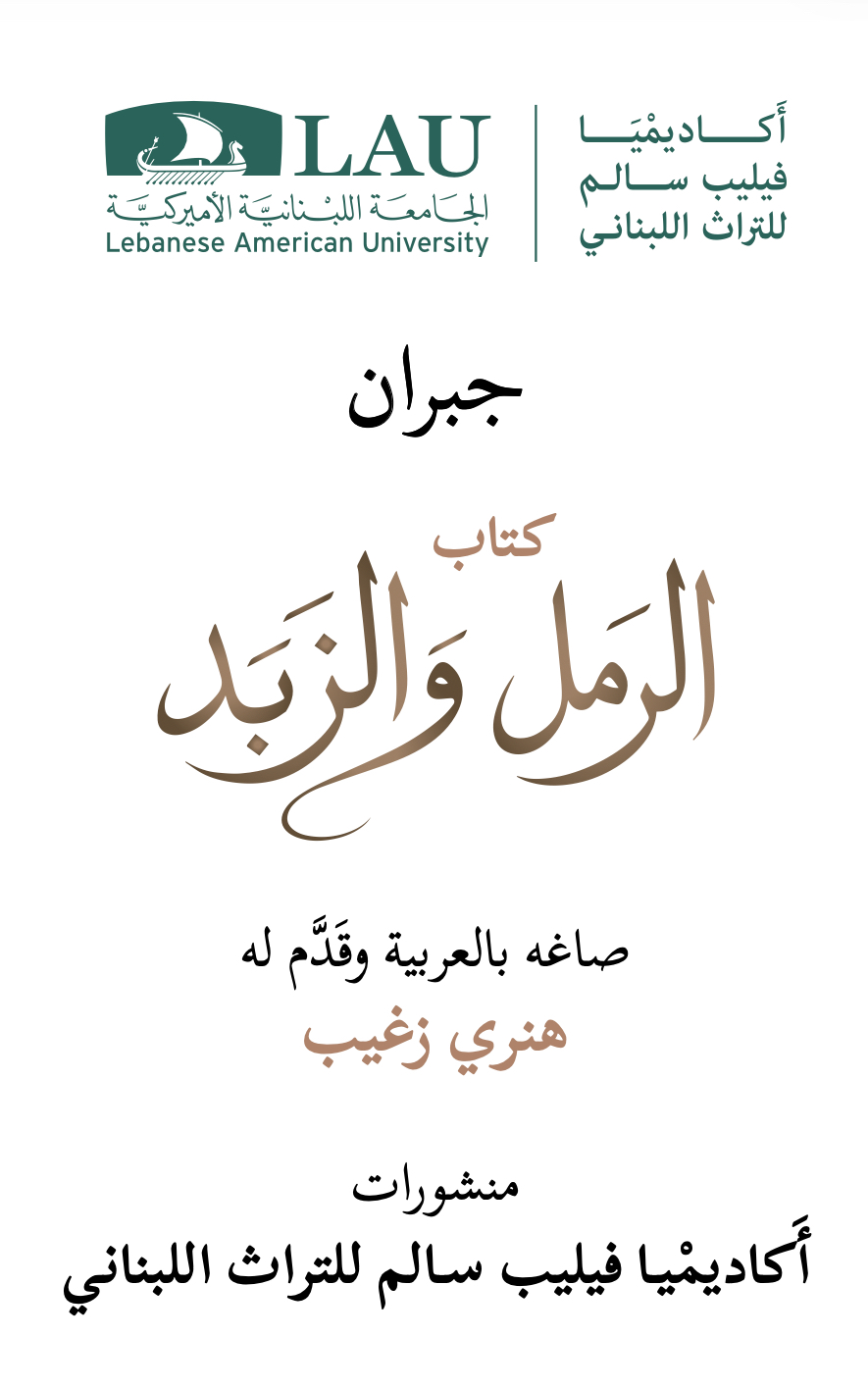
One hundred years after Knopf published Sand and Foam, Henri Zoghaib has given Arabic readers al-Ramal wa al-Zabad, a new translation of Gibran’s “little book of sayings.” He talks to Francesco Medici about the translator as creator, the difference between an aphorism and a saying, and the centenary still to come.
By Francesco Medici
• ❧ KGC ❧ •
KAHLIL GIBRAN COLLECTIVE
By Francesco Medici · Kahlil Gibran Collective · 2026 · kahlilgibran.com
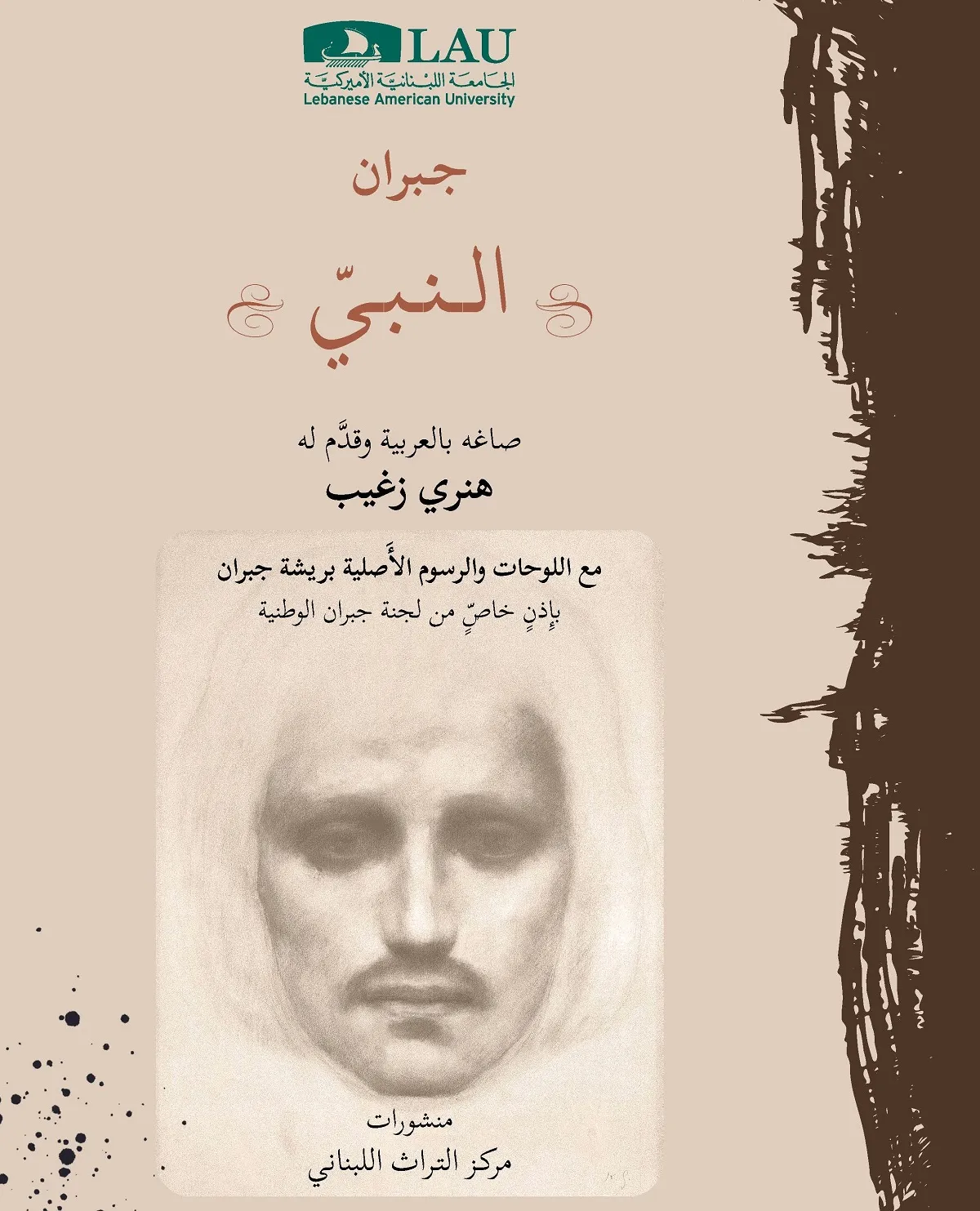
الرَّمَل وَالزَّبَد
Sand and Foam · 1926 – 2026
• ❧ KGC ❧ •
I
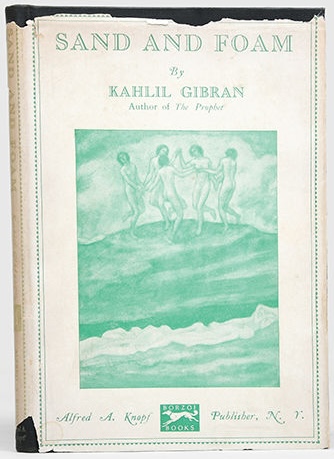
Kahlil Gibran’s Sand and Foam, his fourth book written in English, was published by the New York publisher Alfred A. Knopf (1892–1984) in 1926 under the subtitle A Book of Aphorisms, although Gibran himself usually referred to it as “The Little Book of Sayings.” The volume contains around three hundred aphorisms ranging from two lines to a dozen lines in length. It is illustrated with Gibran’s own drawings, while the aphorisms are separated by floral ornaments likewise designed by the author.
In her biography of the poet-painter from Mount Lebanon—whose close friend, secretary, and amanuensis she was during the final years of his life—the American writer Henrietta Breckenridge Boughton (1878–1961), better known by her pen name Barbara Young, devotes several highly detailed pages to the genesis of what she described as “that book of priceless sayings.”1
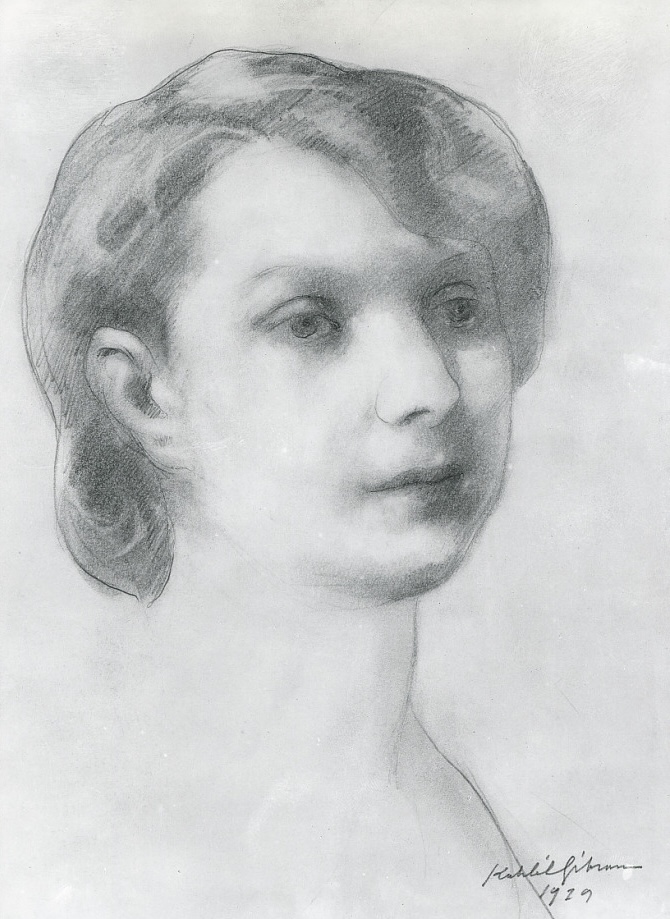
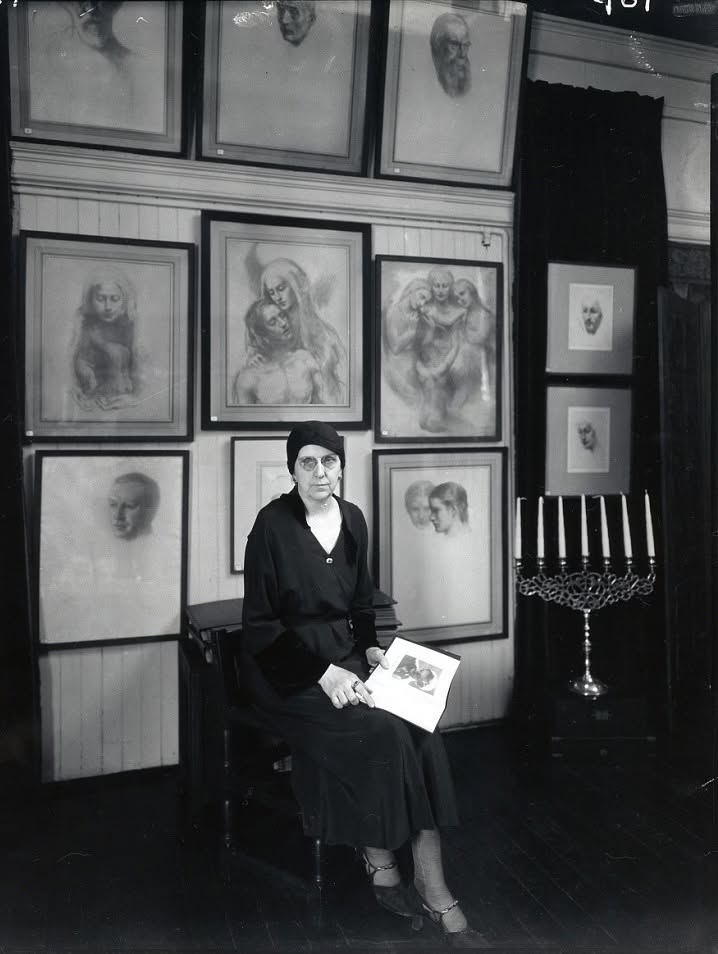
It now seemed very natural and simple for me to continue taking down words that came from the poet’s lips, often in ordinary conversation, though ordinary conversation with Kahlil Gibran was anything but ordinary. I kept a notebook within reach of my hand, and would jot down a sentence or two, not unnoticed, however; for he would say, “Are you remembering everything I say, against me?” […]
It was at that time, also, that the idea occurred to me to gather up the choice words that were spoken during the hours in the studio, together with the hosts of sayings I had found jotted down on a slip or scrap of paper here and there in all sorts of places, and to make them into a volume. Gibran ridiculed the idea at first, and he said, “They would only be so much sand and foam.” Here was the title for the book—so “Sand and Foam” it became, and he began to take an interest in it. He would give me, a little shyly, a piece of a theatre program, a bit of cardboard from the end of a cigarette-box, a torn envelope, with lines written on them, and say, “Here you are—foolishly gathering sand and foam!” But he thoroughly enjoyed it, and began making sentences – some of them comparable with the most powerful things he has ever said or written, and they are contained in the volume. […]
At length I had collected a creditable number of these sayings, and I typed them and took them to the studio. Gibran took the manuscript and seated himself. For a half hour he turned the pages. Neither one of us spoke a word. Then he looked up, and with a look of wonder upon his face, he said, “Have I indeed made all this, or have you helped me along?”
“Not a word is mine,” I answered, “and you know it. Every line in those pages is Gibran, they could be no one else.”
Barbara Young, This Man from Lebanon (1945)
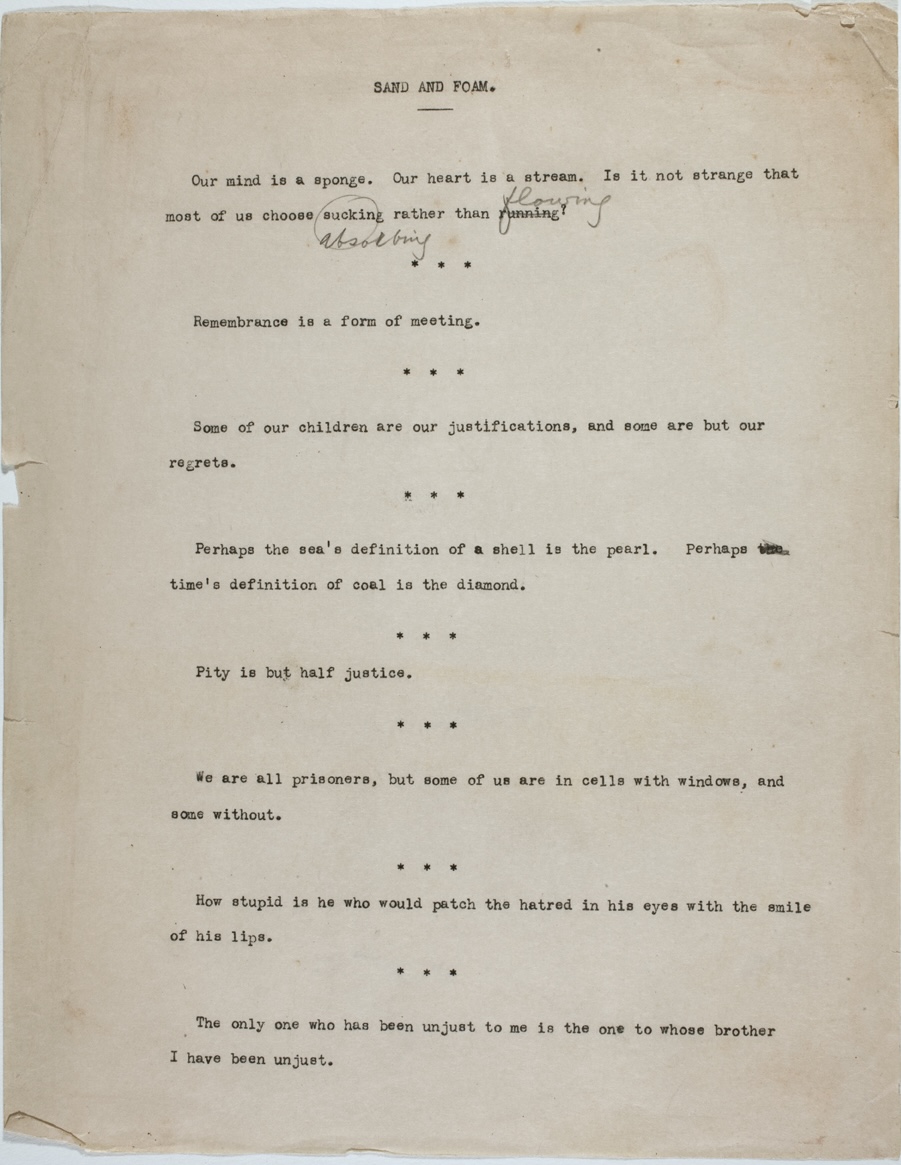
“They would only be so much sand and foam.”
• ❧ KGC ❧ •
II
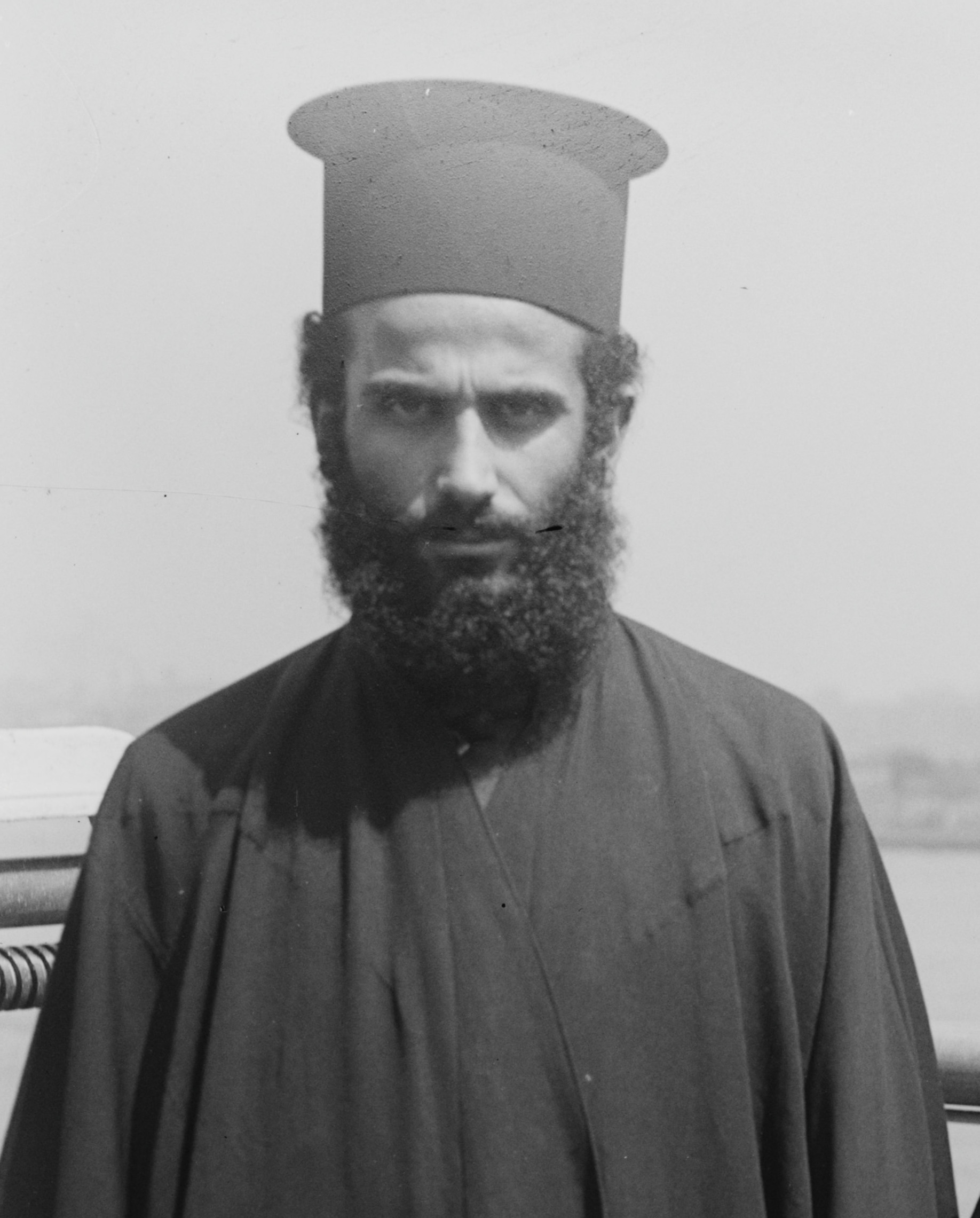
Sand and Foam was translated into Arabic by Antony Bashir (Anṭūniyūs Bašīr, 1898–1966) under the title Ramal wa Zabad. It was published in Cairo, Egypt, by Yūsuf Tūmā al-Bustānī (1892–1952) in 1927, just one year after its appearance in the United States.
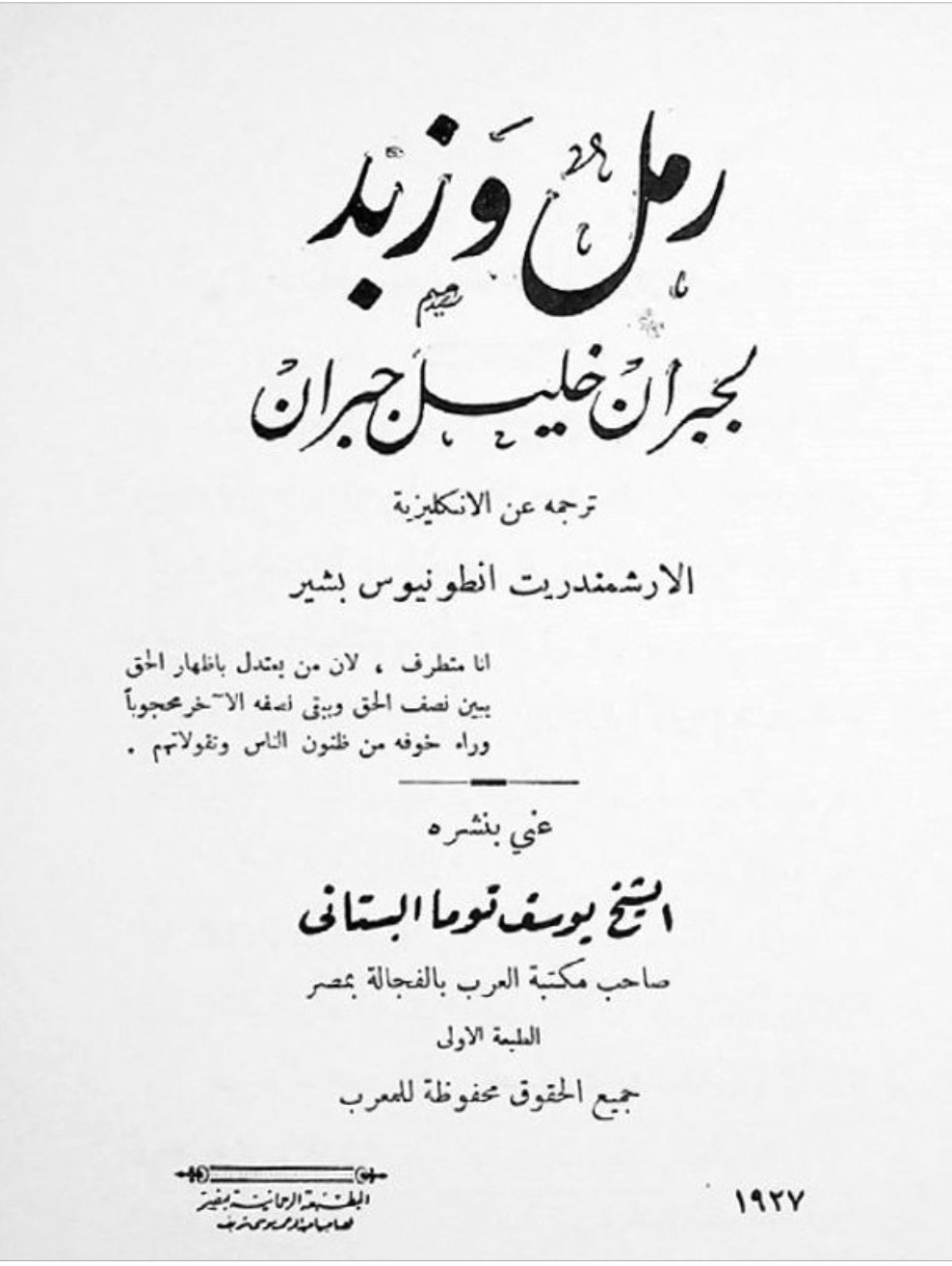
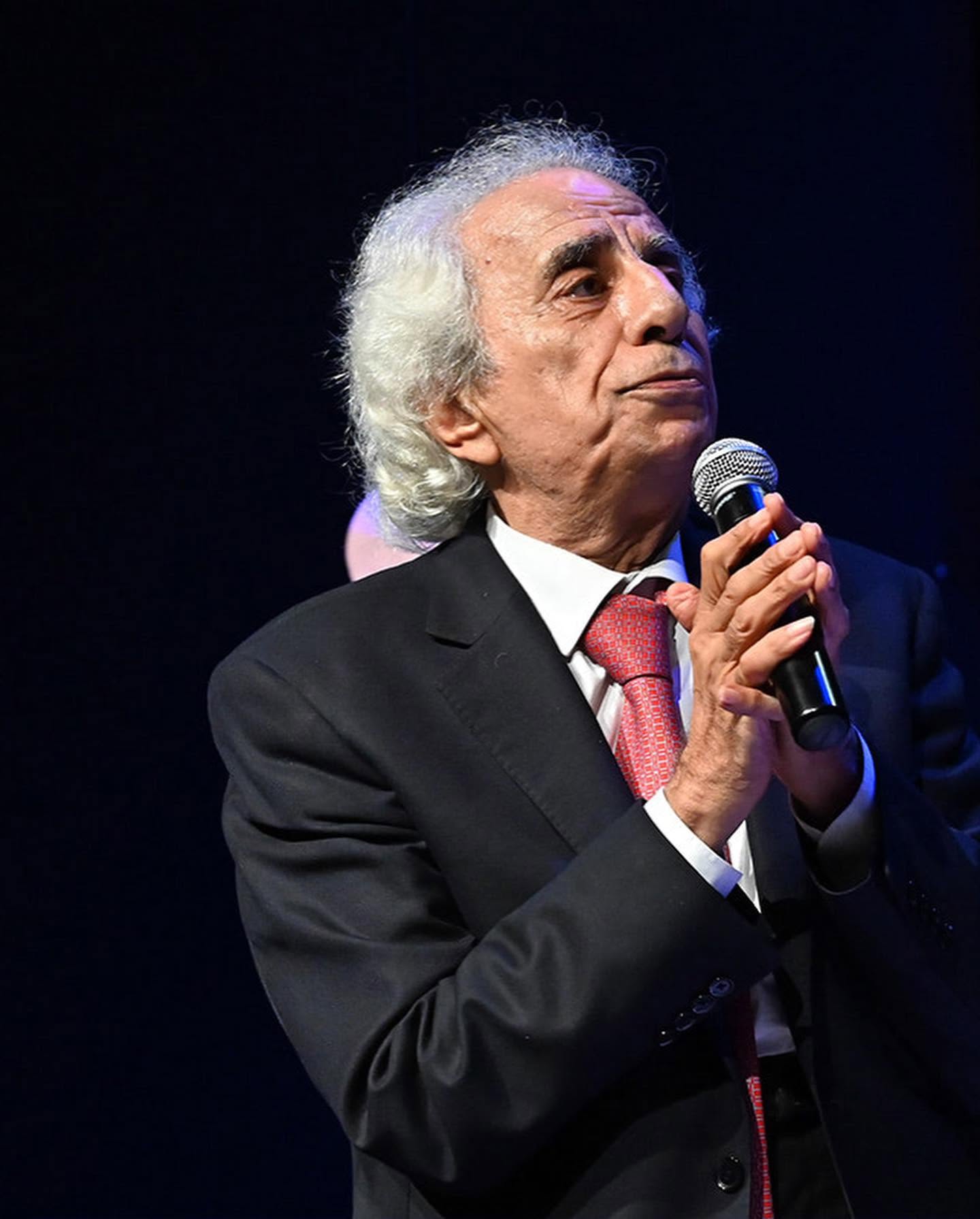
Now, on the occasion of the centenary of the work, Dr. Henri Zoghaib—renowned Lebanese poet, writer, literary critic, and journalist, as well as one of the foremost international scholars and translators of Gibran—has published al-Ramal wa al-Zabad in Beirut (Publications of the Philip A. Salem Academy for Lebanese Heritage–Lebanese American University [LAU]).
This new Arabic translation of Gibran’s collection of aphorisms is further enriched by an extensive introductory essay, together with rare and, in some cases, previously unpublished images and documents. We asked him to answer a number of questions about this important undertaking. The interview follows below.2
One Book, Three Editions
1926
English original
Sand and Foam: A Book of Aphorisms
Alfred A. Knopf, New York
1927
First Arabic
Ramal wa Zabad, tr. Antony Bashir
Yūsuf Tūmā al-Bustānī, Cairo
2026
Centenary Arabic
al-Ramal wa al-Zabad, tr. Henri Zoghaib
Philip A. Salem Academy–LAU, Beirut
• ❧ KGC ❧ •
III
FMFrancesco Medici HZHenri Zoghaib
FMDr. Zoghaib, in a letter dated November 10, 1925, addressed to Antony Bashir, Gibran speaks of the translator not merely as a scholar and critic, but as an author in his own right. He writes: “In my judgment, the translator is a creator, whether people acknowledge this or not. As far as I am concerned, the most deserving of all people to write the introduction is you because he who spends days translating a book from one language to another is certainly the most knowledgeable of all people about the merits and shortcomings of that book.” Although these words refer to al-Nabī (Cairo, 1926), the first Arabic translation of The Prophet (New York, 1923), they seem equally applicable to you and to your newly published al-Ramal wa al-Zabad. How would you comment on Gibran’s view of the translator’s role?
HZI agree with Gibran because, according to my own experience, translating means re-creating the text in the target language. In my opinion, every translator should work within three categories:
1
Word by word
Translating the meaning literally, word by word, of the original text. This is the weakest approach and an ineffective way of producing a translation. However, it is important for the translator to carry the original text over into the translated version, even though this will never be final.
2
The meaning of the meaning
Translating the meaning of the meaning, which means translating within its context, comparing the original text with its translation in parallel to make sure that the original meaning is conveyed correctly in the translation.
3
Setting the original aside
Setting aside the original text is the task of this third category, which consists in revising the Arabic text without referring to the original English, since this reference has already been made in the second category. Here, the translator’s task is to work on the translated text, polish it, and edit it to produce the final Arabic translation.
Therefore, Gibran is right in saying that “the translator is a creator.” This is the utmost expression of the point of view of every translator who aims to produce a creative work.
This was my procedure in translating The Prophet, Sand and Foam, The Blind, Lazarus and His Beloved, and This Man from Lebanon.
“In my judgment, the translator is a creator, whether people acknowledge this or not.”
Gibran to Antony Bashir, 10 November 1925
FMIt appears that Gibran was not particularly fond of the English term “aphorism.” On one occasion, during a conversation with Barbara Young, he asked: “Do we have to say ‘Aphorisms’? Why may we not use the nice, simpler word ‘sayings’?” You, too, are a poet and, like Gibran, are Lebanese and also write in English. How would you explain Gibran’s preference for the term “saying”? In your view, what is the difference between an “aphorism” and a “saying”? And what nuances distinguish the corresponding terms in Arabic?
HZIn fact, Sand and Foam is not precisely a bouquet of “aphorisms,” because the word tends to have philosophical connotations, which is not what Gibran aims for. Perhaps, as he himself suggested, the word “sayings” better suits the world he evokes. “Sayings” is more appropriate because he does not see himself as a philosopher but rather as a poet. That is why he prefers this word. Thus, “aphorism” is a philosophical term, whereas “saying” is a simpler word for what Gibran jotted down here and there on pieces of paper, invitation cards, and so on.
Aphorism
The publisher’s subtitle in 1926. A term with philosophical connotations, the word of the thinker.
Saying
Gibran’s own word for the book. The plainer word of the poet, for lines jotted on paper scraps and invitation cards.
FMYour translation of Sand and Foam appears exactly one hundred years after the publication of the English original and ninety-nine years after the first Arabic translation by the aforementioned Antony Bashir. To the best of your knowledge, have there been any other Arabic translations of the work? What are the principal differences between your translation and Bashir’s? Finally, did Bashir’s version serve in any way as a guide or source of inspiration for your own?
HZTo my knowledge, I am not aware of any translations of Sand and Foam other than Bashir’s. As for the differences between Bashir’s translation and mine, they do not concern the content, which Bashir translated well. The differences lie in the Arabic form of my translation.
Any language is like any other element of life. It grows, experiences golden ages, and then begins to decline when many of its terms cease to be used in speech or writing. The vocabulary Bashir used one hundred years ago is now becoming outdated. This does not mean that it was wrong or inaccurate, but rather that our modern vocabulary can no longer accommodate some of the old terms Bashir used. My goal was to present the book in the fresh, modern Arabic language spoken and written today.
However, Bashir’s version paved the way for the book over the past one hundred years, not for me alone, but for all Arabic readers. Therefore, language is not simply a matter of speaking well or writing well. The secret of a creative text lies in the structure of its sentences, and that is precisely what I worked on. Bashir translated the text using an older, classical structure, whereas my approach is different.
FMSome critics regard Sand and Foam as a collection of fragments or offcuts from The Prophet, composed on whatever materials happened to be at hand—from matchbox cartons to napkins—whenever inspiration struck. In other words, they do not consider it one of the most significant works in Gibran’s bibliography. What is your view on this assessment?
HZThe fragments of Sand and Foam are similar in flavor—in terms of meaning—to those of The Prophet. In some sources, I have read that Gibran intended some of these fragments to be included in The Prophet. Others, however, such as Barbara Young, have mentioned that the fragments were written sporadically on napkins, invitation cards, and other materials.
As for the view that Sand and Foam is not one of the most significant works in Gibran’s bibliography, I disagree, because this book is as important as any other expression of Gibran’s thought. I regard it as a complete and original work in Gibran’s oeuvre. Some of its fragments are even deeper than those in The Prophet, The Madman, or The Forerunner.
“Some of its fragments are even deeper than those in The Prophet.”
Henri Zoghaib
FMGibran scholars know well how complex his writing and philosophy can be. Among the many aphorisms in Sand and Foam, was there any particular passage that posed special difficulties of interpretation—and therefore of translation? Is there any aphorism whose meaning still strikes you as elusive or cryptic?
HZIn fact, yes. I spent long, silent moments poring over some of the “Sayings,” meticulously reconsidering what Gibran might have meant by the phrase before me. Finally, I translated it according to what I thought he might have meant within the context of his literary work as a whole. However, in translation, there is no absolute right or wrong; rather, there are different ways of translating any sentence. I am sure that if I were to translate the book again, I would probably find different words for some passages.
FMIn her biography of Gibran, Barbara Young quotes several of her favorite aphorisms from Sand and Foam. Could you share some of your own favorites and explain why they hold a special place for you?
HZI like the aphorisms Barbara Young chose as her favorites. As for me, I have other favorite sayings. Among them is this one:
❧
Once every hundred years Jesus of Nazareth meets Jesus of the Christian in a garden among the hills of Lebanon. And they talk long; and each time Jesus of Nazareth goes away saying to Jesus of the Christian, “My friend, I fear we shall never, never agree.”
And this one:
❧
Every man loves two women; the one is the creation of his imagination, and the other is not yet born.
And then this one:
❧
Crucified One, you are crucified upon my heart; and the nails that pierce your hands pierce the walls of my heart. And tomorrow when a stranger passes by this Golgotha he will not know that two bled here. He will deem it the blood of one man.
FMIn 2023, you published your translation of The Prophet; now you have given readers your translation of Sand and Foam. The next major Gibranian centenary will be that of Jesus, the Son of Man (New York, 1928), one of the most important works in his oeuvre. May Lebanese readers in particular, and Arabic-speaking readers more generally, hope to receive another gift from you in two years’ time?
HZI translated The Prophet for its centenary (1923–2023) and Sand and Foam for its centenary as well (1926–2026). And, as you intuitively suggest, I will surely translate Jesus, the Son of Man for its centenary (1928–2028), which is, for me, as it is for you, the most important work in Gibran’s oeuvre. May Life grant me many more years! I have already started working on the Arabic translation of Jesus, the Son of Man. Thus, I will be celebrating the centenaries of three books by my very favorite author, Kahlil Gibran.
Henri Zoghaib’s Centenary Translations
2023
The Prophet
1923 → 2023 · published
2026
Sand and Foam
1926 → 2026 · published
2028
Jesus, the Son of Man
1928 → 2028 · in progress
For more information about Henri Zoghaib, please visit his website: henrizoghaib.com.
• ❧ KGC ❧ •
IV
Timeline
1923 The Prophet published by Knopf in New York
1925 Gibran writes to Bashir, 10 November: “the translator is a creator”
1926 Sand and Foam: A Book of Aphorisms published by Knopf; Bashir’s al-Nabī appears in Cairo
1927 Bashir’s Ramal wa Zabad published in Cairo by Yūsuf Tūmā al-Bustānī
1931 Gibran dies in New York
1945 Barbara Young’s This Man from Lebanon recounts the making of the book
2023 Zoghaib’s centenary translation of The Prophet
2026 Zoghaib’s al-Ramal wa al-Zabad, Philip A. Salem Academy–LAU, Beirut
2028 Centenary of Jesus, the Son of Man; Zoghaib’s translation under way
Further Reading on the Kahlil Gibran Collective
❧ Dr. Henri Zoghaib: A Life Devoted to Kahlil Gibran
❧ An Arabic Garment for The Prophet: Gibran’s Letters to Antony Bashir
❧ The Man Who Could Not Die: Barbara Young and a Saying from Sand and Foam
❁
1 Barbara Young, This Man from Lebanon. A Study of Kahlil Gibran, New York: Knopf, 1945, pp. 39, 85–90. Full text at Faded Page. ↩
2 Cf. also “Dr. Henri Zoghaib: A Life Devoted to Kahlil Gibran,” an Interview by Glen Kalem and Francesco Medici, Kahlil Gibran Collective, 12 May 2021: kahlilgibran.com/latest/108. ↩
All Rights Reserved © Copyright Francesco Medici 2026
Cover and portrait reproduced by kind permission of Henri Zoghaib.