Marilyn Monroe kept four copies of The Prophet, gave others away, and read the passage on Marriage aloud on the set of Gentlemen Prefer Blondes — then turned to Jane Russell and asked whether it was true.
By Glen Kalem-Habib
• ❧ KGC ❧ •
KAHLIL GIBRAN COLLECTIVE
By Glen Kalem-Habib · Kahlil Gibran Collective · 2019 · kahlilgibran.com
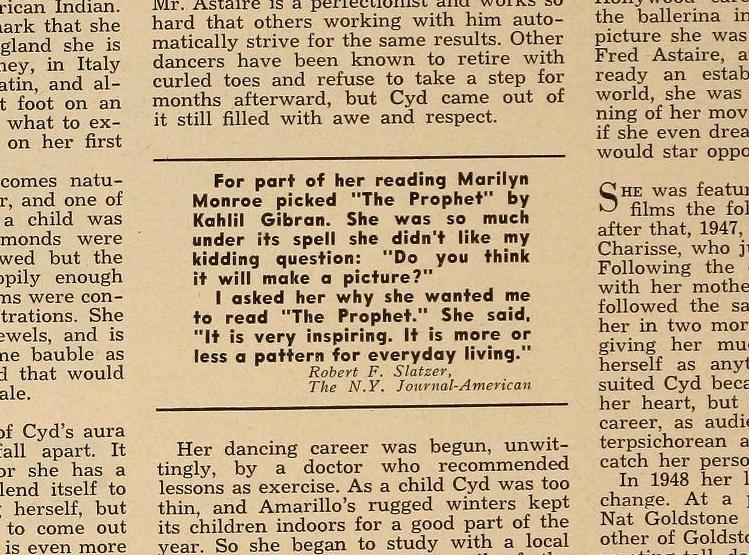
The Prophet… It is very inspiring. It is more or less a pattern for everyday living.
— Marilyn Monroe, to Robert F. Saltzer, The New York Journal-American1
• ❧ KGC ❧ •
I
Marilyn Monroe was self-educated, and it may come as a surprise to many that — like most self-educated people, myself included — she was an avid reader of just about everything, with a wide variety of interests. Surprise, because for most of us the image is of the Hollywood star standing over a street grate in New York City with her dress blowing in the air. That picture, like many others of hers, was perhaps just a cover story for something deeper.
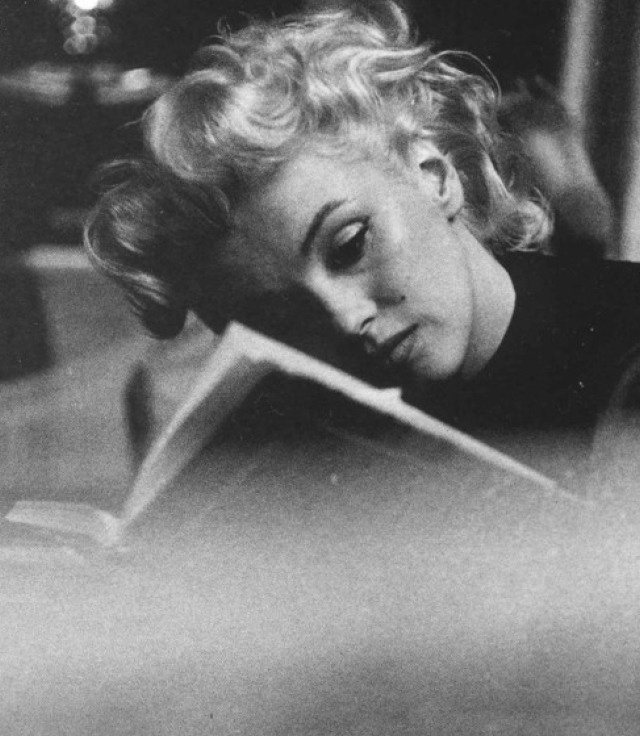
Open the book, so to speak, and you find that this woman's intellect and thirst for knowledge were overlooked in favour of the pretty-girl imagery her public persona projected — fuelled perhaps by her own ambition, and urged on by associates looking to capitalise on her fame. As history suggests, with great fame comes greater public obligation and scrutiny, which can lead to psychological and spiritual exhaustion. Identifying what is real in an idolising world such as hers may have become too foggy to see through — a condition we have sadly read about in many other gifted artists whose careers took a similar path.
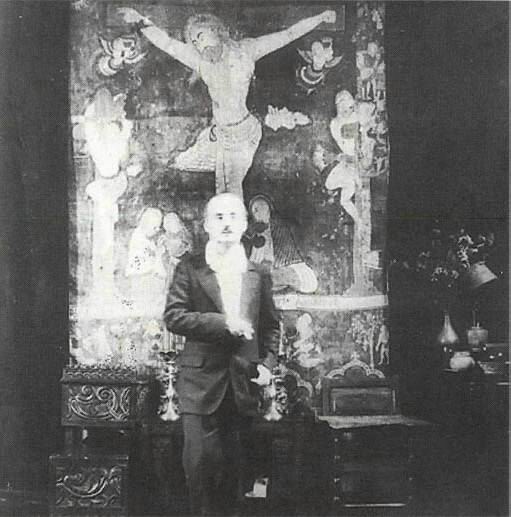
Such figures would have to include Elvis Presley, Michael Jackson, Heath Ledger, and Amy Winehouse, who after amassing great popularity through their work found themselves consumed with outward affairs rather than their own personal and spiritual growth. Even Gibran was not immune. After The Prophet was released, demands for his presence increased: lunches, dinners, parties, and literary gatherings, topped by the unexpected soul-seeker eager to talk and sometimes to confess to the Prophet. The Hermitage2 — the name he gave his New York apartment — was now overwhelmed with visitors, taking solitude away from his painting and writing. Gibran would often find relief by escaping to family in Boston or to the Roosevelts' summerhouse at Herkimer.
• ❧ KGC ❧ •
II
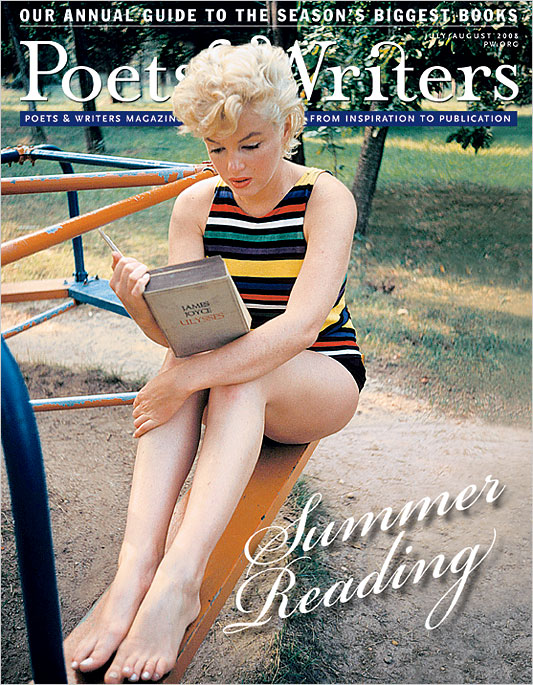
As Monroe's fame grew, so did the demands. We do not know whether she had a hermitage of her own to retreat to, but perhaps she found one in reading. Known to carry something to read wherever she went, I cannot help thinking it was an escape to a world that made more sense. She was not just any kind of reader. One of the more famous books she read was serendipitously captured in what is now a contentious image: the book was Ulysses, by James Joyce.
The striking photograph, taken by Eve Arnold, was not intended to be part of the shoot she had been hired for. Monroe was simply taking a moment for herself, as she so often would between takes, to read. Arnold snapped the deeply focused Monroe, and the now symbolic image has been used by magazines and the like — but robbed of its true nature. Oline Eaton, of Finding Jackie, argues that it has been misrepresented.3 It reads, she writes, as an "unlikely juxtaposition" — because it is Ulysses, and because it is Marilyn Monroe: a pretty girl reading a hard book, something "cute" rather than natural. And yet, she continues, if you are familiar with Monroe's story, her reading of Ulysses represents something else entirely: a woman without a high school education educating herself. Not "an image of breasts and books that functions primarily as a stimulant of nerd-drool."
Considered one of the hardest modernist novels to read, it challenged her to understand it. Lines such as "to learn one must be humble — but life is the great teacher" may well have deepened Monroe's sense of what was not being reflected in the inner journey calling out to her.
• ❧ KGC ❧ •
III
For those lucky enough to have visited Monroe's home, there was a sanctuary of 430 books.6 One can only imagine the solace and joy they gave her. If prompted to talk about them, she might well have greeted you with an enthusiastic review, leaving you wanting to read more yourself — something all book lovers are guilty of.
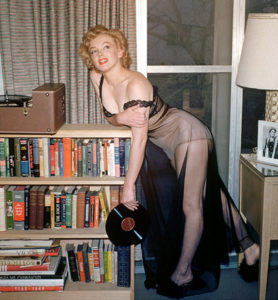
In 1999 the collection was sold, along with other items, at Christie's in New York. The descriptions of some of the books mention how Monroe would leave personal markings, notes, and scrawls in her most cherished reading. Guilty of the same habit myself, I can say she took her reading seriously — and she strikes me as someone with a quenchless thirst for knowledge. The genres ranged across art, drama, biography, poetry, politics, history, theology, philosophy, and psychology; authors from Tolstoy to Twain; classics including The Great Gatsby, Alice's Adventures in Wonderland, Joyce's Dubliners, Hemingway's The Sun Also Rises, and Camus's The Fall. Among the eclectic holdings you would also find books on gardening, her Bibles, and children's books — including her own copy of The Little Engine That Could.7
• ❧ KGC ❧ •
IV
From what we know, The Prophet was one of Monroe's beloved favourites, often read between takes on set. As Johnny Cash and Elvis Presley were known to do, Monroe gave copies away to people in her circle, and kept four copies herself.
The passage on Marriage especially haunted her, perhaps because of the love derby she found herself in between her husband, the athlete Joe DiMaggio, and the literary critic Bob Saltzer. On set one day during the filming of Gentlemen Prefer Blondes, Monroe recited the passage on Marriage to her co-star Jane Russell:
…and stand together yet not too near together: For the pillars of the temple stand apart, and the oak tree and the cypress grow not in each other's shadow.
Then she turned to Russell and asked: "Is it true? I mean, do you have to keep yourself apart? I mean, if a woman loves a man, does she have to give up her own individuality? Do we have to give our own identity up?"8
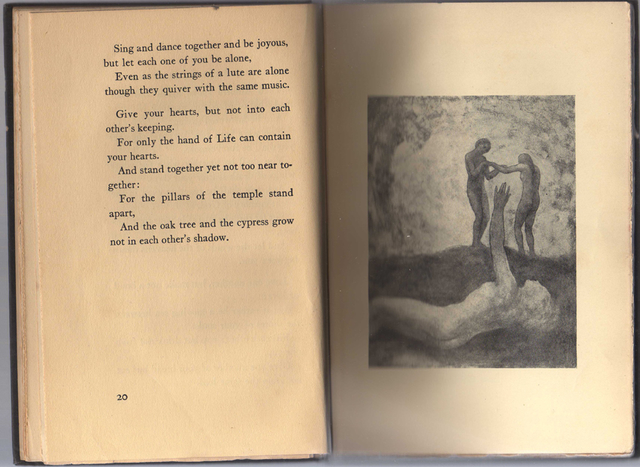
In Anthony Summers's book Goddess: The Secret Lives of Marilyn Monroe, we learn that Bob Saltzer "was supplying Monroe with books" such as the Rubáiyát of Omar Khayyám and Edgar Allan Poe. She, in turn, gave him The Prophet. "This was not, one would assume, reading that Marilyn could share with Joe DiMaggio," Summers notes.9
Saltzer, reflecting years after her death on an interview he had made with Monroe, remembered kidding about whether The Prophet would make a great picture, and noting that she was under some kind of spell with Gibran's poetry — to which Monroe replied: "The Prophet… It is very inspiring. It is more or less a pattern for everyday living."
• ❧ KGC ❧ •
V
While researching this piece I read a number of fine articles, including one that spoke intelligently about the Ulysses photograph and its backstory. During that time my colleague and friend Francesco Medici, who inspired this study, sent me the Christie's auction records — "The Personal Property of Marilyn Monroe"10 — for reference. And sure enough, listed under Lot 509, just below Erich Fromm's The Art of Loving, was Monroe's personal copy of The Prophet.
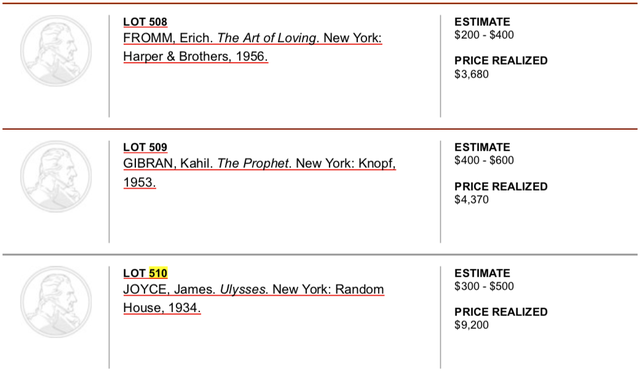
Listed just below, under Lot 510, is the contentious James Joyce novel, Ulysses. I smiled to myself and noted how nicely it had all been married by the Prophet — and I thought of Joyce's words, as Monroe did: "to learn one must be humble — but life is the great teacher."
❁
I would like to thank Francesco Medici for his contribution to this article and to the Kahlil Gibran world at large. Over the years Medici and I have researched and collected books and stories belonging to some of the most influential people who used Gibran's wisdom in their work or life.
1 Robert F. Saltzer, The New York Journal-American.
2 The Hermitage was the name given to Gibran's New York apartment at 51 West Tenth Street. ↩
3 Oline Eaton, "'Marilyn Monroe reading' (hey, let's murder this phrase)." ↩
4 Ulysses (novel), Wikipedia.
6 "The 430 Books in Marilyn Monroe's Library," Open Culture, 2014. ↩
7 "The Intellectual: Marilyn's Library," The Marilyn Monroe Collection. ↩
8 Gary Vitacco-Robles, Icon: The Life, Times and Films of Marilyn Monroe, volume 1, 1926–1956. ↩
9 Anthony Summers, Goddess: The Secret Lives of Marilyn Monroe. ↩
10 The Personal Property of Marilyn Monroe, Christie's, New York, 27–28 October 1999. ↩
All Rights Reserved © Copyright Glen Kalem-Habib 2019