In an unpublished diary entry of 1987, Joseph Nahas recalled the day Gibran handed him “Your Children” to set in type: a reply to Nahas’s own essay on the subject, and the text that became one of the best-loved sermons of The Prophet.
By Francesco Medici
• ❧ KGC ❧ •
KAHLIL GIBRAN COLLECTIVE
By Francesco Medici · Kahlil Gibran Collective · 2026 · kahlilgibran.com
• ❧ KGC ❧ •
I
Kahlil Gibran (1883–1931) and his friend and fellow countryman Joseph Nahas (c. 1890–1987) met in New York at the office of the Arabic-language newspaper Al-Mohajer (“The Emigrant”), where Nahas was employed as an assistant to Ameen Guraieb (1880–1971), the paper’s publisher. Nahas, too, was a prolific poet and writer, both in Arabic and in English. While his contributions in his native language appeared in various Arab-American periodicals during the early decades of the twentieth century, his writings in his adopted language were collected in several volumes published in the 1970s, including Musing Through Life: Rambling Thoughts in Verse and Prose (1972), Seventy-Eight and Still Musing (1974), and A Depression Miracle (1975).1
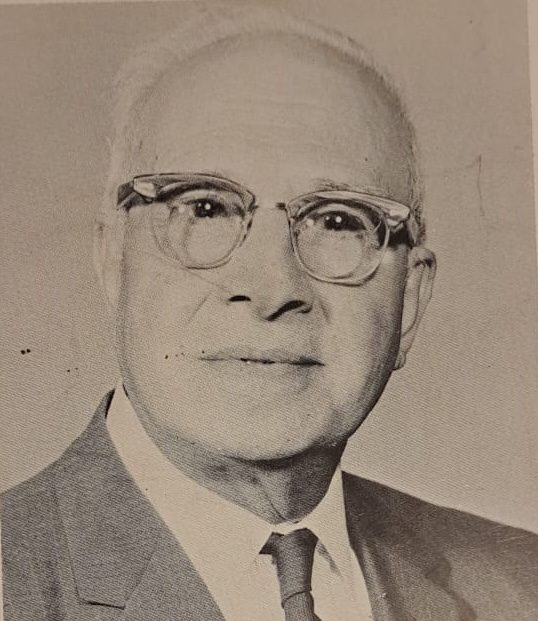
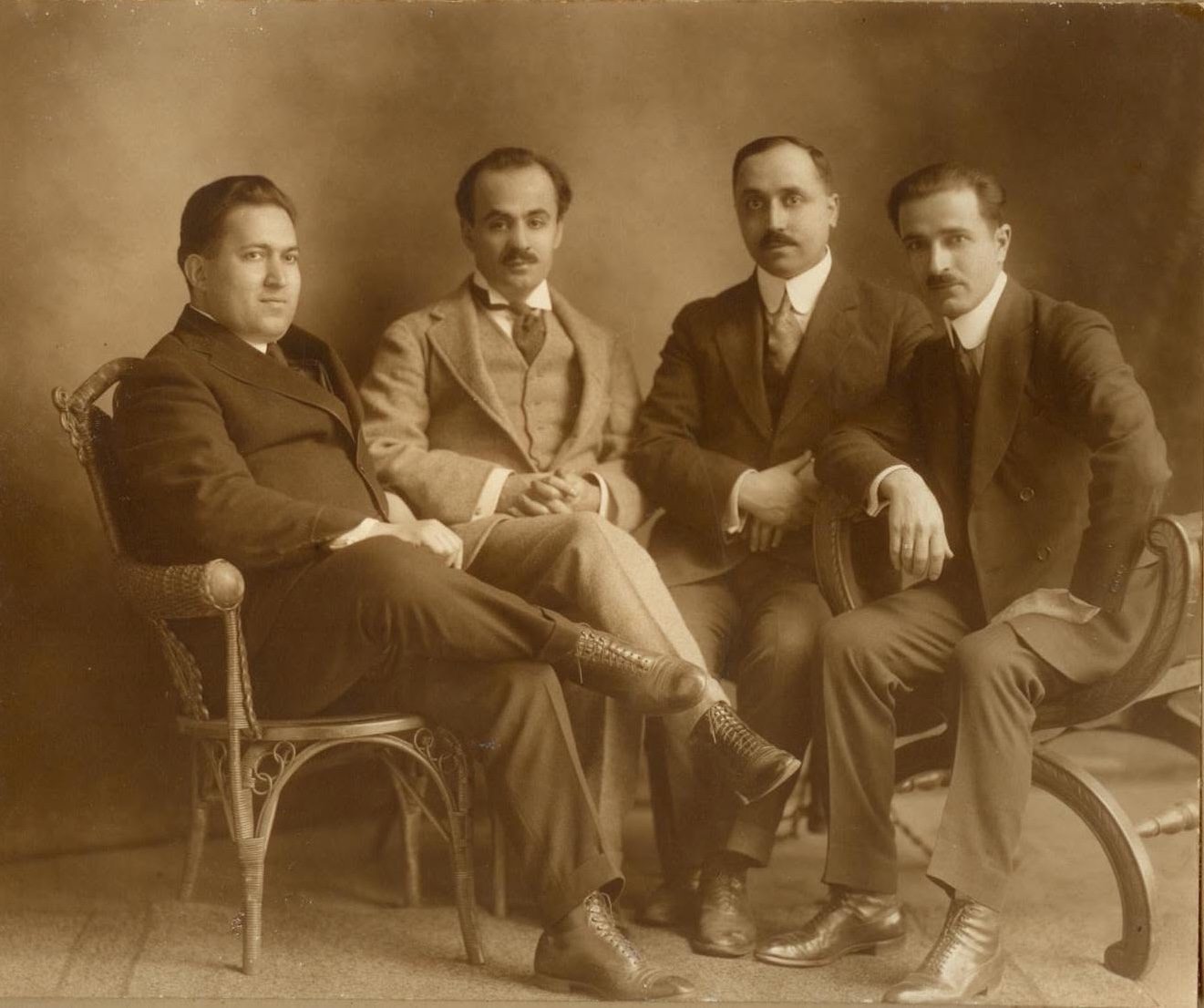
Nahas maintained friendships and professional relationships not only with Gibran, but also with several other Syrian-Lebanese men of letters of the diaspora, including, for example, Naseeb Arida (1887–1946) and Abdulmassih Haddad (1890–1963), as well as Mikhail Naimy (1889–1988), all pillars of the Arrabitah (al-Rabitah al-Qalamiyyah, “The Pen League”), the first Arabic-language literary society in North America (1920–1931). His diaries, written shortly before his death and still entirely unpublished to this day, also reveal that Naimy and Gibran themselves asked Nahas on several occasions to type up their manuscripts.
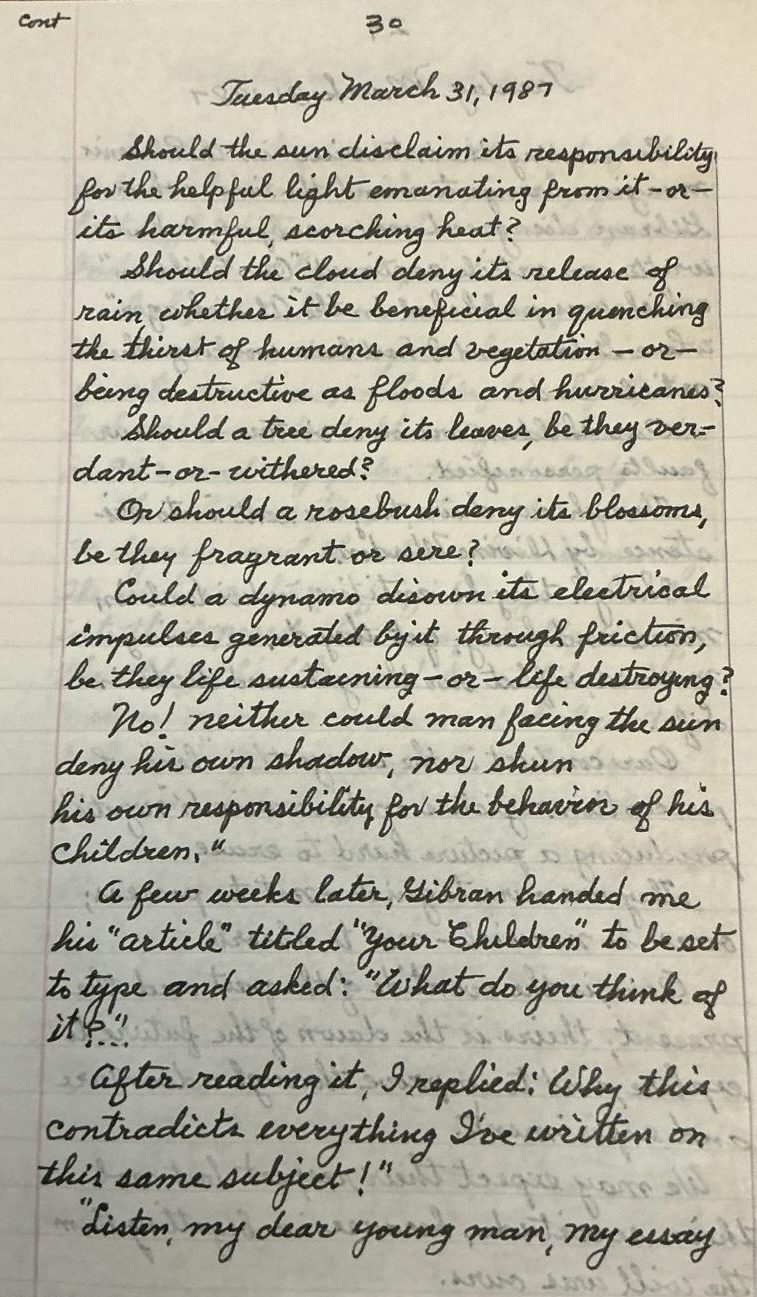
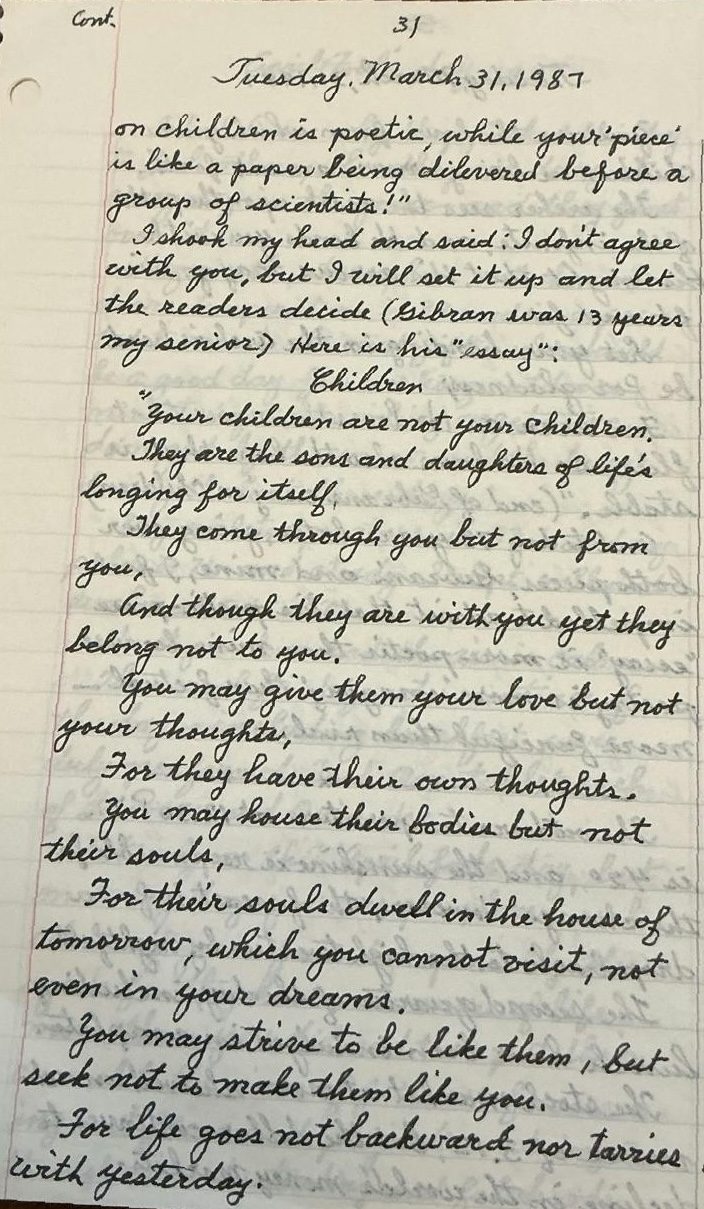
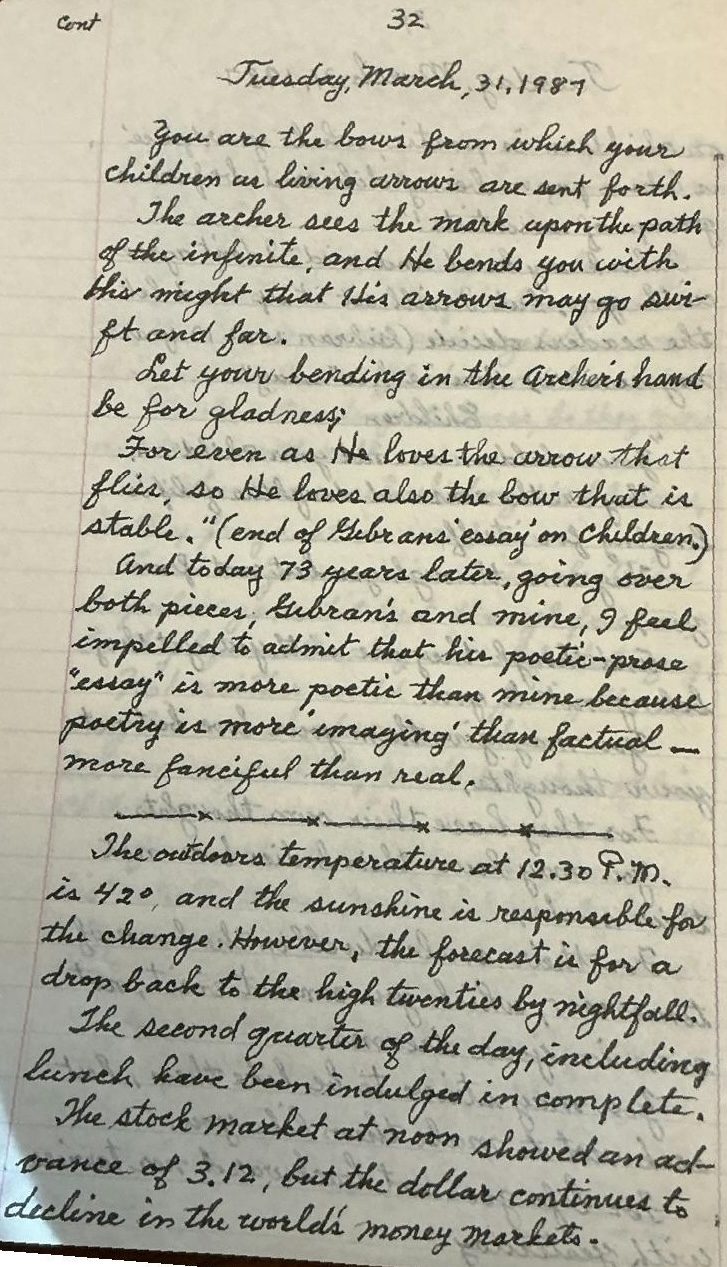
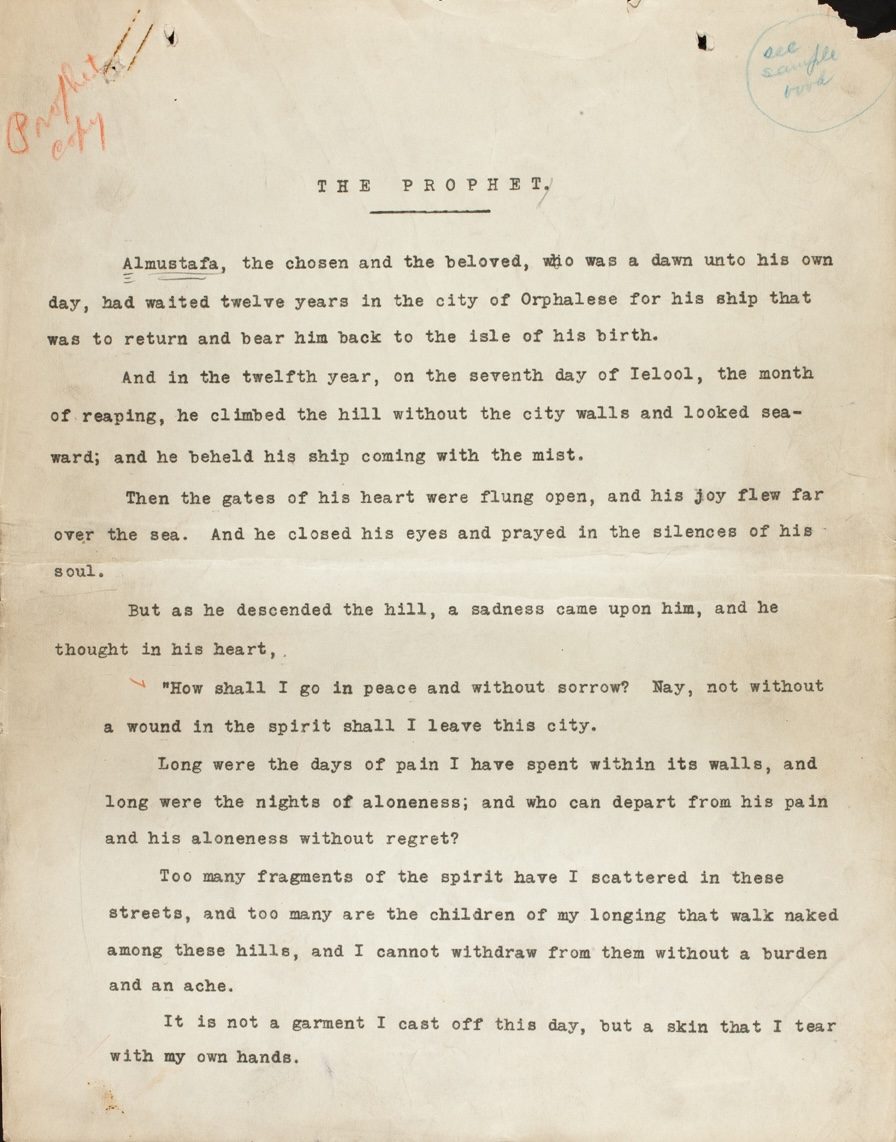
The diary page that follows, dated Tuesday, March 31, 1987, is reproduced below by kind permission of the author’s granddaughter, Kathy Nahas Pratt. It shows that Nahas was also, in whole or in part, the typist of Gibran’s manuscript that would later be published in New York by Knopf in 1923 as The Prophet, universally regarded as his masterpiece. More specifically, the passage from Nahas’s diary refers to one of the most acclaimed sermons in Gibran’s longseller, namely “On Children.” Of particular interest, finally, is the good-natured, playful, and ironic spirit of competition between the two writers, who here seem almost to challenge each other in a kind of poetic contest.
• ❧ KGC ❧ •
II
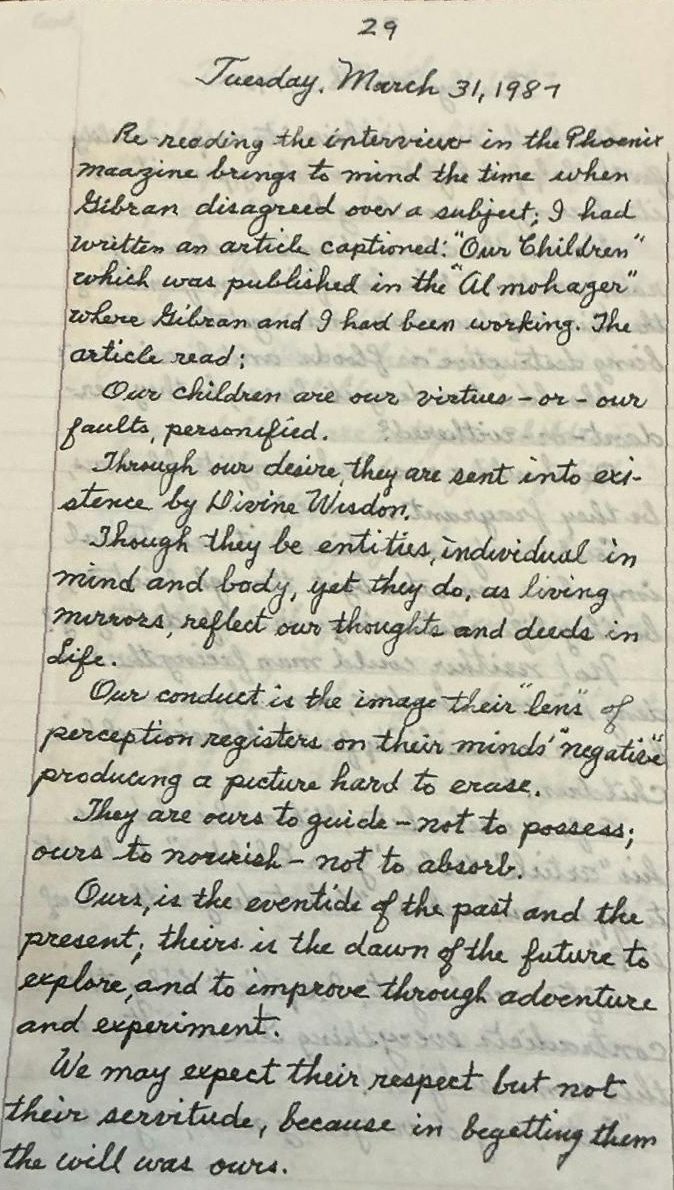
Re-reading the interview in The Phoenix magazine brings to mind the time when Gibran disagreed [with me] over a subject. I had written an article captioned: “Our Children” which was published in the Al-Mohajer where Gibran and I had been working. The article read:2
Our Children
Our children are our virtues — or — our faults, personified.
Through our desire they are sent into existence by Divine Wisdom.
Though they be entities, individual in mind and body, yet they do, as living mirrors, reflect our thoughts and deeds in Life.
Our conduct is the image [that] their “lens” of perception registers on their minds’ “negative,” producing a picture hard to erase.
They are ours to guide — not to possess; ours to nourish — not to absorb.
Ours is the eventide of the past and the present; theirs is the dawn of the future to explore, and to improve through adventure and experiment.
We may expect their respect but not their servitude, because in begetting them the will was ours.
Should the sun disclaim its responsibility for the helpful light emanating from it — or — its harmful, scorching heat?
Should the cloud deny its release of rain whether it be beneficial in quenching the thirst of humans and vegetation — or — being destructive as floods and hurricanes?
Should a tree deny its leaves, be they verdant — or — withered?
Or should a rosebush deny its blossoms, be they fragrant or sere?
Could a dynamo disown its electrical impulses generated by it through friction, be they life-sustaining — or — life-destroying?
No! Neither could man facing the sun deny his own shadow, nor shun his own responsibility for the behavior of his children.
Joseph Nahas, Al-Mohajer
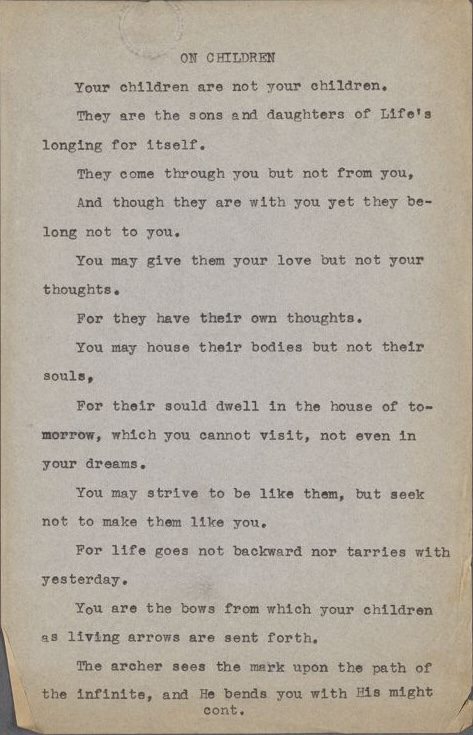
A few weeks later, Gibran handed me his article titled “Your Children” to be set to type and asked: “What do you think of it?”
After reading it, I replied: “Why this contradicts everything I’ve written on this same subject!”
“Listen, my dear young man, my essay on children is poetic, while your ‘piece’ is like a paper being delivered before a group of scientists!”
I shook my head and said: “I don’t agree with you, but I will set it up and let the readers decide.”
Gibran was 13 years my senior. Here is his “essay”:
Children
Your children are not your children.
They are the sons and daughters of life’s longing for itself,
They come through you but not from you,
And though they are with you yet they belong not to you.
You may give them your love but not your thoughts,
For they have their own thoughts.
You may house their bodies but not their souls,
For their souls dwell in the house of tomorrow, which you cannot visit, not even in your dreams.
You may strive to be like them, but seek not to make them like you.
For life goes not backward nor tarries with yesterday.
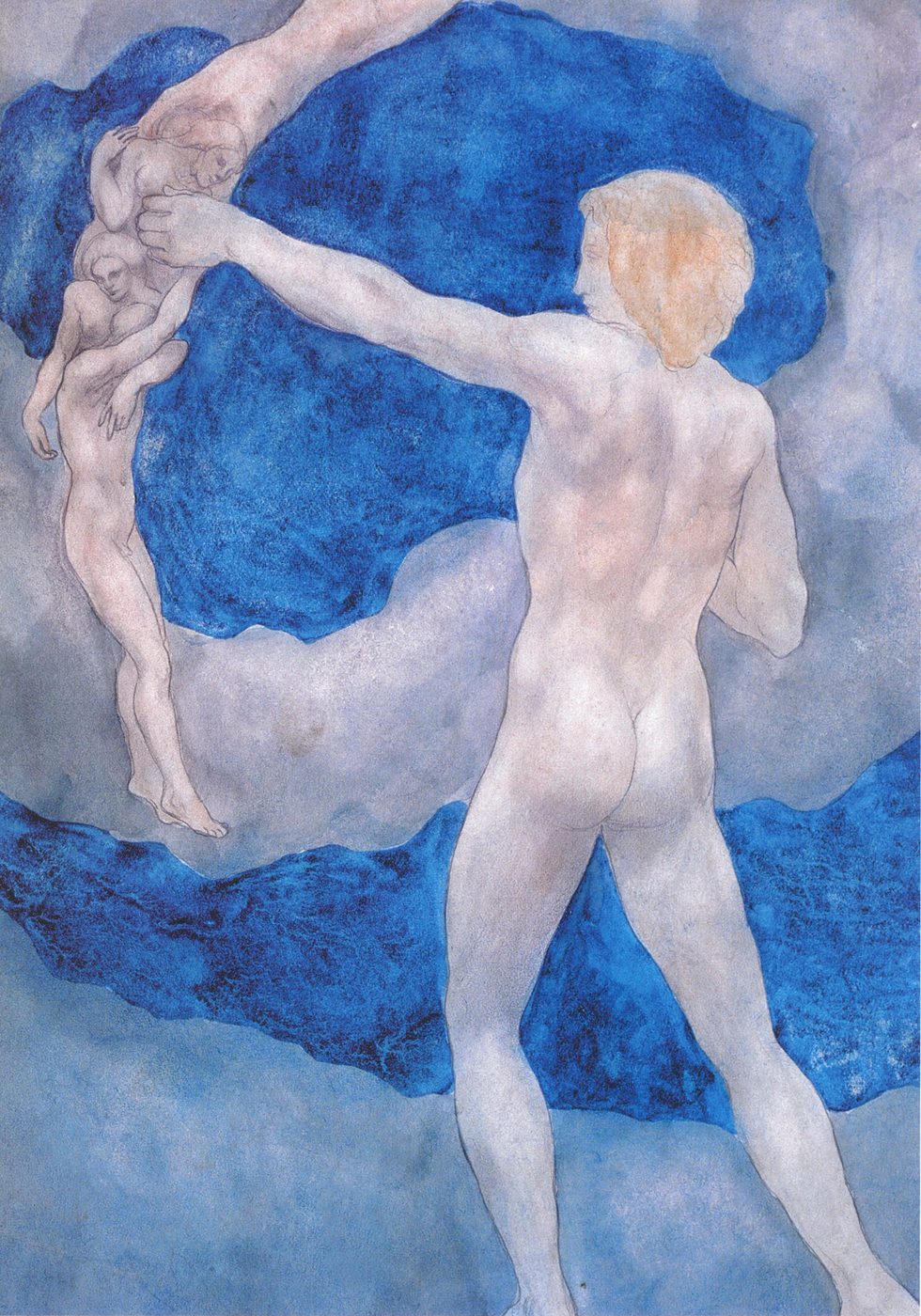
You are the bows from which your children as living arrows are sent forth.
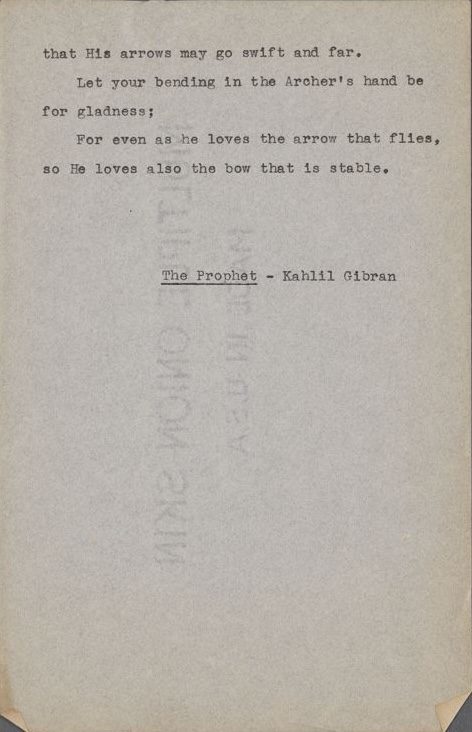
The Archer sees the mark upon the path of the infinite, and He bends you with His might that His arrows may go swift and far.
Let your bending in the Archer’s hand be for gladness;
For even as He loves the arrow that flies, so He loves also the bow that is stable.
Kahlil Gibran, as copied by Joseph Nahas
And today, 73 years later, going over both pieces, Gibran’s and mine, I feel impelled to admit that his poetic-prose “essay” is more poetic than mine because poetry is more ‘imaging’ than factual — more fanciful than real.
• ❧ KGC ❧ •
III
Set next to each other, the two texts share a subject and several images, yet they reach opposite conclusions. Nahas holds parents answerable for what their children become. Gibran releases the child to Life. The panel below pairs the lines where the two writers come closest, and where they part.
• ❧ KGC ❧ •
IV
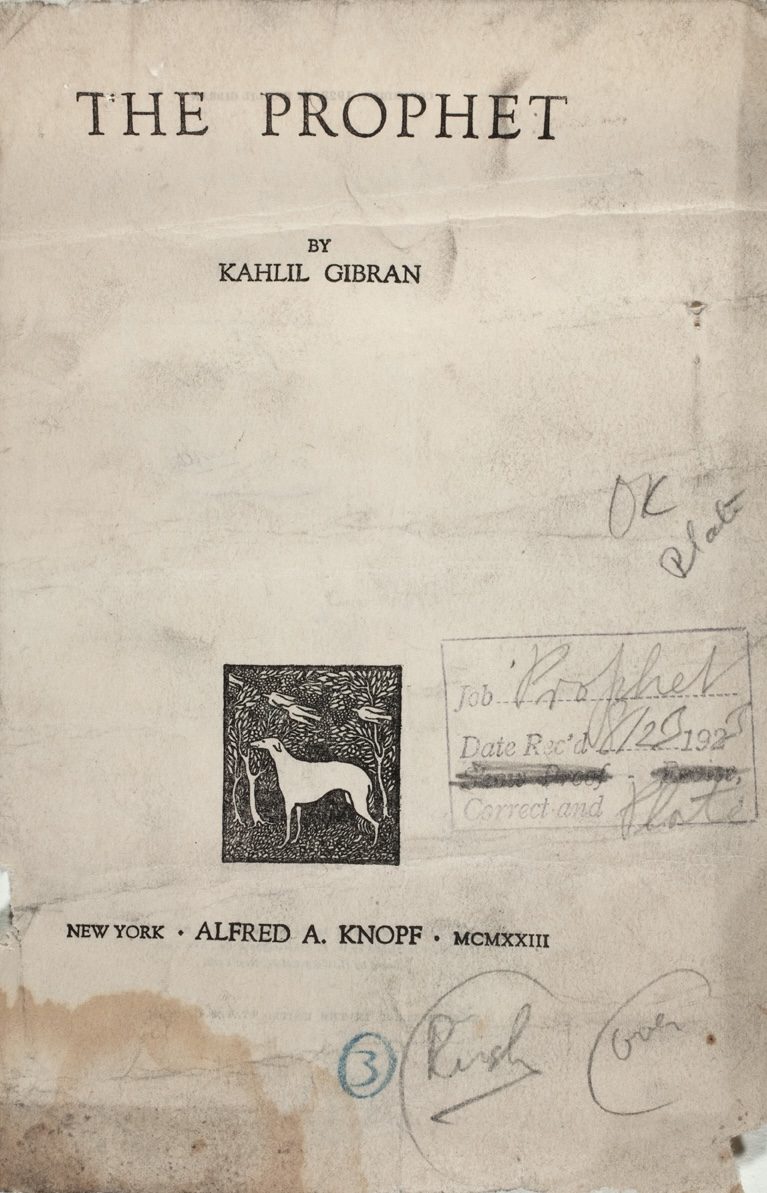
Gibran’s piece reached print in its best-known form in 1923, when Alfred A. Knopf published The Prophet in New York. The sermon kept the opening line Nahas remembered, and appears under the title “On Children”. The complete text can be read on theprophet.org.
Timeline
1883 Gibran born in Bsharri, Mount Lebanon
1911 Gibran settles in New York
Undated The exchange at Al-Mohajer, recalled by Nahas as “73 years” before 1987
1920 The Pen League re-formed in New York
1923 The Prophet published by Knopf, with “On Children”
1931 Gibran dies in New York
1987 Nahas records the exchange in his diary, 31 March
More from the Nahas Papers
❧ Gibran, As I Knew Him — by Joseph Nahas
❧ Gibran on New York’s “Civic Virtue” Statue: A Little-Known Anecdote Recounted by Joseph Nahas
❧ Gibran Meets Father John, the “Mad Monk”: A Firsthand Testimony by Joseph Nahas
❁
1 Joseph Nahas, Musing Through Life: Rambling Thoughts in Verse and Prose (1972); Seventy-Eight and Still Musing (1974); A Depression Miracle (1975). ↩
2 Joseph Nahas, unpublished diary, entry for Tuesday, 31 March 1987, pp. 29–32, Nahas family / Kathy Pratt Family Archive. Transcription by Francesco Medici; editorial insertions in square brackets. The entry continues with Nahas’s notes on the day’s weather and markets, omitted here. ↩
All Rights Reserved © Copyright Francesco Medici 2026
Diary images reproduced by kind permission of Kathy Nahas Pratt.