In October 1923 Mary Haskell opened her copy of The Prophet and wrote to Gibran that generations would not exhaust it. Tania June Sammons traces the literary partnership that produced the book — and the prophecy that came true.
By Tania June Sammons
• ❧ KGC ❧ •
KAHLIL GIBRAN COLLECTIVE
By Tania June Sammons · Kahlil Gibran Collective · 2019 · kahlilgibran.com
• ❧ KGC ❧ •
I
In October 1923, the educator, philanthropist and traveller Mary Haskell prophesied the success of The Prophet after receiving a copy of the book she had helped bring to fruition:
This book will be held as one of the treasures of English literature. And in our darkness we will open it to find ourselves again and the heaven and earth within ourselves. Generations will not exhaust it, but instead, generation after generation will find in the book what they would fain be — and it will be better loved as we grow riper and riper.
Nearly a hundred years later, The Prophet has sold millions of copies worldwide, has never gone out of print, and has been translated into more than a hundred languages.1
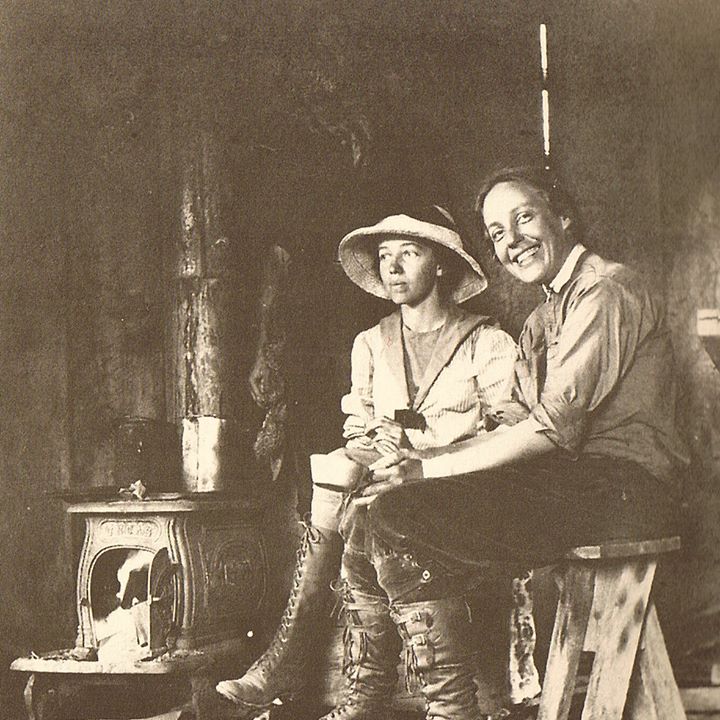
The powerful cross-cultural connection between the artist and writer Kahlil Gibran and his friend and supporter Mary Haskell marked one of the literary world's most important creative partnerships. Despite their different backgrounds — Kahlil a poor immigrant from the mountains of Lebanon, Mary a Northeastern transplant from the recently defeated American South — the two shared common interests: art, music, theatre, history, people, and literature. Their faith in and love of humanity led them on a transformative personal and literary journey that culminated in one of the twentieth century's most notable books.2
• ❧ KGC ❧ •
II
By the time Kahlil and Mary met in Boston in 1904, each had finished a formal education. Kahlil studied at Madrasat al-Hikmah, a Maronite college in Beirut; Mary went to Wellesley College in Massachusetts, one of the elite American women's schools known as the Seven Sisters. In Lebanon, Gibran focused on Arabic and French literature. He also began to write, and with his friend Joseph Hawaiik published a magazine called al-Manarah, The Beacon. His knowledge of Western literature came mostly informally, from his early American mentor Fred Holland Day. Day — a book publisher, bibliophile and avant-garde photographer — introduced his young protégé to Shakespeare, Tolstoy and classical mythology, and emphasised the Romantics in their varied forms: Emerson and the Transcendentalists, Rossetti and the Pre-Raphaelites, Maeterlinck and the Symbolists, D'Annunzio and the Decadents. Day's associates shared their knowledge too, especially Gibran's one-time love interest, the poet Josephine Preston Peabody.
At Wellesley, Mary studied Western literature along with philosophy, German and the sciences, and served as an editor of The Wellesley Magazine. She too had an interest in the Romantics and their related genres, but she was also a follower of Matthew Arnold and Thomas Carlyle. Categorised as Victorian sage writers, these authors moralised their views about the world. For Arnold, the moral demise of society could only be remedied through the pursuit of perfection in all cultural realms, especially education. Carlyle's ideas leaned towards socialism, but he also believed in the importance of bold, visionary leaders to guide social, political and religious change — the subject of On Heroes, Hero-Worship and the Heroic in History.3
• ❧ KGC ❧ •
III
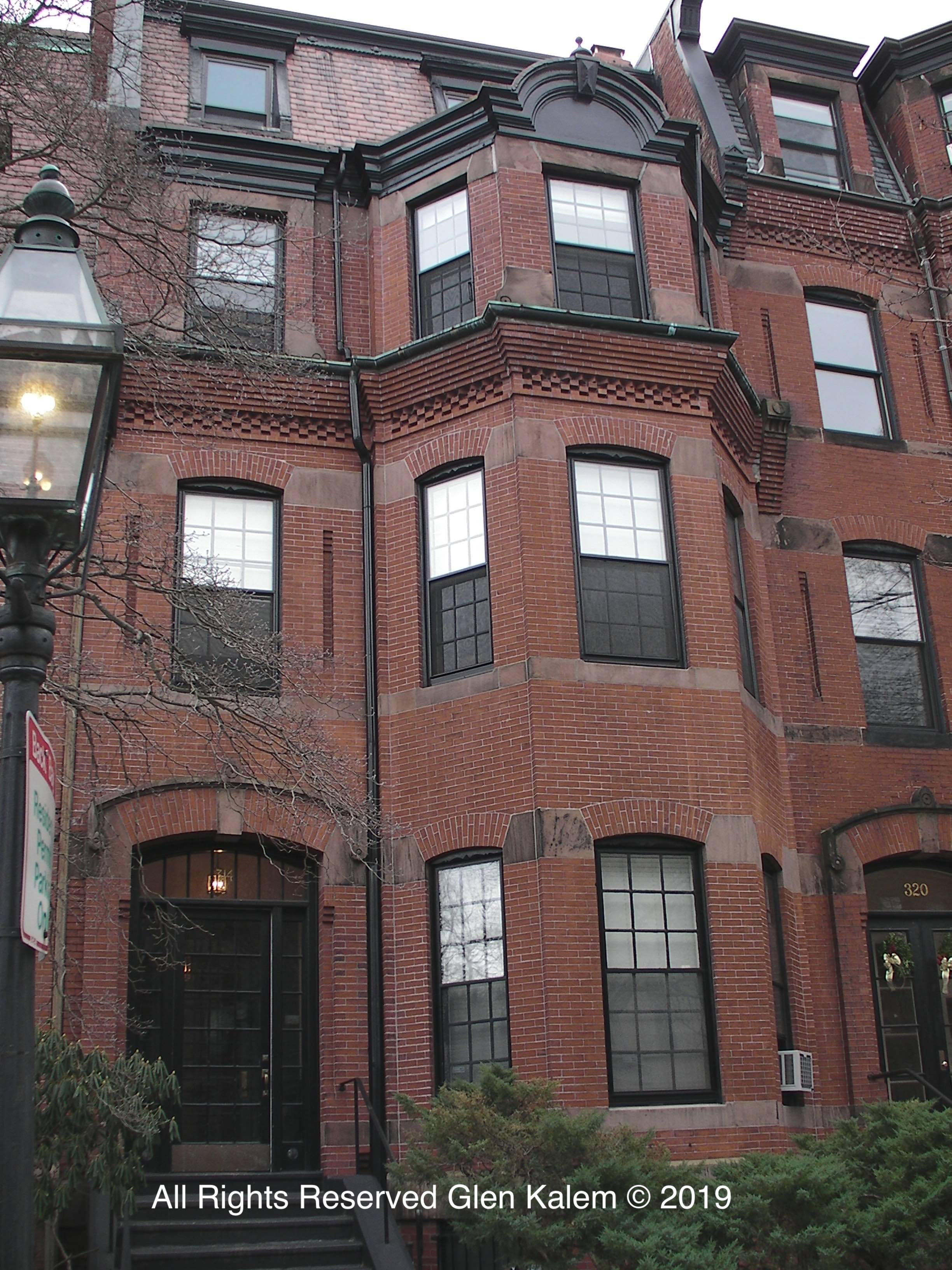
With their formal educations behind them and their literary foundations grounded, Kahlil and Mary's discussions about literature began in earnest in 1910, after Gibran returned from the two-year study trip to Paris that Mary had funded. They would usually meet in the evening at Mary's school on Marlborough Street. Their gatherings were not exclusively dedicated to books, but often squeezed between visits to the theatre, symphony, museum or library. They also discussed Kahlil's artwork; he often appeared with wet canvases carried from his home over a mile away. Sometimes their meetings included others, such as Charlotte Teller and Aristides Phoutrides, two more creatives Mary supported. More rarely Mary hosted a dinner party to introduce people who might help Kahlil. Mostly, however, they preferred to spend the time alone. In her journal Mary often noted his comments, such as his declaration of 1911: "Oh! What a good time I do have here! I live here & only here — at other times I'm not living."4
When discussing great literature, the two strove to identify universal ideas about life. For a course Mary was developing, they classified "supreme literary expressions of the World-Soul." After deliberating — or what Mary called "talking the bark off our tongues" — they made their final selection: the Book of the Dead, Job, Aeschylus, Sophocles, Euripides, the Koran, Dante, Shakespeare, Michelangelo, Leonardo, Faust, Balzac, Nietzsche, Ibsen, and Whitman. On the surface these discussions seemed ordinary and routine, but underneath, both understood their work had a purpose beyond designing a class. They sought the universal essence of these great works — and to push Kahlil's own work in the same direction.5
• ❧ KGC ❧ •
IV
When Kahlil began to write in English, the Gibran–Haskell literary journey took on a more deliberate course. Mary acted as his scribe and helped him with words and phrases. She coached with purpose, with the goal that Kahlil would one day write alone. In 1914, while he was working on The Madman, she recorded: "It will not be long before he will be so a master of English that he need look nothing over with anybody." Nonetheless Kahlil recognised her value, and used her editing for all his major English writings — even after she moved to Savannah in 1923. In January 1917 he wrote: "You see, Mary, I go to your school, too, and I am sure that I could not have written a word in English if it were not for you." And again in April 1918: "how can anything of mine be really English without your help?" Mary critiqued with an eye on clarity, and on the work's ability to transcend time.6
Kahlil published The Madman in 1918, The Forerunner in 1920, and then his supreme literary expression, The Prophet, in 1923. Three more books appeared before he died — Sand and Foam (1926), Jesus, the Son of Man (1928), and The Earth Gods (1931) — and two after: The Wanderer (1932) and The Garden of the Prophet (1933). The last was unfinished at his death, and although his secretary, the writer Barbara Young, completed the manuscript, critics deem the published version less authentic.
In May 1918 Kahlil shared his first draft of The Prophet with Mary, which he originally called "The Counsels." After going through the manuscript, he asked: "Do you notice how full these things are of what we have said in talking together — sometimes years ago… There's nothing in them that hasn't come from our talks. Talking about them with you has made them clear to me." Five years later they saw the fruit of that labour published. Today, as Mary predicted nearly a century ago, The Prophet transcends generations and provides solace, wisdom, and pleasure.7
❁
1 2 October 1923, Mary Haskell Diary, quoted in Virginia Hilu, ed., Beloved Prophet: The Love Letters of Kahlil Gibran and Mary Haskell and Her Private Journal (New York: Alfred A. Knopf, 1972), pp. 416–417; Glen Kalem-Habib and Francesco Medici, "The Prophet, Translated," The Kahlil Gibran Collective, 27 June 2018. ↩
2 See Jean Gibran and Kahlil Gibran, Kahlil Gibran: Beyond Borders (Interlink, 2016); Suheil Bushrui and Tania Sammons, The Art of Kahlil Gibran at Telfair Museums (Telfair Museums, 2010); Alexandre Najjar, Kahlil Gibran, A Biography (SAQI, 2008); Suheil Bushrui and Joe Jenkins, Kahlil Gibran: Man and Poet (Oneworld, 1998); Robin Waterfield, Prophet: The Life and Times of Kahlil Gibran (St. Martin's Press, 1998); Béatrice Peyret-Vignals, ed., Khalil Gibran: artiste et visionnaire (Institut du monde arabe, 1998). ↩
3 Wellesley College Archives; Minis Family Papers, Southern Historical Collection, University of North Carolina, Chapel Hill; Matthew Arnold, Culture and Anarchy (1869); Thomas Carlyle, On Heroes, Hero-Worship and the Heroic in History (1841). ↩
4 20 April 1911, Mary Haskell Diary, Minis Family Papers. ↩
5 4 October 1911, Mary Haskell Diary, Minis Family Papers. ↩
6 31 August 1914, Mary Haskell Diary, quoted in Gibran and Gibran, p. 271; 12 January 1917 and 10 April 1918, Kahlil Gibran to Mary Haskell, quoted in Gibran and Gibran, pp. 300, 314; 12 May 1918, Mary Haskell to Kahlil Gibran, quoted in Gibran and Gibran, p. 316. ↩
7 6 May 1918, Mary Haskell Diary, quoted in Beloved Prophet, p. 304. ↩
Excerpted from "The Literary Journey of Kahlil Gibran and Mary Haskell," in Gibran in the 21st Century: Lebanon's Message to the World, edited by H. Zoghaib and M. Rihani (Beirut: Center for Lebanese Heritage, LAU, 2018), pp. 152–159.
All Rights Reserved © Copyright Tania June Sammons 2019